
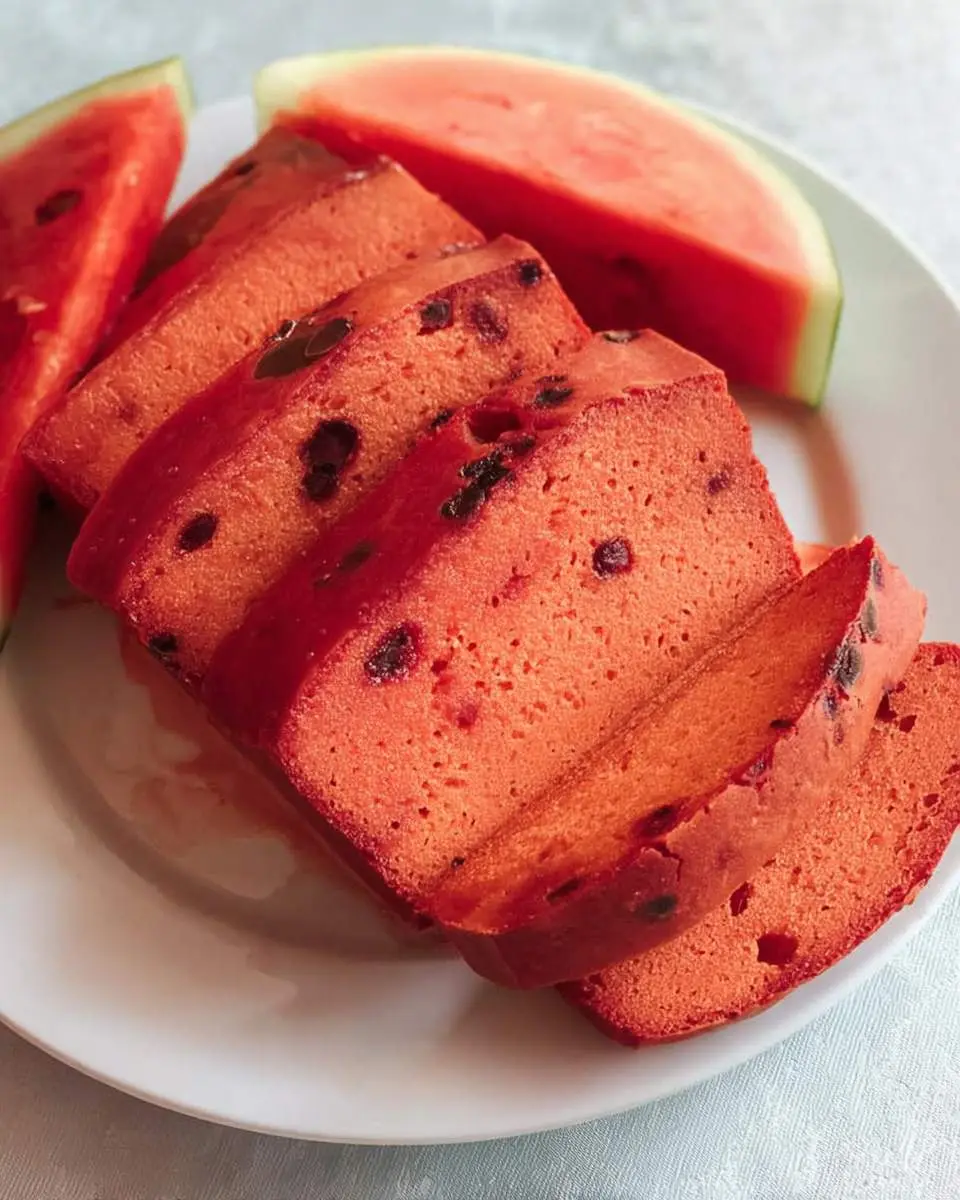
The first time I saw a loaf of watermelon bread, I genuinely thought someone had baked an actual melon into dough. That shock of pink streaked through green, dotted with what looked like seeds. I had to know how they did it. Turns out, it’s all clever layering and a little patience, and now I can’t stop making it for summer brunches.
My grandmother always bought watermelon from the same farm stand every July. She’d carve it on the porch while I sat on the steps, juice running down my wrists. This bread brings that same feeling. unexpected, sweet, and completely tied to the season. I made it for her last birthday, and she laughed for ten minutes before taking her first bite.
I’ve been on a real fruit bread kick lately. My peach pecan bread got me through last August, but this one feels like the peak of summer baking.
What Makes This Dough Look Like a Watermelon
The magic happens with three separate doughs. You need matcha powder for that rind green. don’t skip the good stuff, the cheap kind tastes like grass clippings. The pink center comes from a tiny bit of gel food coloring and a handful of mini chocolate chips that sink into place like seeds. I also fold in some cottage cheese flatbread techniques I learned for keeping enriched doughs tender and moist.
How to Make Watermelon Bread
You start with one basic enriched dough, then divide it three ways. The largest portion gets matcha kneaded in until it smells like a Japanese tea garden. that’s your outer rind. A smaller piece stays plain for that thin white layer. The smallest portion gets tinted pink and studded with chocolate chips. The layering feels almost sculptural: green on the outside, white in the middle, pink at the heart. I roll each layer thin, stack them, then roll the whole log into a spiral. The first rise fills your kitchen with that yeasty sweetness. The second rise happens in the loaf pan, and you’ll watch the colors press together through the glass. Baking transforms everything. the green deepens, the pink sets like sunset, and those chocolate chips peek through like seeds. I learned the spiral technique from my strawberry banana bread experiments, where swirling two batters taught me how colors behave when they bake.
What I Learned After Three Attempts
My first loaf looked like a traffic accident. The colors bled, the layers merged, and I served something that resembled mold more than melon. Here’s what actually matters.
Chill between layers. Ten minutes in the fridge firms up the butter in the dough, so your green doesn’t smudge into your white when you roll. Cold dough is obedient dough.
Under-tint the pink. The color intensifies in the oven’s heat. What looks like bubblegum raw becomes watermelon flesh baked. I stopped at three drops of gel color.
Position those chips carefully. They need to sit in the pink dough’s center, not against the white layer, or they read as bruises instead of seeds.
My Secret Trick: I brush the interior white layer with milk before adding the pink center. It acts like edible glue, preventing the air pockets that ruined my second loaf.
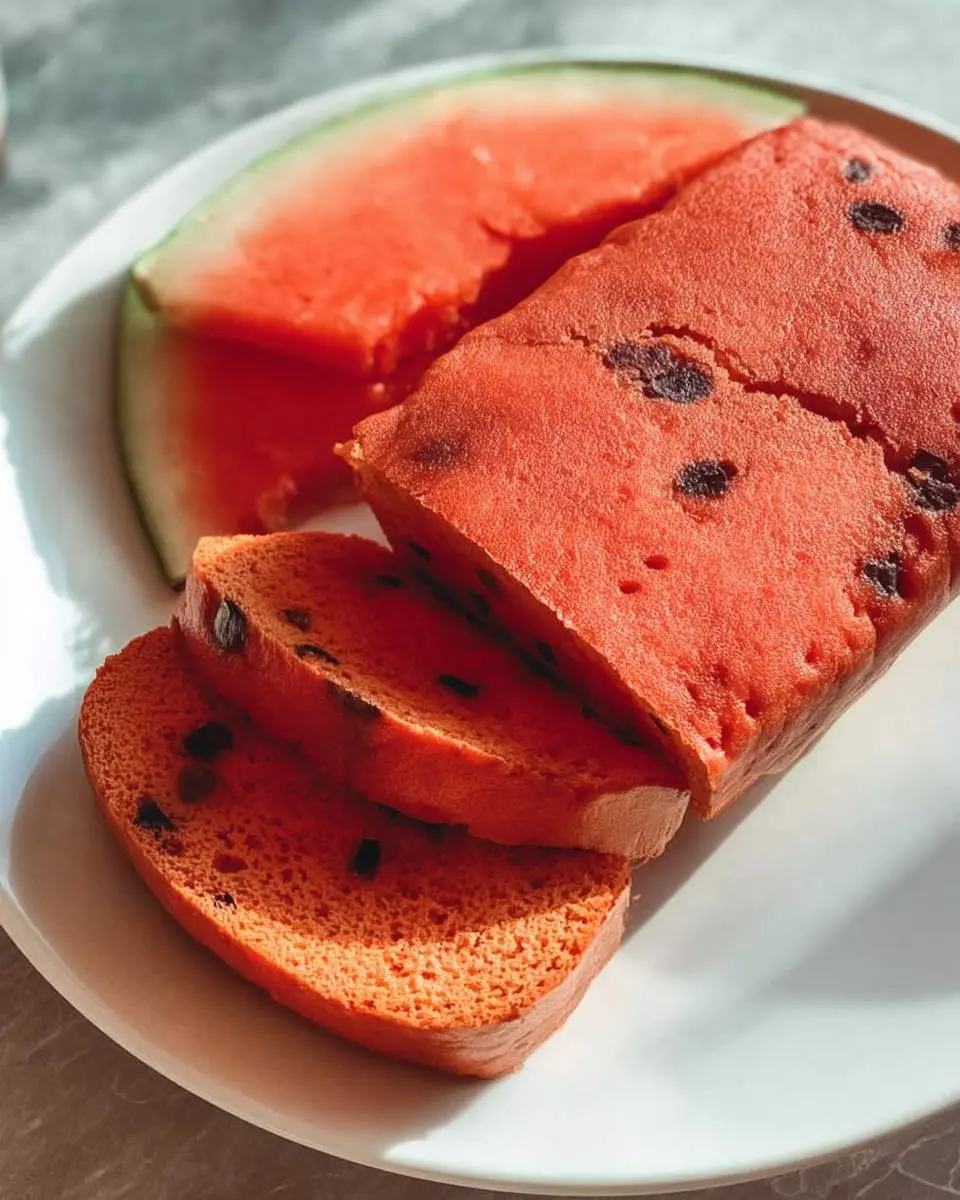
How to Store Watermelon Bread
- Room temperature: Wrap tightly in plastic or store in airtight container for up to 3 days. The enriched dough stays soft.
- Refrigerator: Not recommended. Cold temperatures dull the matcha flavor and firm the crumb unpleasantly.
- Freezer: Slice first, then freeze in a single layer before transferring to freezer bag. Keeps 2 months. Thaw at room temperature for 30 minutes.
- Reheating: 10 seconds in microwave restores softness, or 5 minutes in 300°F oven wrapped in foil for that fresh-baked warmth.
Why This Bread Works for Summer Gatherings
Watermelon bread delivers surprise without demanding heavy frosting or complicated decoration. The matcha brings actual antioxidants and a gentle caffeine lift, while the enriched dough gives you sustaining energy for long afternoons outside. I slice it thick for picnics where I don’t want to fuss with spreading anything. It looks like you spent hours on presentation when really, you just understood how dough behaves.

FAQs
Can I use real watermelon juice instead of food coloring?
I tried this. The juice adds too much liquid and the color bakes to a sad beige. Stick with gel food coloring. it’s concentrated, stable in heat, and you need so little it doesn’t affect flavor.
Why did my layers swirl instead of staying distinct?
Your dough was too warm or you rolled too aggressively. Cold dough keeps clean edges. If your kitchen runs hot, work in shorter sessions with fridge breaks between.
Can I make this without matcha?
Spirulina works for green, though it tastes more vegetal. I’ve also seen bakers use pandan extract for a more floral, Southeast Asian approach. Both change the flavor profile significantly.
How do I get the chocolate chips to stay put while slicing?
Chill the baked loaf completely before cutting. Warm chocolate smears. A serrated knife with gentle sawing motion, not pressing, keeps your seed pattern intact.

Watermelon Bread
Ingredients
Equipment
Method
Notes
Conclusion
Watermelon bread reminds me that baking can be playful without being gimmicky. The first slice always makes someone gasp. If you’re craving more summer fruit bakes, my raspberry bread carries that same bright, seasonal energy. Make this once, and you’ll find reasons to make it again.
Follow us on Social Media : Pinterest