
The first time I pulled a sheet pan from the oven and everything was done at once, I actually laughed out loud. It felt like cheating. That golden salmon, those crispy-edged potatoes, and bright green asparagus all sharing one pan. this Salmon Potatoes and Asparagus Sheet Pan Dinner became my weeknight sanity saver before I even sat down to eat.
My grandmother never made salmon. She was a Midwestern beef-and-potatoes woman through and through. But I remember watching her arrange vegetables around a roast so everything finished together, and that same satisfaction lives in this dish. One pan, one timer, one thing to wash. She would have approved of the efficiency, even if she raised an eyebrow at the fish.
I’ve cooked this more times than I can count now, and it still feels like a small miracle. If you’re craving more one-pan seafood inspiration, I wrote about a Mediterranean shrimp skillet that hits similar notes with completely different flavors.
Why These Three Ingredients Belong Together
The beauty of this combination is how they cook at different rates but finish in harmony. Baby potatoes need that head start in the oven to get creamy inside and crisp outside. Salmon is delicate and fast, so it joins halfway through. Asparagus is the sprint finisher. ten minutes and it’s perfectly tender with just enough bite. I learned about balancing salmon cook times from a broiled pesto salmon experiment that taught me respect for the fish’s texture. Together, these three create a complete Salmon Potatoes and Asparagus Sheet Pan Dinner without any one element stealing the show.
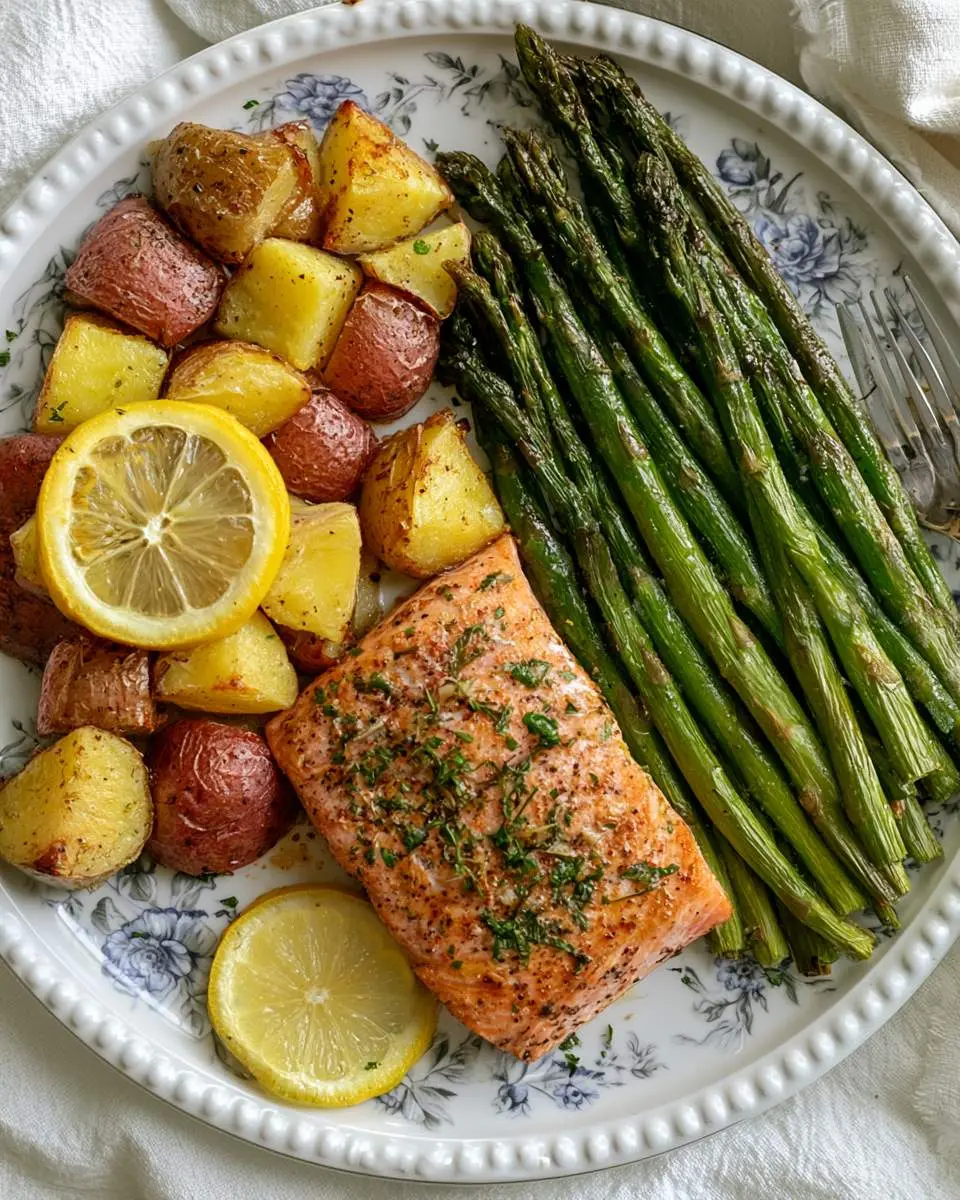
How to Make Salmon Potatoes and Asparagus Sheet Pan Dinner
I start by tossing halved baby potatoes with olive oil, salt, and pepper while the oven preheats to 425°F. They hit the pan first and roast for about fifteen minutes. long enough that I can hear them sizzling when I open the door. That’s my cue. I push them to one side and add the salmon fillets, skin side down, with a little space between each. The asparagus goes on last, drizzled with whatever oil is left on the cutting board.
The final ten minutes are where the magic happens. The salmon’s fat starts to render and baste the potatoes underneath. The asparagus tips get slightly charred. I stand at the stove and watch through the oven window like it’s television. For another take on this technique, my one-pan lemon herb salmon uses similar timing with different aromatics.
What I Learned After Making This Ten Times
Cut your potatoes uniformly, no exceptions. Uneven halves mean some stay hard while others turn to mush. I use a sharp knife and aim for pieces between one and one-and-a-half inches. anything smaller burns, anything larger stays raw in the center.
Don’t crowd the salmon. When fillets touch, they steam instead of roast. That beautiful crust where the seasoning meets the hot pan? You lose it. I use a half-sheet pan and never cook more than four portions at once.
Asparagus thickness matters more than you think. Pencil-thin spears become stringy; jumbo ones never tenderize. I look for medium stalks, about as thick as my index finger, and snap off the woody ends rather than cutting them.
My Secret Trick: I save a tablespoon of the potato-roasting oil mixed with lemon zest and drizzle it over everything right when the pan comes out. The residual heat blooms the zest into something that smells like a coastal restaurant.
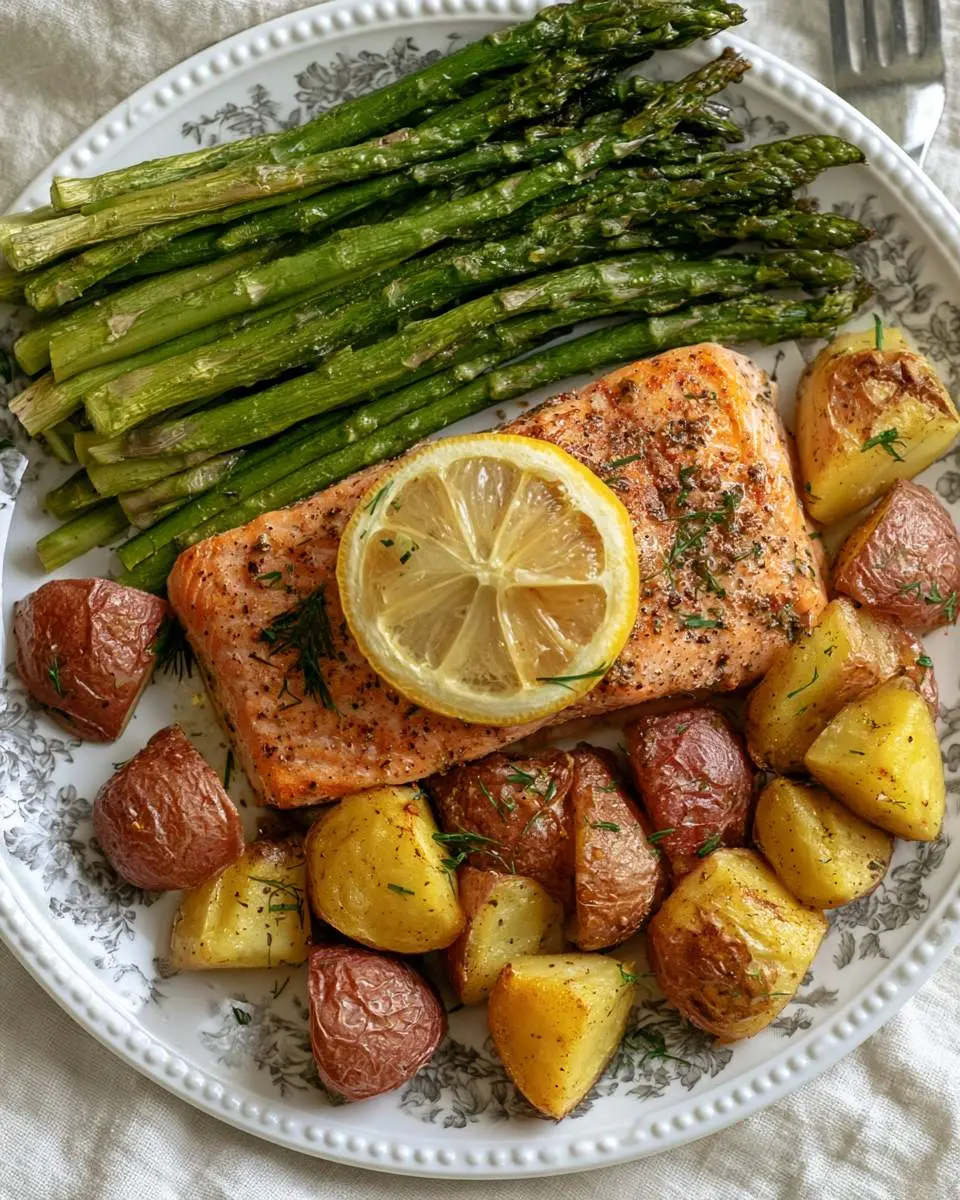
How to Store Salmon Potatoes and Asparagus Sheet Pan Dinner
- Refrigerate in airtight containers within two hours of cooking; keeps for up to 3 days at 40°F or below
- Store salmon separately from vegetables if possible. the fish continues to release moisture that softens the potatoes
- Freeze only the salmon: wrap individual fillets tightly in plastic, then foil, for up to 2 months; potatoes and asparagus do not freeze well
- Reheat in a 350°F oven for 12-15 minutes on a fresh sheet pan; microwave works in 60-second bursts but sacrifices the crispy edges
- Never reheat more than once; cold salmon over salad is actually delicious the next day
Why This Dinner Fits Real Life
Between the omega-3s in the salmon and the fiber in those skin-on potatoes, this Salmon Potatoes and Asparagus Sheet Pan Dinner covers nutritional bases without trying too hard. I eat it on nights when I want to feel good about what I cooked but don’t have energy for a production. The asparagus brings folate and that satisfying green-vegetable virtue that makes the whole plate feel complete.
FAQs
Can I use frozen salmon for this recipe?
Frozen salmon works if you thaw it completely first. I pat it very dry with paper towels. moisture is the enemy of that roasted exterior. Add it to the pan at the same timing as fresh, but check for doneness early since thawed fish can cook faster.
Why do my potatoes never get crispy?
They need space and dry heat. Crowding traps steam, and wet potatoes steam instead of roast. I dry my halved potatoes on a clean towel before oiling them. Also, resist the urge to flip them constantly; let them sit undisturbed for the first ten minutes.
What can I substitute for asparagus?
Green beans work beautifully with the same timing. Broccoli florets need an extra five minutes, so I add them with the salmon instead. I’ve also used thin zucchini slices, though they release more water and won’t char as nicely.
Is this recipe gluten-free and dairy-free?
Completely, as written. The Salmon Potatoes and Asparagus Sheet Pan Dinner relies on olive oil, not butter, and contains no flour or breadcrumbs. Just check any seasoning blends for hidden gluten if you’re strictly avoiding it.
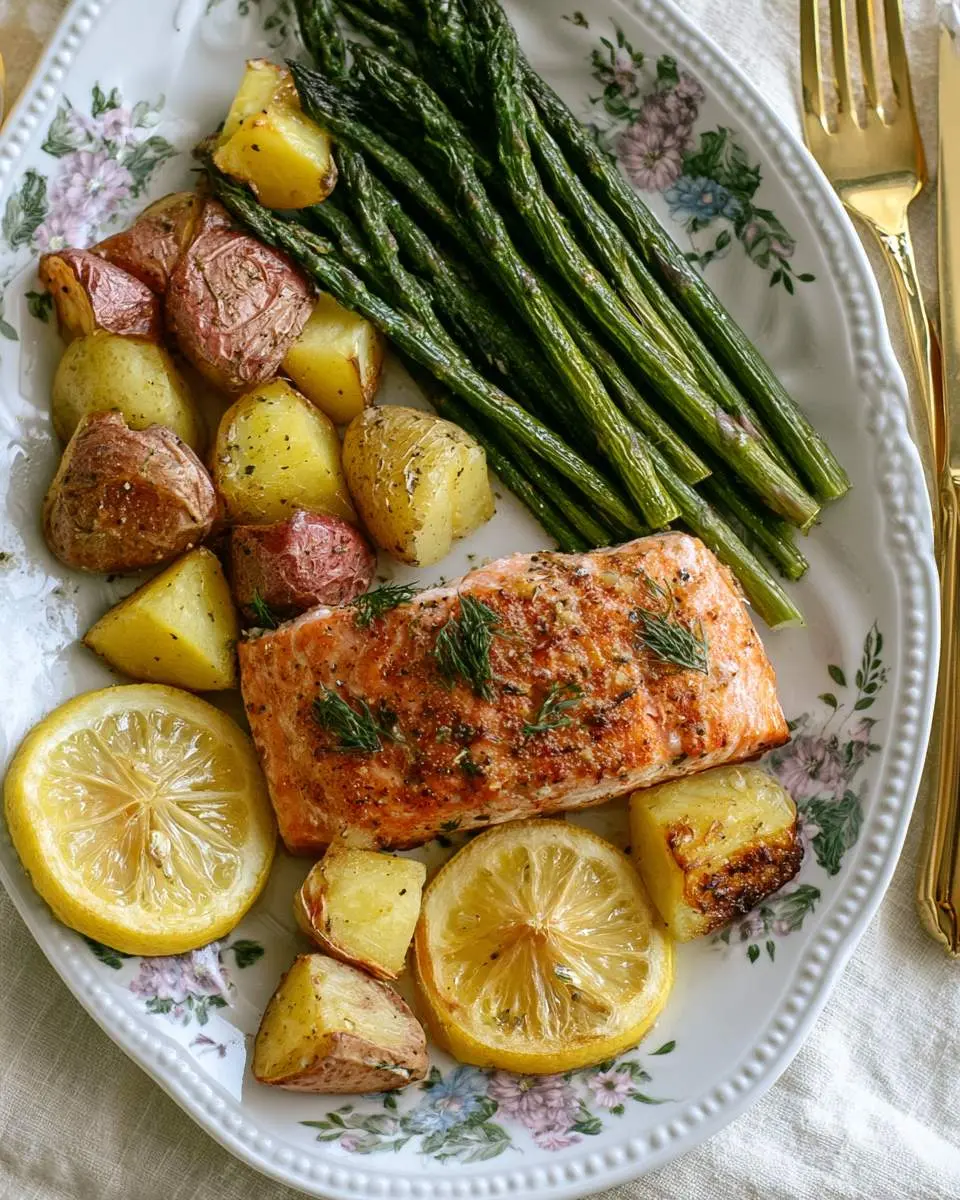
Salmon Potatoes and Asparagus Sheet Pan Dinner
Ingredients
Equipment
Method
Notes
Conclusion
This Salmon Potatoes and Asparagus Sheet Pan Dinner has earned its place in my permanent rotation because it respects my time without cutting corners on flavor. If you’re new to cooking fish, it’s forgiving. If you’re experienced, it’s reliable. For more salmon inspiration, my guide to baked salmon covers even more techniques. Now go preheat your oven.
Follow us on Social Media : Pinterest