
The first time I pulled a loaf of raspberry bread from my oven, the smell hit me before I even opened the door. Sweet and bright, with that unmistakable tang of summer berries that had started to burst under the heat. I stood there in my kitchen, holding a dish towel, wondering why I had waited so long to bake with raspberries this way.
My grandmother used to make a quick bread every Sunday morning, though hers was always blueberry or banana. I remember the way she’d slice it while it was still warm, butter melting into every crevice. When I found myself with a pint of raspberries threatening to turn, I thought of her. I wanted that same comfort, but with something unexpected. Something that would make her raise an eyebrow and then ask for a second slice.
This loaf became my answer. It’s become the recipe I reach for when I want to feel connected to those slow Sunday mornings, but with my own twist. If you’re someone who loves fruity quick breads, you might also enjoy my Fruity Pebbles Banana Bread. another unexpected combination that somehow works beautifully.
Why Raspberries and Buttermilk Change Everything
The magic of this loaf starts with two ingredients that don’t get enough credit. Fresh raspberries bring more than color. they have this incredible way of collapsing into jammy pockets that streak through every slice with tart ribbons. I toss them in a spoonful of flour first, which keeps them from sinking to the bottom like stones. Then there’s the buttermilk, which I started using after a failed attempt with regular milk left me with something flat and sad. The acidity wakes up the baking soda and gives raspberry bread that tender, almost velvety crumb that makes you close your eyes on the first bite. If you’re curious about other nutty, colorful loaves, my Pistachio Bread uses a similar technique for keeping everything light.

How to Make Raspberry Bread
I start by creaming butter and sugar until the mixture turns almost white and fluffy. this takes longer than you think, about four minutes, and the sound of the paddle against the bowl changes from a slapping noise to something softer, like a whisper. Eggs go in one at a time, and I always crack them into a separate bowl first after learning my lesson with a bad egg that ruined an entire batter. The dry ingredients get folded in gently, in three additions, alternating with the buttermilk. Here’s where I slow down. Overmixing is the enemy of a tender loaf, and I stop the moment the last streak of flour disappears. Then I fold in those floured raspberries with a rubber spatula, watching the batter turn pink in places, marble-swirled and promising. Into a greased loaf pan, and the oven does the rest. The top cracks exactly how I want it to, golden and slightly domed, around the fifty-minute mark. My kitchen fills with that berry-butter-vanilla perfume that makes my husband wander in asking how much longer. If you want to see how zucchini can play a similar role in keeping quick breads moist, check out my Blueberry Zucchini Bread.
What I Learned After Three Attempts
My first try was a disaster. I used frozen raspberries straight from the freezer and watched my batter turn lavender-gray, streaked with bleeding juice. Now I know. if frozen is all you have, don’t thaw them. Toss them in frozen, add two extra minutes to the bake time, and accept that your loaf will be more marbled than studded. The second mistake was overbaking. I waited for a completely clean toothpick and ended up with something dry by day two. Now I pull it when a few moist crumbs still cling to the tester. The third revelation came with the pan itself. A light-colored metal pan gave me a pale, soggy-bottomed loaf. My dark nonstick pan, lined with parchment with overhanging edges, creates that perfect caramelized crust and lets me lift the whole thing out without drama.
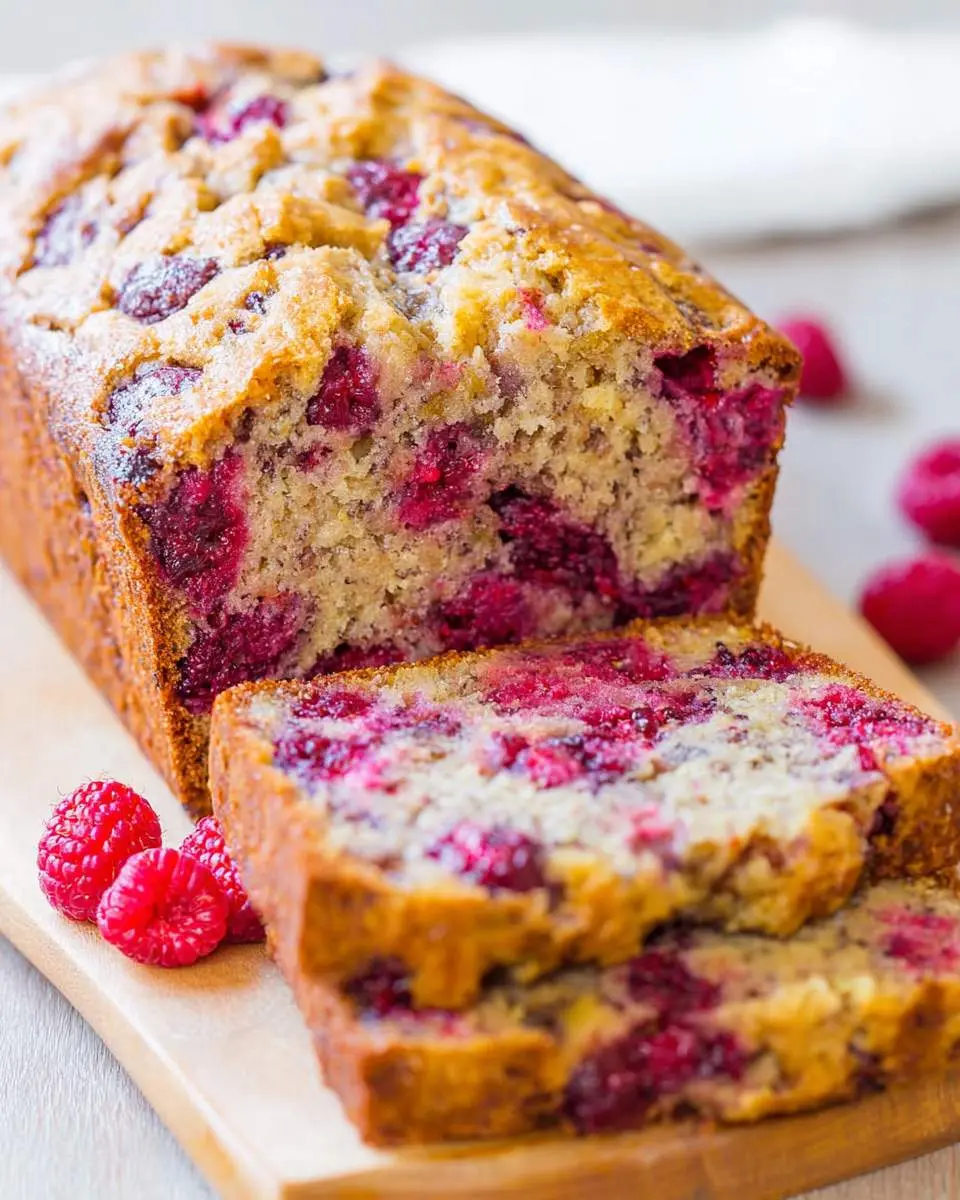
My Secret Trick: Before folding in the raspberries, I reserve a handful and press them gently into the top of the batter once it’s in the pan. They sink just enough during baking to create these jewel-like pockets on the surface, like the loaf is studded with precious stones. It makes every slice feel bakery-worthy.
Fresh raspberries will always give you the cleanest look, but don’t let perfect be the enemy of good. This raspberry bread is forgiving in ways that surprised me.
How to Store Raspberry Bread
- Room temperature: Wrap tightly in plastic wrap or store in an airtight container for up to 2 days. The moisture from the berries means it won’t last as long as plainer loaves.
- Refrigerator: Extend freshness to 5 days by refrigerating, though the texture firms up slightly. Let slices come to room temperature or warm gently before serving.
- Freezer: Wrap the whole cooled loaf or individual slices in plastic wrap, then foil, and freeze up to 3 months. Thaw overnight in the refrigerator.
- Reheating: A 10-second zap in the microwave revives a refrigerated slice beautifully. For frozen slices, 20-25 seconds does the trick.
Why This Loaf Earns Its Place in My Rotation
I’m not someone who tracks macros or counts antioxidants, but I do pay attention to how food makes me feel. This raspberry bread sits right in that sweet spot between treat and something I can justify with my morning coffee. The raspberries bring actual fruit. fiber, vitamin C, that bright acidity that wakes up your palate. while the portion of whole wheat flour I sometimes swap in for half the all-purpose adds staying power. It’s the kind of recipe that doesn’t demand perfection from me, which is maybe why I keep coming back to it. Some weeks I make it with all white flour and a sugary glaze. Other times I cut the sugar by a third and call it breakfast. Both versions work. Both versions disappear.
FAQs
Can I use frozen raspberries instead of fresh?
Yes, absolutely. Do not thaw them first. toss the frozen berries directly into your floured mixture and fold them in quickly. Your batter will turn more pink and marbled, and you may need to add 2-3 extra minutes to the baking time. The flavor remains excellent, though the visual is more rustic than jewel-toned.
Why did my raspberries sink to the bottom?
This happens when berries are too wet or too heavy for the batter. Toss them thoroughly in flour before folding in, and make sure your batter has the right consistency. thick enough to suspend them. If your batter seems thin, a tablespoon or two of extra flour helps create the structure needed to hold everything in place.
Can I make this into muffins instead?
Divide the batter among a 12-cup muffin tin lined with paper cups, filling each about three-quarters full. Bake at the same temperature for 18-22 minutes, rotating the pan halfway through. The raspberry bread recipe adapts beautifully to muffins, and they actually freeze even better than the loaf for grab-and-go mornings.
What can I substitute for buttermilk?
Stir one tablespoon of lemon juice or white vinegar into one cup of whole milk and let it sit for five minutes. The acidity is crucial for activating the leavening and creating that tender crumb. Plain milk won’t give you the same result. your loaf will be denser and less flavorful.

Raspberry Bread
Ingredients
Equipment
Method
Notes
Conclusion
This raspberry bread has earned its place in my recipe box, written on a stained index card in my own handwriting. It’s the loaf I make when I want my kitchen to smell like summer, when I need something reliable that still feels special. I hope it finds a place in your rotation too. For another berry-forward option with a completely different personality, try my Cranberry Walnut Bread. tart, nutty, and perfect for cooler months.
Follow us on Social Media : Pinterest