
I still remember the first time I pulled a golden slab of focaccia with tomatoes from my oven. The smell of warm olive oil and blistered cherry tomatoes hit me before I even opened the door, and I knew immediately this would become something I made again and again.
My grandmother never measured anything. She’d press her thumb into soft dough, creating those signature dimples, then nestle halved tomatoes into each one like they belonged there. I watched her do this every Sunday morning, and now my kitchen fills with that same comfort.
This version honors her memory while fitting perfectly into my busy week. If you’re craving something similar, my garlic herb flatbread uses the same no-knead technique I love.
What You Need to Make This Recipe
The olive oil here isn’t just a fat—it’s a flavor foundation that soaks into every dimple and creates that crackly, golden crust I can’t stop picking at. I use cherry tomatoes specifically because they hold their shape and burst just enough to release sweet juice without turning mushy. Fresh rosemary is non-negotiable for me; the dried stuff tastes like pine needles in comparison. For another bread that celebrates simple ingredients, try my blueberry pancake bread—it shares that same philosophy of letting quality components shine.

How to Make Focaccia with Tomatoes
I start the night before, mixing flour, water, yeast, and salt into a shaggy, sticky mess that looks all wrong. The magic happens while I sleep—slow fermentation develops flavor I could never rush. By morning, the dough has doubled and smells faintly tangy, like good bread should.
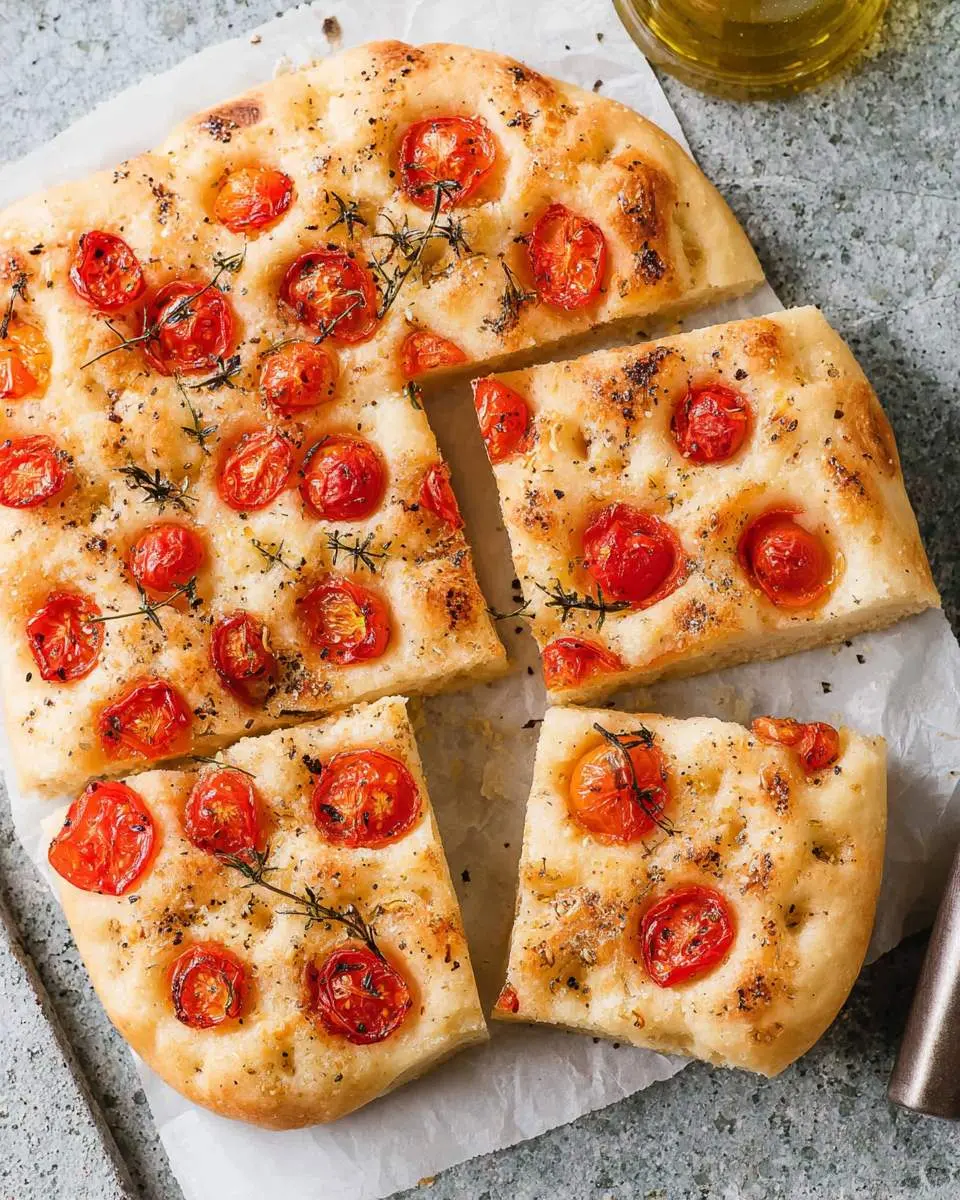
I pour it into an oiled pan and let it rest again, resisting the urge to touch it. The real moment comes when I oil my fingertips and press straight down, creating those characteristic divots that will catch pools of olive oil. The tomatoes go in cut-side up, nestled deep so they don’t roll off during baking.
The oven needs to be screaming hot. I listen for the sizzle when the pan slides onto the stone—that sound tells me the bottom crust is setting immediately. Twenty minutes later, the edges pull away from the pan and the tomatoes have collapsed into jammy pockets. If you enjoy this process, my olive rosemary focaccia uses identical techniques with a different flavor profile.
Pro Tips
Don’t rush the cold ferment. That overnight rest in the refrigerator isn’t just convenient timing—it allows enzymes to slowly break down starches into sugars, giving you deeper flavor and better browning than any same-day dough.
Press tomatoes deeply. I learned this the hard way when half mine rolled into the gap between oven racks. Nestle them firmly into the dough so they steam in place rather than sliding around.
Save some oil for after baking. A final drizzle of fresh extra-virgin olive oil right when the focaccia with tomatoes comes out adds brightness that cooking oil loses.
My Secret Trick: I place a small oven-safe dish of water on the rack below the bread for the first ten minutes. The steam keeps the crust soft just long enough for the interior to fully expand, then evaporates to let it crisp.

How to Store Focaccia with Tomatoes
- Room temperature: Wrap tightly in foil or place in airtight container for up to 2 days. The tomatoes make it more perishable than plain focaccia.
- Refrigerator: Not recommended—the cold accelerates staling and turns the crust leathery within hours.
- Freezer: Slice into portions, wrap individually in plastic then foil, and freeze up to 1 month. Thaw at room temperature unwrapped to prevent sogginess.
- Reheating: 375°F oven for 8-10 minutes directly on the rack restores the crackly exterior. Microwave only if you enjoy chewing leather.
Nutritional Benefits
This focaccia with tomatoes delivers more than comfort. The slow fermentation breaks down gluten and creates prebiotic compounds that support gut health, while the tomatoes provide lycopene that becomes more bioavailable through cooking. I don’t bake this for the nutrition label—I bake it because it makes me happy—but I appreciate that the ingredients I love happen to love me back.

FAQs
Can I use dried tomatoes instead of fresh?
Rehydrated sun-dried tomatoes work beautifully, though they won’t burst and release juice like fresh ones. I soak mine in warm water for twenty minutes first, then pat very dry to prevent soggy spots in the dough.
Why is my focaccia dense instead of airy?
Underproofing is almost always the culprit. That second rise in the pan should look visibly puffy and jiggle slightly when you shake it. Rushing this step traps gas that would otherwise create those coveted open crumb holes.
Can I make this without a stand mixer?
Absolutely—my grandmother certainly did. Use a wooden spoon and accept that your dough will look rough and shaggy. The long fermentation does the kneading work for you, developing gluten without any elbow grease required.
What pan works best for focaccia with tomatoes?
A quarter sheet pan or 9×13 inch baking dish both work well. I prefer metal for the crispiest bottom crust, but glass is fine if you reduce the temperature by 25 degrees and extend baking time slightly.
Focaccia with Tomatoes
Ingredients
Equipment
Method
Notes
Conclusion
I hope this focaccia with tomatoes finds its way into your kitchen soon. There’s something deeply satisfying about transforming flour, water, and patience into bread that makes people linger at the table. For another tomato-forward bake, my tomato basil flatbread uses similar flavors in a quicker format. Follow us on Social Media : Pinterest