
The first time I opened a jar of homemade pickled cabbage, the smell hit me like a memory I didn’t know I had. Sharp and alive, it reminded me of my grandmother’s cellar, where mason jars lined wooden shelves like stained glass windows. That tang is what drew me to develop this vegan pickled red cabbage. a recipe that’s become my refrigerator’s most reliable resident.
I started making this during a gray February when I craved color more than anything. The cabbage bled fuchsia into the brine within hours, and suddenly my kitchen felt like spring had arrived early. My partner walked in and asked what smelled so “exciting,” which is not a word he typically uses for vegetables.
What I love most is how it bridges worlds. It’s fermented enough to feel alive, but quick enough for impatient people like me. If you want to explore longer fermentation, my fermented cabbage guide goes deeper into that traditional territory.
Why Red Cabbage Beats Green for Pickling
The anthocyanins in red cabbage do more than paint your brine gorgeous. they act as natural pH indicators, shifting color based on acidity. Apple cider vinegar keeps things bright magenta, while white vinegar turns it more blue-purple. I use raw sugar instead of refined because it dissolves cleaner and leaves no murky residue. The salt matters enormously here; I reach for fine sea salt that disappears completely into the hot liquid. For another cabbage-forward dish, these cabbage dumplings have become my favorite way to use the core scraps.

How to Make Vegan Pickled Red Cabbage
Start by slicing the cabbage against its grain. I use a mandoline when I want paper-thin ribbons that almost glow, or a sharp chef’s knife when I’m feeling rustic. The salt draw is crucial: massage it in and wait twenty minutes while the cabbage weeps dramatically into your bowl. You’ll hear it before you see it, that soft crunch giving way to submission.
The brine comes together in five minutes on the stove. I add coriander and mustard seeds whole, watching them dance in the simmering vinegar before the sugar melts everything into harmony. Pouring hot liquid over cold cabbage creates the most satisfying sizzle, and that first whiff of spice-infused steam always makes me hungry.
I pack everything into jars while still warm, pressing out air pockets with the back of a spoon. The cabbage will shrink considerably overnight, so don’t worry about overfilling initially. For pickle lovers who want heat, my bread and butter jalapeño pickles use the same technique with spectacular results.
What I Learned After Three Batches
My first attempt went soft and sad because I salted too long. Forty minutes maximum for thin slices, twenty for thick. the cabbage should bend without breaking. Over-salting draws out so much moisture that the final pickle loses its structural integrity.
Room temperature resting before refrigeration makes a noticeable difference. Those six hours at room temperature kickstart fermentation in a way that cold storage alone cannot replicate. The flavor develops more complexity, more funk, more personality.
Don’t discard the brine when the cabbage runs low. It’s spectacular in salad dressings, splashed into bean soups, or whisked into mayonnaise for a pink-hued sandwich spread.
My Secret Trick: Add a single dried bay leaf to each jar before pouring the hot brine. It releases subtle pine and floral notes that make people ask what your “secret ingredient” is without being able to identify it.
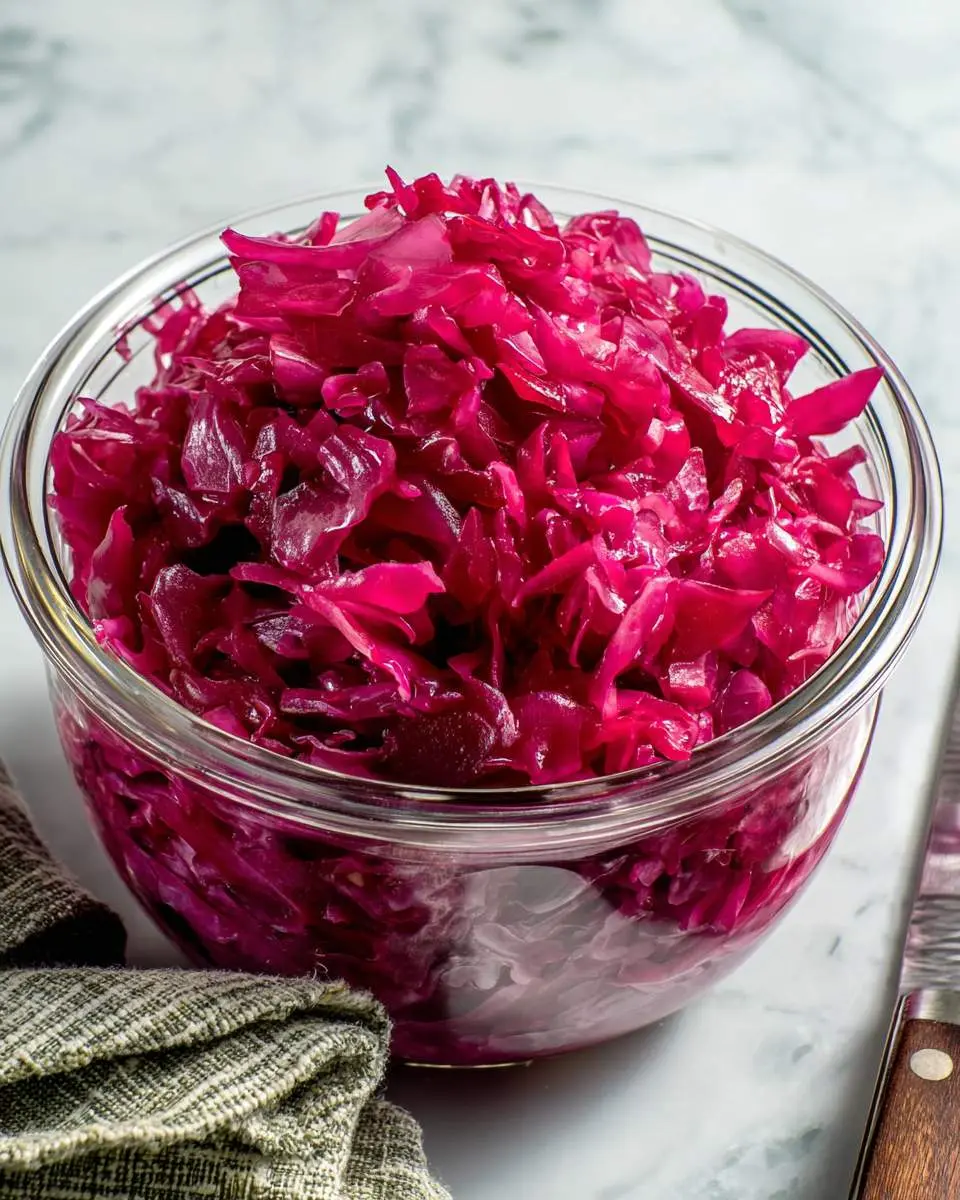
How to Store Vegan Pickled Red Cabbage
- Refrigerate in glass jars with tight lids for up to 3 weeks; the flavor actually improves after day 3
- Keep submerged under brine at all times; use a clean spoon to press cabbage down if needed
- Do not freeze; the texture becomes unpleasantly spongy upon thawing
- Store at 38°F to 40°F for optimal fermentation control
- If mold appears on the surface, discard immediately; do not skim and continue
Why This Tangy Staple Earns Its Fridge Real Estate
Red cabbage delivers more vitamin C per cup than oranges, and the fermentation process creates beneficial compounds that support digestive health. The raw preparation means none of that goodness gets cooked away. I reach for this vegan pickled red cabbage when I need something crunchy, something bright, something that makes ordinary meals feel intentional. It transforms leftover rice bowls into craveable lunches and turns sad desk salads into something I actually look forward to eating.

FAQs
How long until I can eat the pickled cabbage?
Technically it’s safe after the brine cools, but patience rewards you here. I find day three marks the sweet spot where tang and crunch balance perfectly. By day seven, fermentation deepens the flavor into something more complex and slightly effervescent.
Why did my brine turn blue instead of pink?
Your vinegar pH was likely higher than expected. Red cabbage anthocyanins react to acidity. more acid equals pinker color, less acid shifts toward blue. Adding a splash more apple cider vinegar will restore that vibrant magenta you were hoping for.
Can I reduce the sugar in this recipe?
You can, but the pickle loses its traditional balance. The sugar doesn’t make it sweet; it rounds the harsh edges of vinegar and salt. I’ve successfully reduced by one-third without disaster, though the final result tastes sharper and less complete.
What dishes pair best with this pickle?
Anything rich or fatty needs this counterpoint. I pile it on vegan pulled pork sandwiches, tuck it into grain bowls, and serve it alongside fried anything. For a fresh application, try it in these raw vegan tacos where crunch and acidity shine brightest.

Vegan Pickled Red Cabbage
Ingredients
Equipment
Method
Notes
Conclusion
This vegan pickled red cabbage has outlasted every food trend in my kitchen because it solves real problems. It keeps for weeks, improves with age, and makes everything around it taste better. Start a jar this weekend and watch how quickly it disappears. For more plant-forward inspiration, explore these raw vegan tacos that showcase similar bright, living flavors.
Follow us on Social Media : Pinterest