
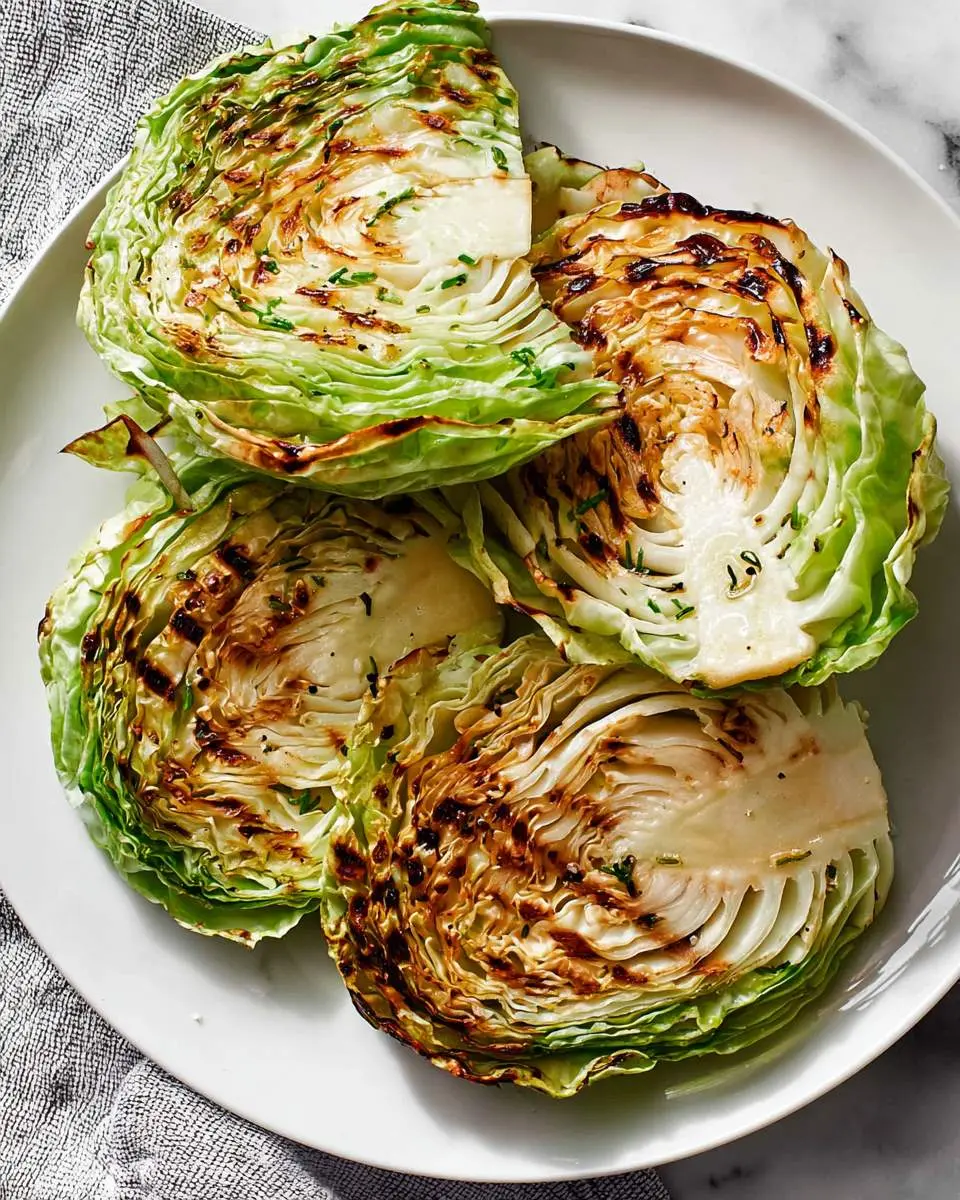
The first time I pulled a tray of roasted cabbage from the oven, I stood there staring at it like I’d discovered something I wasn’t supposed to know. The edges had caramelized into this deep, almost burnt umber, and the centers were creamy and sweet in a way that made me forget I was eating a vegetable I’d spent decades ignoring. That night, cabbage steaks became my quiet obsession.
My grandmother used to boil cabbage until it surrendered completely, turning the kitchen into that unmistakable sulfurous cloud that haunted my childhood. I never blamed her. that was just how people cooked back then. But standing in my own kitchen years later, knife in hand, I wondered what would happen if I treated cabbage with the same respect I’d give a thick-cut ribeye. The answer changed everything about how I cook vegetables now.
If you are curious about other ways to transform humble cabbage into something extraordinary, I have been experimenting with cabbage lasagna lately, layering roasted leaves with ricotta and marinara until it barely resembles its former self. But these steaks remain my weeknight staple.
The Ingredients That Make Cabbage Steaks Work
A tight head of green cabbage is non-negotiable here. the loose-leaf varieties will fall apart before they ever get a chance to brown. I look for one that feels heavy for its size, with leaves that squeak slightly when I press them. The olive oil matters more than you might think; I use a robust extra-virgin that can stand up to high heat without turning bitter. And please, do not skip the smoked paprika. It bridges the gap between vegetable and something you would actually crave at midnight. If you enjoy roasted vegetables as much as I do, you might also love this roasted cauliflower from the oven that develops similarly crispy edges.

How to Make Cabbage Steaks
I slice my cabbage into one-inch rounds through the core, keeping those outer leaves attached like a ruffled collar. The core holds everything together. without it, you are left with loose leaves that scorch before they soften. I brush both sides generously with oil, then season aggressively; cabbage can handle salt in a way that still surprises me.
Into a 425-degree oven they go, and here is where patience becomes its own ingredient. The first fifteen minutes are quiet, almost boring. Then the sizzling starts, and the smell shifts from raw and green to nutty and complex. I flip them once, watching for that moment when the edges turn lacquered and the centers yield to a gentle press. The best ones develop these crackly, almost chip-like edges that I fight my husband for. For another cabbage transformation that uses the whole head differently, try these cabbage dumplings I developed last fall.
What I Learned Making These Three Times
Do not crowd the pan. I learned this the hard way when my first batch steamed in their own moisture and emerged limp and sad. Each steak needs breathing room for the Maillard reaction to work its magic.
Slice from pole to pole, not across the equator. The core runs through the center, and cutting with it rather than against it keeps your steaks intact.
Season underneath, not just on top. Oil and spices on the pan itself create a flavorful foundation that seasons the bottom while the top roasts.
My Secret Trick: I save the outer leaves that fall off during slicing, chop them roughly, and scatter them around the steaks on the pan. They become these crispy, irregular chips that I snack on while plating dinner.
How to Store Cabbage Steaks
- Refrigerate in an airtight container for up to 4 days; the edges will soften but the flavor deepens
- Layer between parchment paper to prevent sticking
- Freeze not recommended; the texture becomes waterlogged and unpleasant upon thawing
- Reheat in a 400-degree oven for 8-10 minutes to recrisp edges; the microwave produces sad, soggy results
Why This Recipe Fits a Healthy Routine
Cabbage steaks deliver serious fiber and vitamin C without the heaviness of meat-centered meals, and the high-heat roasting actually concentrates the glucosinolates that make cruciferous vegetables worth eating. I find one hefty steak with a poached egg on top keeps me satisfied through the afternoon without the crash I get from heavier lunches. The minimal oil keeps it light while still allowing for that essential caramelization.

FAQs
Why do my cabbage steaks fall apart when I flip them?
You are likely slicing too thin or missing the core entirely. The core is the backbone that holds everything together. Cut one-inch steaks and keep that tough center intact. it softens beautifully in the oven and prevents your rounds from disintegrating into a pile of leaves.
Can I make these in an air fryer instead?
Absolutely, though you will work in batches. Set your air fryer to 375 degrees and cook for 12-14 minutes, flipping halfway. The circulating air creates even crisper edges than my oven method, though you sacrifice some of the creamy interior texture.
What sauces pair best with cabbage steaks?
I am partial to a lemon-tahini drizzle or a simple garlic yogurt. The nutty, acidic elements cut through the natural sweetness that develops during roasting. My husband prefers them with nothing but flaky salt and a squeeze of lime.
Can I use red cabbage instead of green?
You can, though the texture differs slightly. red cabbage is denser and takes a few minutes longer. The color also bleeds dramatically, turning everything on your plate a vivid purple that some find charming and others alarming.

Cabbage Steaks
Ingredients
Equipment
Method
Notes
Conclusion
I hope you give cabbage steaks a chance to surprise you the way they surprised me. Start with a good head, a hot oven, and low expectations. then watch something ordinary become unforgettable. If you are hungry for more vegetable-forward mains, these grilled cauliflower steaks carry that same meaty satisfaction.
Follow us on Social Media : Pinterest