
The steam rising from my oven last Tuesday smelled like Sunday dinners at my grandmother’s house, except something was different. Lighter. Brighter. I pulled out a pan of cabbage lasagna and my husband actually stopped mid-email to ask what I was making. That never happens with my usual roasted vegetables.
I’ve been chasing that perfect comfort food feeling without the heavy aftermath for months. My body craves lasagna when the weather turns, but my energy levels don’t always agree with traditional pasta-heavy versions. This dish came from one of those experimental Wednesdays where I stared at a head of cabbage and wondered what would happen if I treated it like noodles.
The result surprised me so much I made it again three days later. If you enjoy vegetable-forward cooking, you might also love my roasted cauliflower method that uses similar techniques.
Why Cabbage Deserves the Spotlight Here
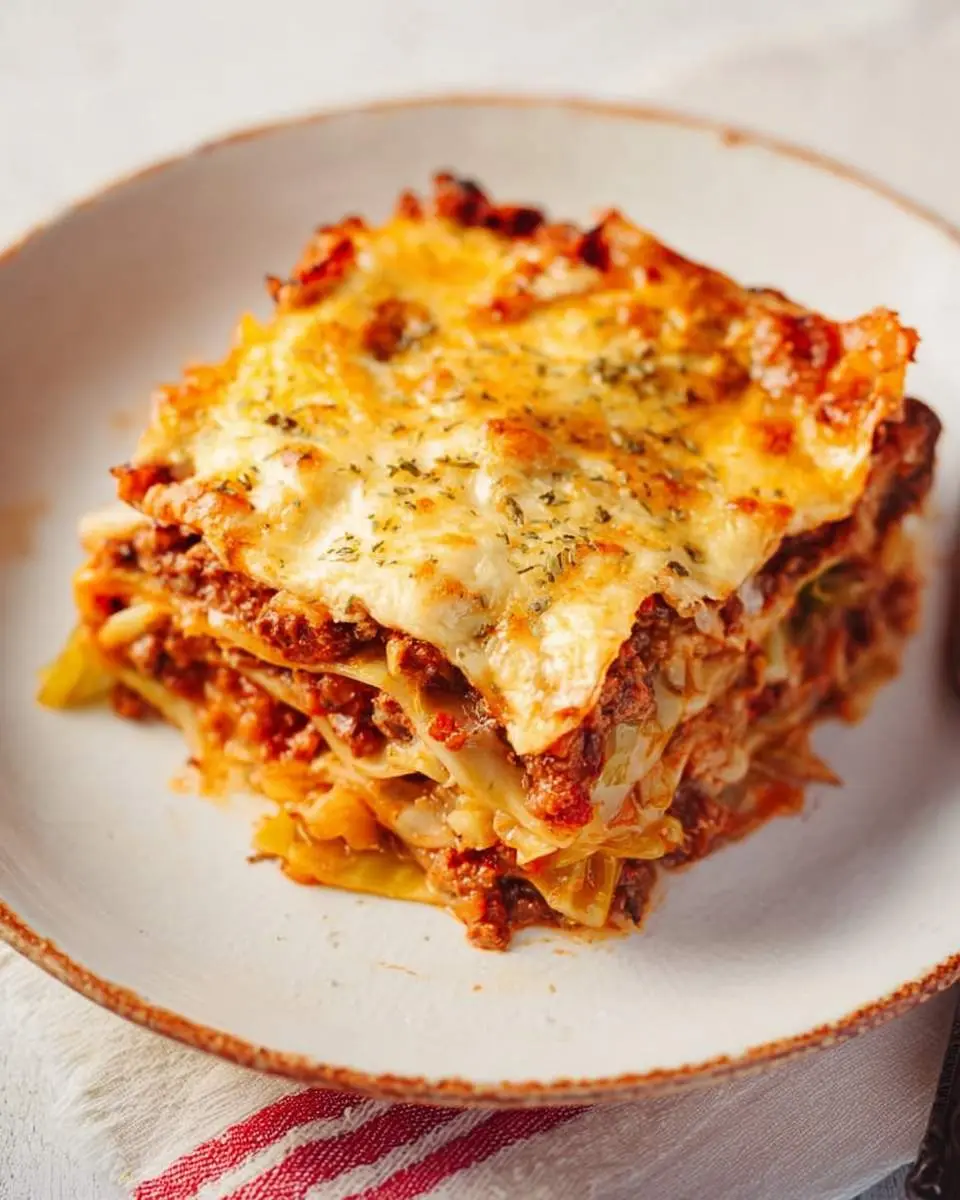
The cabbage in this cabbage lasagna does something remarkable that pasta simply cannot. It softens into silky, noodle-like layers that hold sauce beautifully while adding a subtle sweetness that deepens as it bakes. I use savoy cabbage when I can find it, those crinkled leaves separating naturally into perfect sheets, but regular green cabbage works just as well with a quick blanch. The ricotta mixture needs real Parmigiano-Reggiano, not the pre-grated stuff in green cans, because that nutty sharpness cuts through the cabbage’s earthiness. For another recipe where vegetables replace traditional starches brilliantly, try these balsamic garlic mushroom skewers.
How to Make Cabbage Lasagna
Start by separating your cabbage leaves carefully, keeping them as intact as possible. The kitchen fills with that distinctive sulfurous sweetness as you blanch them for just two minutes, then shock in ice water so they stay vibrant green. Pat them completely dry, this matters more than you’d think, wet leaves make soggy lasagna. Layering feels meditative once you find your rhythm. Sauce, cabbage, ricotta mixture, repeat. The oven does the real work, transforming those crisp leaves into something that genuinely resembles pasta. Around the forty-minute mark, your house will smell like an Italian grandmother moved in. I learned to let it rest for fifteen minutes before cutting, no matter how hungry everyone claims to be. If you enjoy vegetable-based lasagna variations, my eggplant lasagna uses similar patience-rewarding techniques.
What I Learned After Three Attempts
My first cabbage lasagna fell apart completely because I rushed the cooling. The second needed more salt in the cabbage itself, not just the sauce. Here is what actually matters. Salt your cabbage leaves lightly after blanching and let them drain on towels for ten minutes, this draws out excess moisture that would otherwise pool at the bottom of your pan. Use a slightly thicker sauce than you would for pasta lasagna, the cabbage releases more liquid than noodles do. Grate your own cheese, pre-shredded varieties contain anti-caking agents that prevent proper melting. My Secret Trick: Save the tough outer cabbage leaves, chop them finely, and sauté them into your sauce for extra depth without anyone detecting the secret vegetable boost.
How to Store Cabbage Lasagna
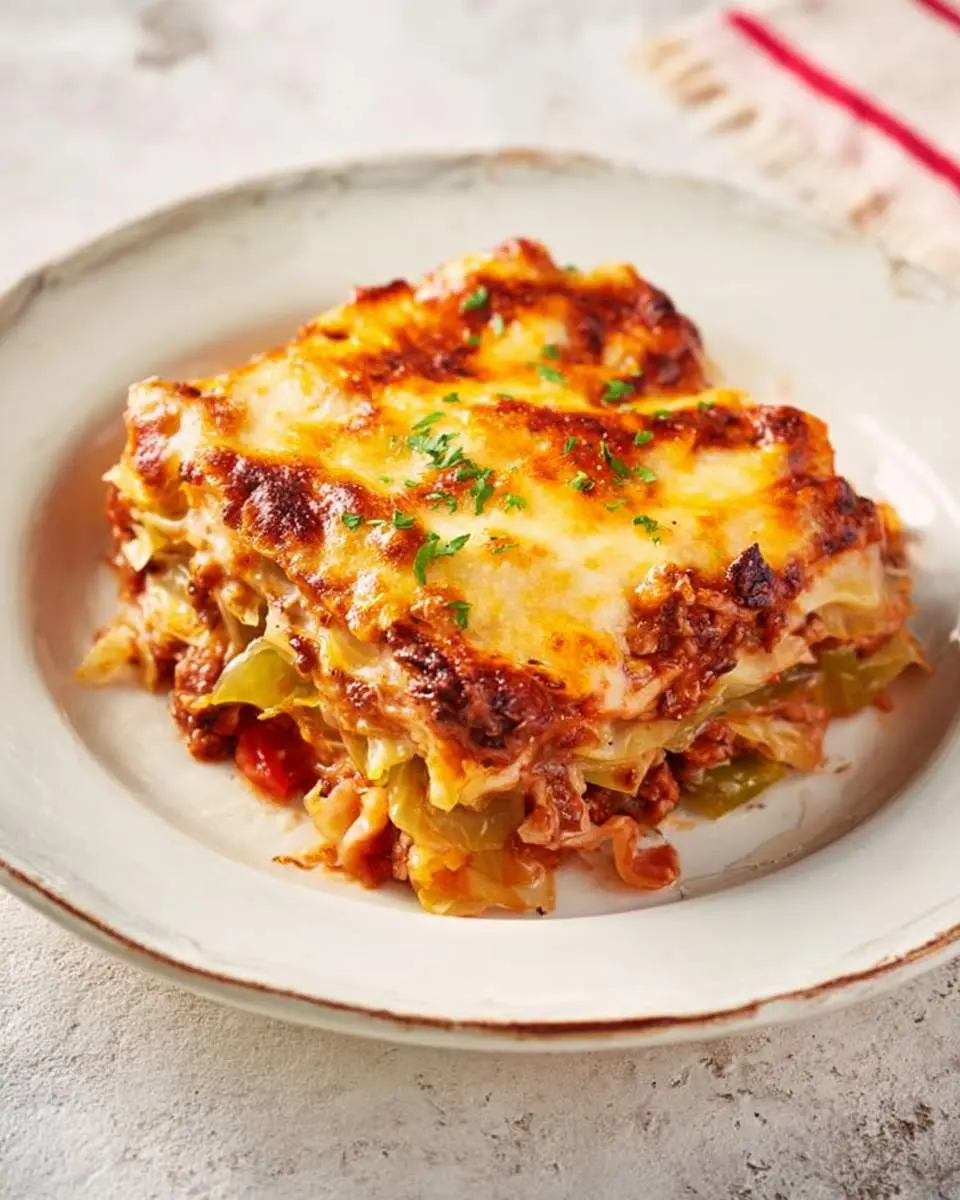
- Refrigerate covered tightly with foil or in an airtight container for up to 4 days
- Freeze individual portions wrapped in plastic then foil for up to 3 months, thaw overnight in refrigerator before reheating
- Reheat covered at 350°F for 20-25 minutes until internal temperature reaches 165°F
- Individual slices reheat well in a covered skillet over medium-low heat with a splash of water to create steam
Why This Dish Belongs in Your Regular Rotation
This cabbage lasagna delivers genuine nutrition without tasting like a compromise. One serving provides roughly half your daily vitamin C from that humble head of cabbage, plus significant fiber that keeps you satisfied longer than traditional versions. The calcium from the ricotta and mozzarella supports bone health, particularly valuable if you are reducing meat intake. I notice my energy stays steadier after eating this compared to pasta-heavy meals, no afternoon slump demanding coffee.
FAQs
Does the cabbage taste strong or smell up the kitchen?
The blanching step mellows cabbage’s sharpness significantly, and baking transforms it into something mild and sweet. Your kitchen will smell like cooking vegetables briefly, but nothing overpowering lingers. My neighbor who claims to hate cabbage ate two servings without guessing the main ingredient.
Can I use red cabbage instead of green?
Technically yes, though your lasagna will turn an alarming purple-pink color that some find unappetizing. The flavor works fine, but I stick with green or savoy for visual appeal. If color does not bother you, red cabbage offers even more antioxidants.
What if my cabbage leaves tear while blanching?
Small tears do not matter, layer strategically and no one notices. For larger damaged pieces, patch them together like broken lasagna noodles. The cheese and sauce bind everything together during baking, imperfections become invisible.
Is this recipe gluten-free?
Completely, assuming your sauce and cheese contain no hidden gluten ingredients. Always check labels on pre-made sauces. I make my own simple marinara to control ingredients, but several certified gluten-free jarred options work well too.
Cabbage Lasagna
Ingredients
Equipment
Method
Notes
Conclusion
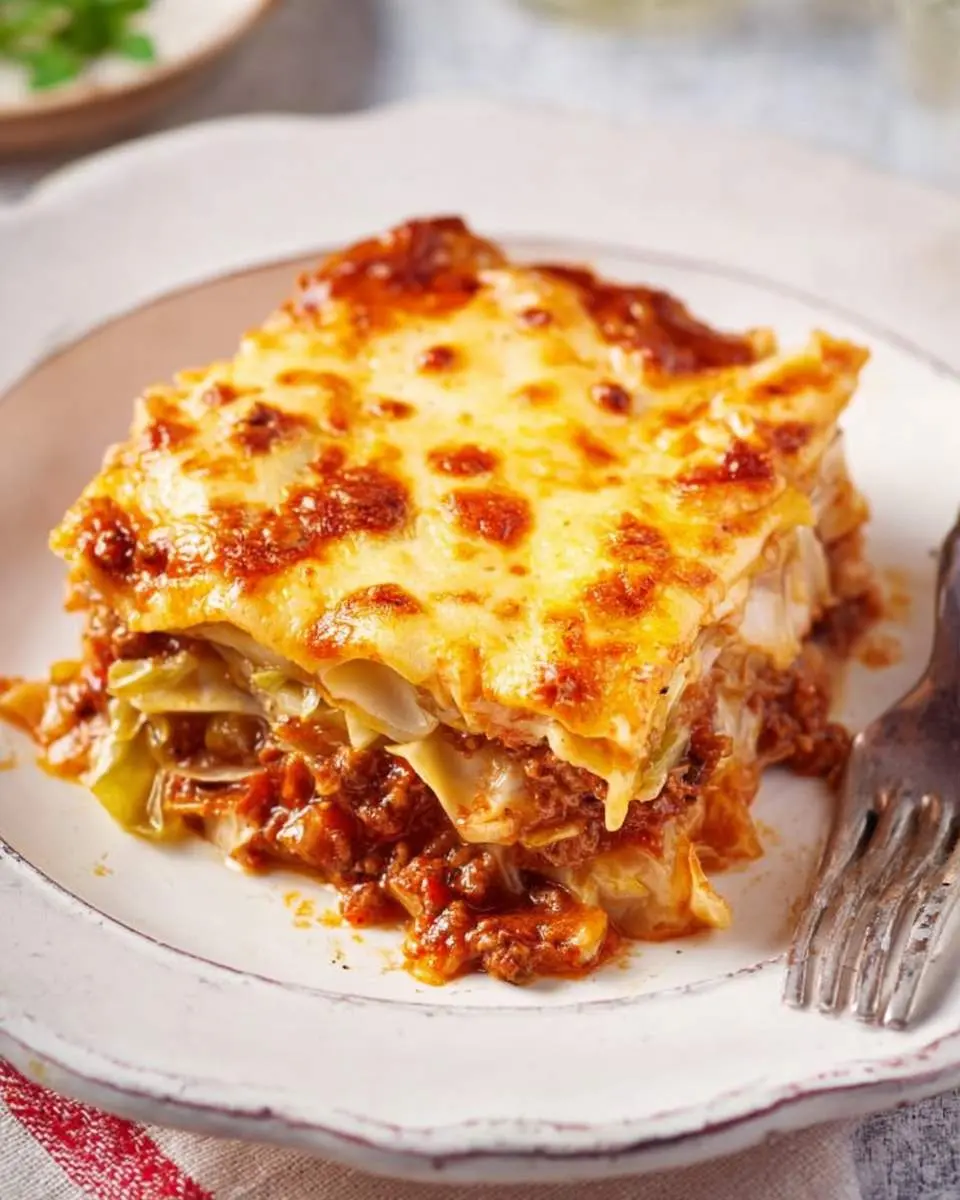
This cabbage lasagna has earned permanent status in my winter recipe collection, the kind of dish I crave rather than merely tolerate. It proves that comfort food can nourish without weighing you down. For another creative cabbage application, try my cabbage dumplings that use similar techniques. Make it once, and I suspect you will understand exactly why I needed to share it.
Follow us on Social Media : Pinterest