
The first time I smelled dark soy sauce hitting a hot wok, I knew my weeknight dinner game had changed forever. That deep, caramelized aroma wrapped around thick Shanghai noodles and sizzling chicken became my new obsession. Shanghai Stir-Fried Noodles With Chicken isn’t just another stir-fry for me. it’s the dish that convinced my kids to abandon their boxed mac and cheese habit without a single complaint.
My grandmother never made this exact dish, but she taught me that noodles carry memory. I remember standing on a stool beside her, watching her hands move faster than my eyes could follow. When I finally nailed the sauce balance on my third attempt at this recipe, I felt that same pride she must have felt. The kitchen filled with that familiar comfort, and I knew I had found something worth sharing.
This recipe came together after too many disappointing takeout orders that arrived soggy and cold. I wanted that restaurant wok hei flavor without the restaurant price tag. If you are craving more comfort food inspiration, my Louisiana Chicken Pasta Bake brings that same satisfaction with a completely different personality.
Why These Specific Ingredients Matter
The magic of Shanghai Stir-Fried Noodles With Chicken lives in three non-negotiable components. Thick Shanghai noodles. sometimes labeled as cu chao mian. hold their chew even under aggressive heat, unlike thinner varieties that turn to mush. Dark soy sauce provides that signature mahogany color and subtle sweetness; regular soy sauce simply cannot replicate the depth. And chicken thighs, not breasts, stay juicy through the high-heat chaos of wok cooking where lean meat would seize up and dry out. I learned this the hard way after my first attempt with chicken breast turned disappointingly stringy. For another vegetable-forward noodle option, my Sausage and Peppers with Zucchini Noodles swaps in spiralized vegetables for a lighter take.
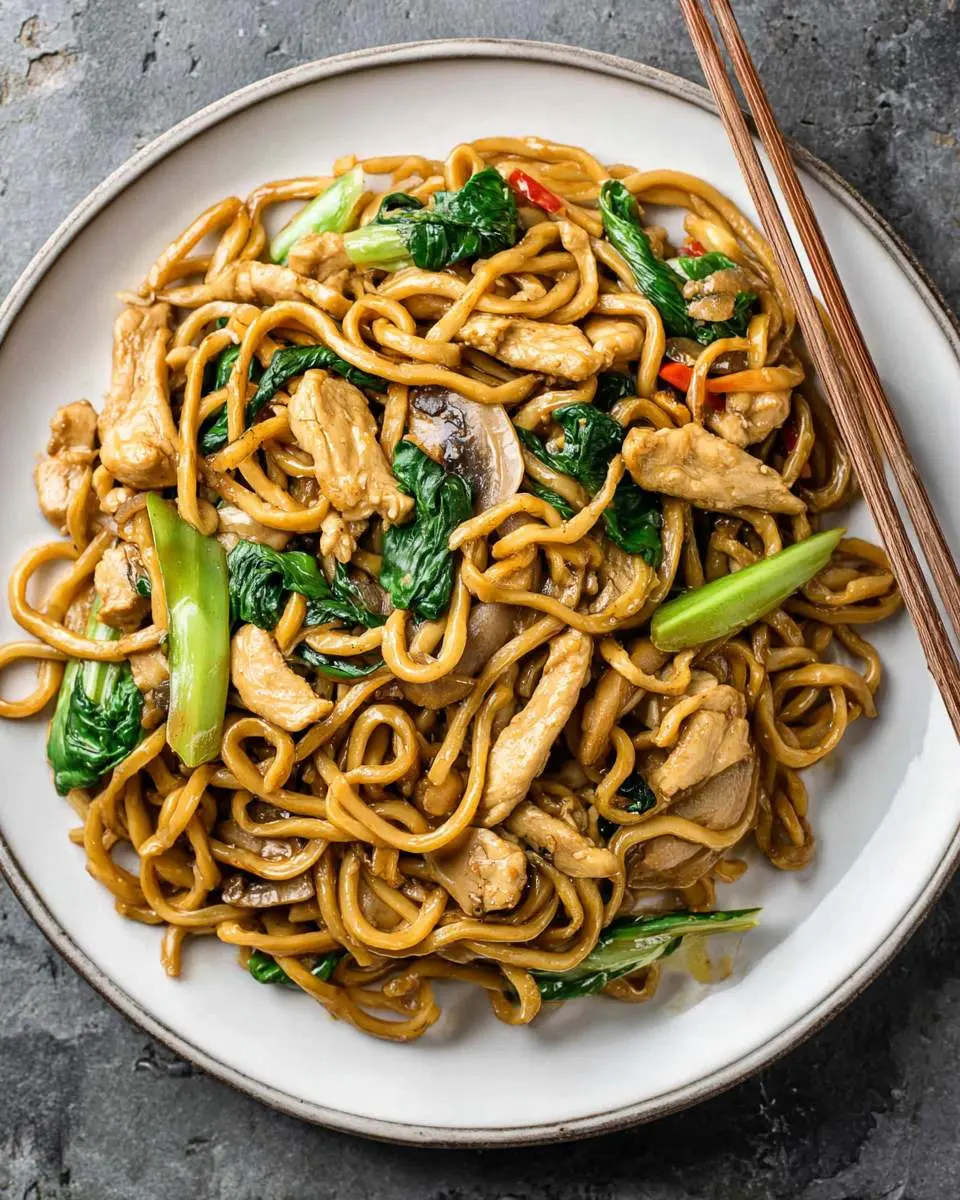
How to Make Shanghai Stir-Fried Noodles With Chicken
The rhythm of this dish matters more than perfect technique. I start by marinating sliced chicken thighs while my water comes to a boil. just fifteen minutes in soy sauce, Shaoxing wine, and cornstarch transforms the meat. The cornstarch especially creates that silky coating you recognize from good Chinese restaurants. Once the noodles hit the water, I heat my wok until it barely passes the water droplet test. those beads should evaporate in two seconds flat.
Chicken hits first, spreading into a single layer so each piece develops fond on the bottom. That sizzle tells you everything; if it’s quiet, your pan is too cold. I push the chicken aside, add aromatics, then the drained noodles go in still slightly wet. that steam helps everything separate without oil overload. The sauce goes in last, tossed constantly until each strand wears that glossy, dark coat. The smell at this moment is intoxicating: caramelized soy, wok smoke, and garlic merging into something greater than its parts. If you want to master the plain noodle foundation first, my Plain Lo Mein Noodles Recipe breaks down the technique without distractions.
What I Learned Making This Three Times
My first attempt taught me that Shanghai noodles need space. crowding creates steaming instead of searing. I now work in batches without shame, even when hungry. The second revelation was sauce timing: adding it too early burns the sugars, too late leaves everything pale and under-seasoned. I wait until I see wisps of smoke rising from the noodles themselves.
Cold noodles straight from the fridge are your enemy here. Room temperature or even slightly warmed noodles hit the wok ready to absorb flavor instead of dropping the pan temperature. This single adjustment transformed my results more than any equipment upgrade.
My Secret Trick: I reserve a quarter cup of the starchy noodle cooking water and splash it in during the final toss. The starch emulsifies with the oil and soy sauce, creating a clingy, restaurant-quality coating that would otherwise require excessive oil. I discovered this accidentally when my sauce looked broken and desperate measures saved dinner.
Shanghai Stir-Fried Noodles With Chicken rewards patience with the heat. A screaming hot wok and quick hands beat expensive equipment every time.
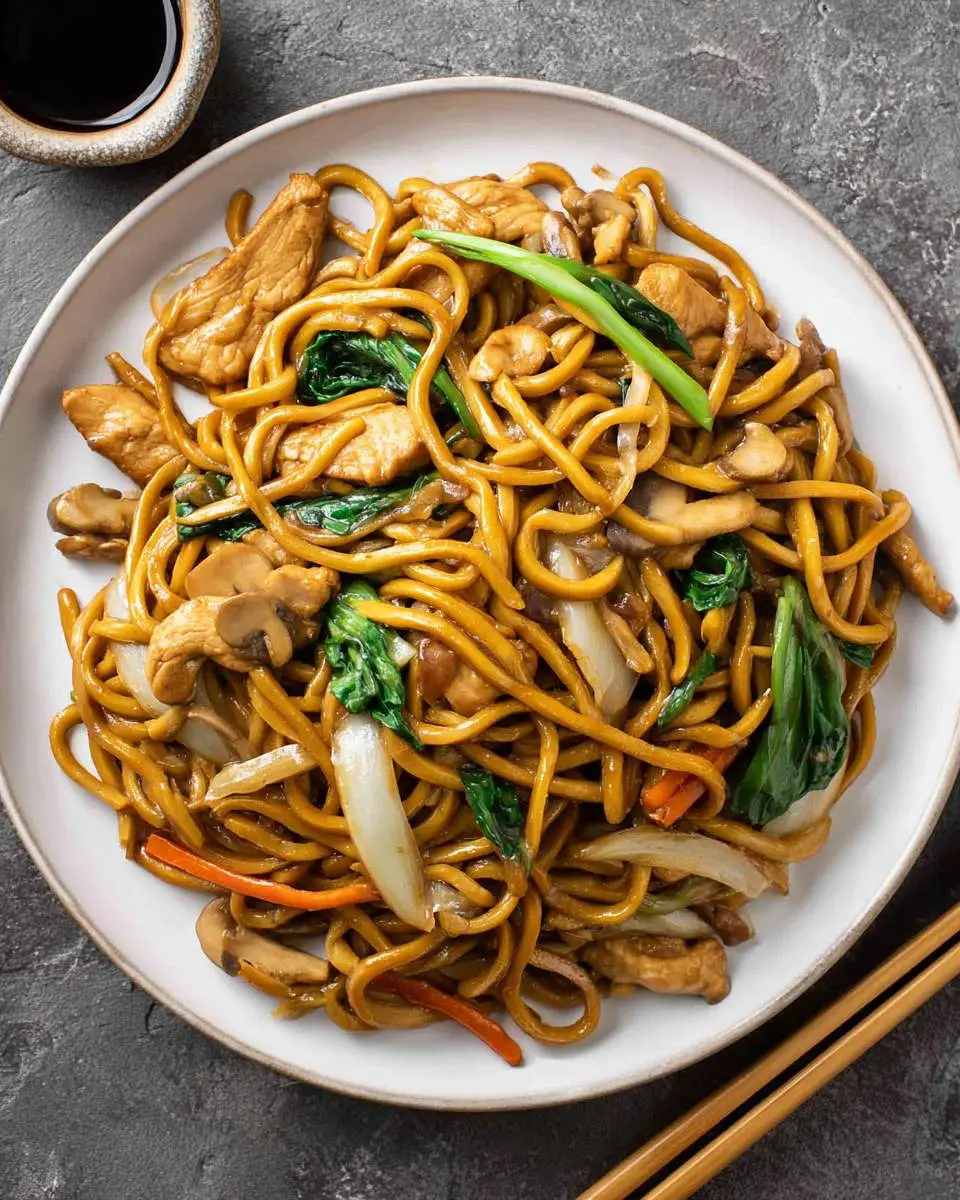
How to Store Shanghai Stir-Fried Noodles With Chicken
- Refrigerate in airtight containers within two hours of cooking for maximum safety and texture preservation
- Store up to 4 days at 40°F or below; the flavors actually deepen after the first day as the sauce penetrates the noodles
- Freeze in portioned containers for up to 2 months, though the noodle texture softens noticeably upon thawing
- Reheat in a hot skillet with a splash of water or chicken broth to revive the sauce’s silkiness; microwave reheating works but yields slightly gummier results
- Do not store raw marinated chicken with cooked noodles; keep components separate if prepping ahead
Why This Recipe Fits a Busy Weeknight
Shanghai Stir-Fried Noodles With Chicken delivers complete nutrition in under thirty minutes without feeling like a compromise. The chicken provides substantial protein that keeps me satisfied until morning, while the substantial noodle portion satisfies carbohydrate cravings that would otherwise send me snacking later. Unlike many stir-fries that leave me hungry again in an hour, this dish has real staying power. The dark soy sauce contains antioxidants from the extended fermentation process, and the minimal oil approach. made possible by that starchy water trick. keeps calories reasonable without sacrifice. I reach for this when I need comfort and efficiency in equal measure.
FAQs
Can I use spaghetti or linguine instead of Shanghai noodles?
Fresh Chinese noodles from the refrigerated section of Asian markets provide the ideal chewy texture, but dried udon or even thick Italian pasta can substitute in emergencies. Cook any substitute slightly under al dente since they will continue cooking in the wok. The sauce clings differently to wheat varieties, so expect some textural variation from the original.
Why does my sauce always turn out too salty?
Dark soy sauce varies dramatically in sodium content between brands. I recommend starting with half the amount specified, tasting, and adjusting. Low-sodium versions exist but lack the depth of traditional brewing. Balancing salt with a touch of sugar or mirin helps round the profile without reducing savory impact.
Is a wok absolutely necessary or can I use a regular skillet?
A carbon steel wok with proper seasoning creates unmatched wok hei flavor, but a heavy stainless steel or cast iron skillet works adequately. The key is surface area and heat retention. avoid non-stick coatings which cannot handle the required temperatures. Preheat your alternative vessel thoroughly and work in smaller batches than you would with a wok.
How do I prevent the noodles from sticking together in the pan?
Toss immediately upon adding to the hot surface, and ensure your noodles were drained well but not completely dried. residual moisture creates steam that separates strands. If sticking persists, your pan temperature is likely too low or you have overcrowded the cooking surface. Shanghai Stir-Fried Noodles With Chicken demands respect for the physics of high-heat cooking.
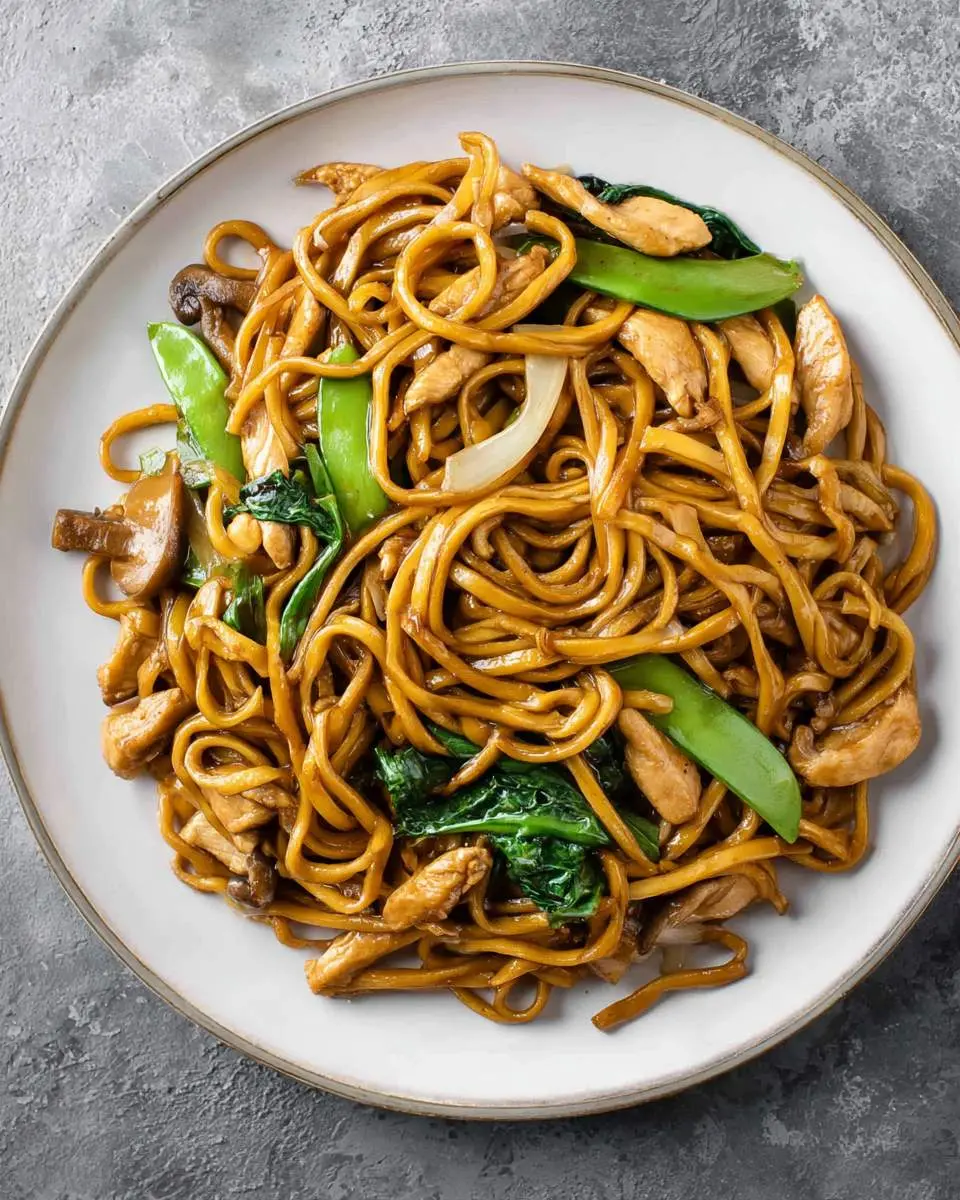
Shanghai Stir-Fried Noodles With Chicken
Ingredients
Equipment
Method
Notes
Conclusion
Some recipes earn permanent rotation status through sheer reliability, and Shanghai Stir-Fried Noodles With Chicken has become my Tuesday night salvation. The transformation from simple ingredients to something that tastes like restaurant effort never gets old. I hope your kitchen fills with the same wok smoke and satisfaction that hooked me. For another noodle journey with completely different origins, my Pad See Eew brings Thai sweetness to your weeknight repertoire.
Follow us on Social Media : Pinterest