
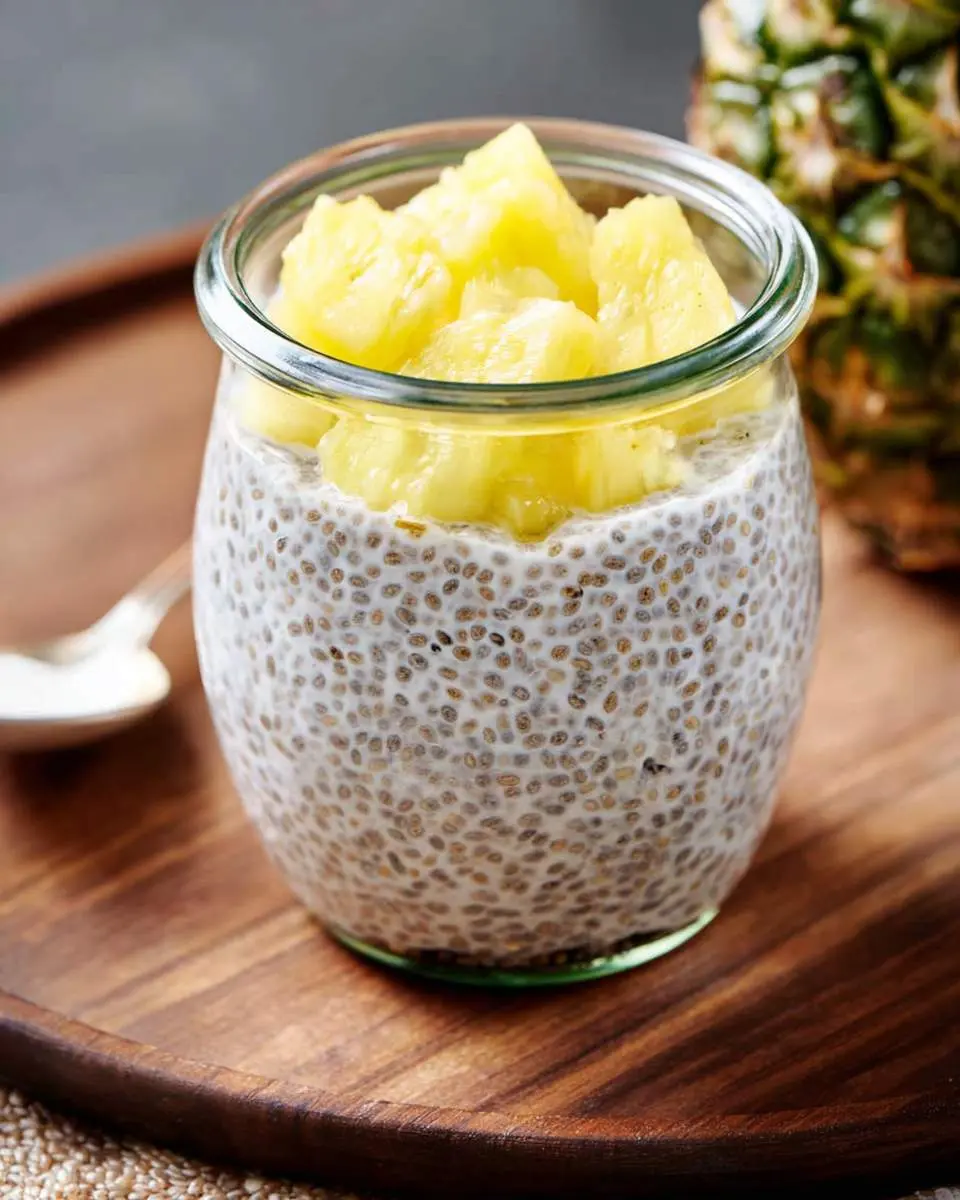
The first time I opened my fridge and saw that jar of chia pudding, I almost didn’t recognize it. The golden pineapple had settled into creamy coconut layers like a sunset trapped in glass. That morning, I made pineapple chia pudding on a whim, and it turned into the breakfast I now crave most.
My grandmother used to serve pineapple at every summer gathering. She’d cut it fresh, the juice running down her wrists, and I’d stand on tiptoes waiting for my slice. This pudding brings that same bright, sticky sweetness back, only now it’s wrapped in something that keeps me full until lunch.
I’ve been on a breakfast rotation lately, bouncing between carrot zucchini muffins and whatever chia creation I can dream up. This one stopped me in my tracks.
Why Pineapple and Chia Were Made for Each Other
The magic here lives in three ingredients that do real work. Fresh pineapple brings enzymes that tenderize everything they touch, plus that acidity that cuts through richness. Chia seeds swell into tiny pearls, creating a texture that satisfies in a way oatmeal never quite managed for me. Full-fat coconut milk carries the whole thing, giving body without dairy. I learned this balance from my almond flour waffles experiments. fat matters in morning meals.
How to Make Pineapple Chia Pudding
I start by dicing pineapple small, almost minced, so every spoonful carries that tropical punch. The chia seeds go into coconut milk first, and I whisk aggressively for a full minute. this prevents the clumps that ruined my early attempts. The mixture thickens slowly, almost stubbornly, over about twenty minutes. I fold in the pineapple last, watching the juices bleed into the cream like watercolor. The refrigerator does the real work overnight, transforming liquid into something spoonable and lush. My basic chia pudding with coconut milk taught me patience here; rushing never works.
What I Learned After Three Batches
Canned pineapple fails here. The enzyme that makes fresh pineapple special gets destroyed in processing, and the texture turns mushy instead of bright. I learned this the hard way on batch two.
Toast your chia seeds lightly in a dry pan before soaking. It sounds strange, but the nuttiness that develops balances the sweetness dramatically.
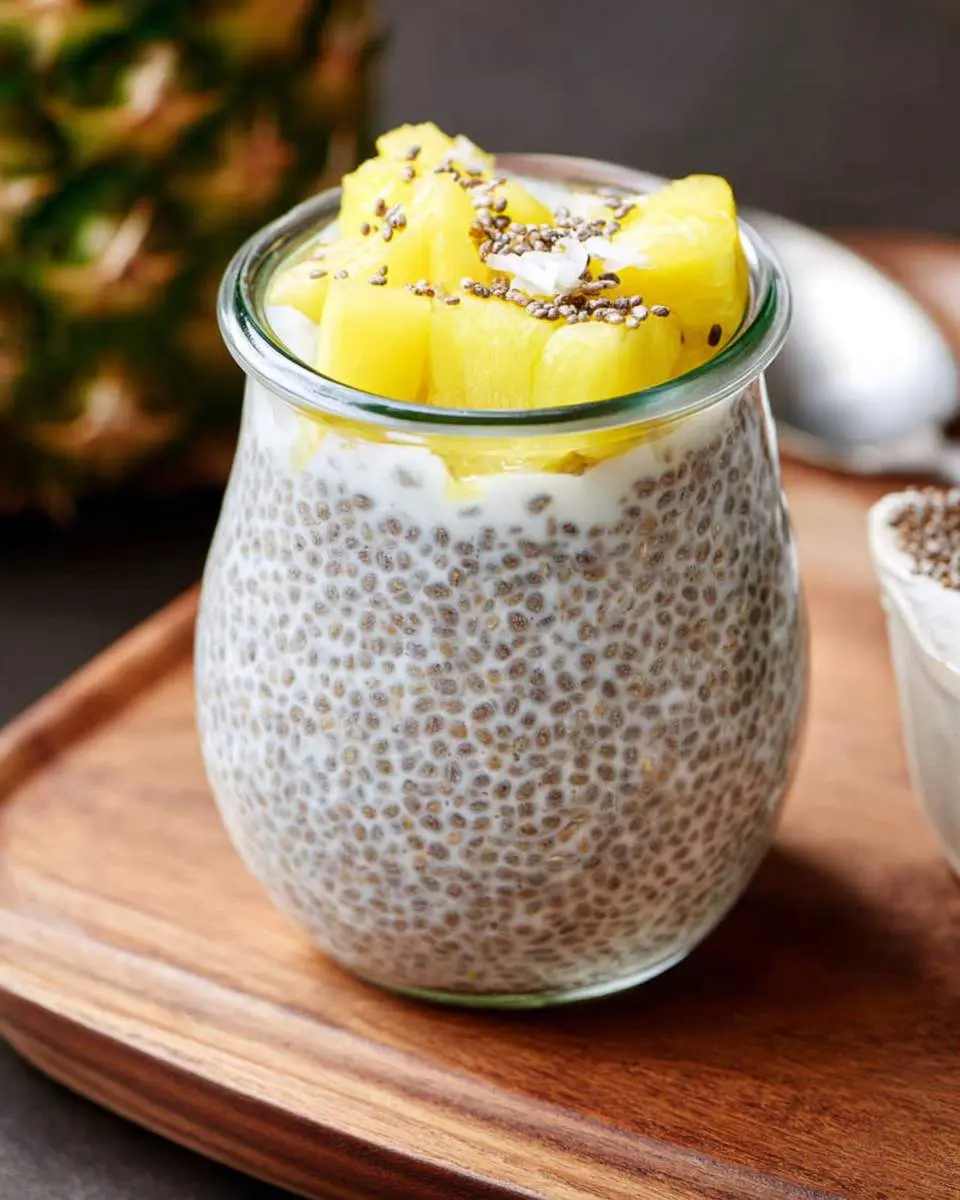
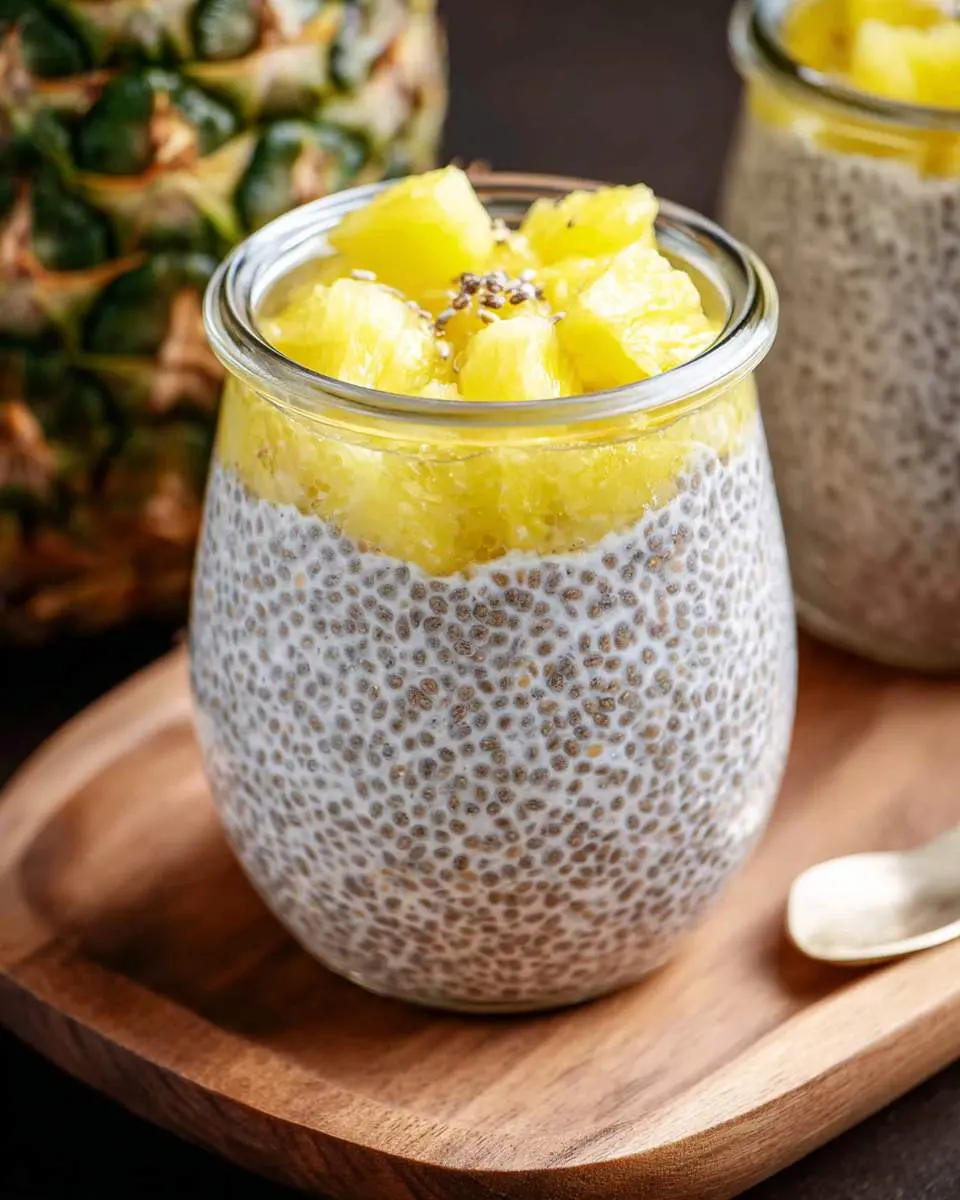
Layer, don’t mix completely. Keeping some pineapple on top creates visual appeal and prevents the acids from breaking down the chia structure too aggressively.
My Secret Trick: Blend a quarter of your pineapple into the coconut milk before adding chia. This infuses every bite with flavor without adding sugar or artificial anything.
How to Store Pineapple Chia Pudding
- Refrigerate in airtight glass jars for up to 4 days; plastic containers absorb the pineapple aroma permanently
- Store at 40°F or below; the coconut milk can separate slightly. just stir before serving
- Freeze individual portions in small containers for up to 1 month; thaw overnight in refrigerator
- Do not reheat; this is meant cold, and warmth destroys the chia texture entirely
Why This Recipe Fits My Morning Routine
Pineapple chia pudding delivers sustained energy without the crash. The chia provides omega-3s and fiber that keep blood sugar steady, while pineapple offers vitamin C and bromelain that supports digestion. I notice I snack less on days I start with this. The protein from chia seeds, though modest, combines with the healthy fats to create genuine satiety. It’s become my answer to busy mornings when I still want to feel like I treated myself well.
FAQs
Can I use frozen pineapple instead of fresh?
Frozen pineapple works in a pinch, but thaw it completely and drain excess liquid first. The texture will be softer, and you lose some of that enzymatic brightness. I prefer fresh when possible, especially in peak summer months when pineapple is cheap and abundant.
Why did my chia pudding turn out runny?
Insufficient chia seeds or inadequate resting time are the usual culprits. I use 3 tablespoons chia per cup of liquid minimum. Some brands of chia absorb differently, so adjust by adding a teaspoon more if yours seems thin after two hours.
Is there a substitute for coconut milk?
Oat milk creates the creamiest alternative, though the flavor profile changes entirely. Almond milk works but yields a thinner result. Avoid skim or low-fat milks. the fat carries flavor and creates that satisfying mouthfeel that makes this feel like dessert.
How long does pineapple chia pudding last in the fridge?
Four days maximum, though I prefer it within two. The pineapple continues to release enzymes that gradually break down the chia structure, making it progressively softer. For meal prep, I make three days worth and freeze any beyond that.
Pineapple Chia Pudding
Ingredients
Equipment
Method
Notes
Conclusion
This pineapple chia pudding has earned permanent rotation status in my kitchen. It’s the rare healthy breakfast that feels like a treat, and it keeps me full through chaotic mornings. If you’re chia-curious, start here. And for another fruity variation, try my kiwi raspberry chia pudding. equally bright, completely different mood.
Follow us on Social Media : Pinterest