
The first time I pulled this cake from the oven, my kitchen smelled like late August in Georgia. That honeyed, jammy scent of stone fruit caramelizing into butter and brown sugar stopped me mid-step. I knew immediately this Peach-Plum Upside-Down Cake would become something I made every summer without fail.
My grandmother had a plum tree in her backyard that never produced enough fruit for anything grand. She’d gather what fell and simmer them into small batches of preserves. I never understood her patience until I started baking with stone fruit myself. Now I wait all year for peaches and plums to overlap at the market, that narrow window when both are perfect.
This cake came together on a Sunday when I couldn’t decide between the two fruits. The result surprised me so much I made it again the following weekend. If you’re craving something similar with maple and nuts, I recently fell hard for this maple walnut coffee cake that hits the same cozy notes.
Why Peaches and Plums Together Actually Works
The magic here is in the contrast. Peaches bring that floral sweetness and soft texture that almost melts into the cake. Plums contribute tartness and structure, holding their shape so you get distinct bites of fruit rather than uniform mush. I use brown sugar in the topping because it deepens everything, creating that sticky lacquer that makes an upside-down cake worth the flip. The batter itself is simple, almost like a German chocolate cake base in its tenderness, though without the coconut and pecan drama. This Peach-Plum Upside-Down Cake needs nothing fancy to shine.
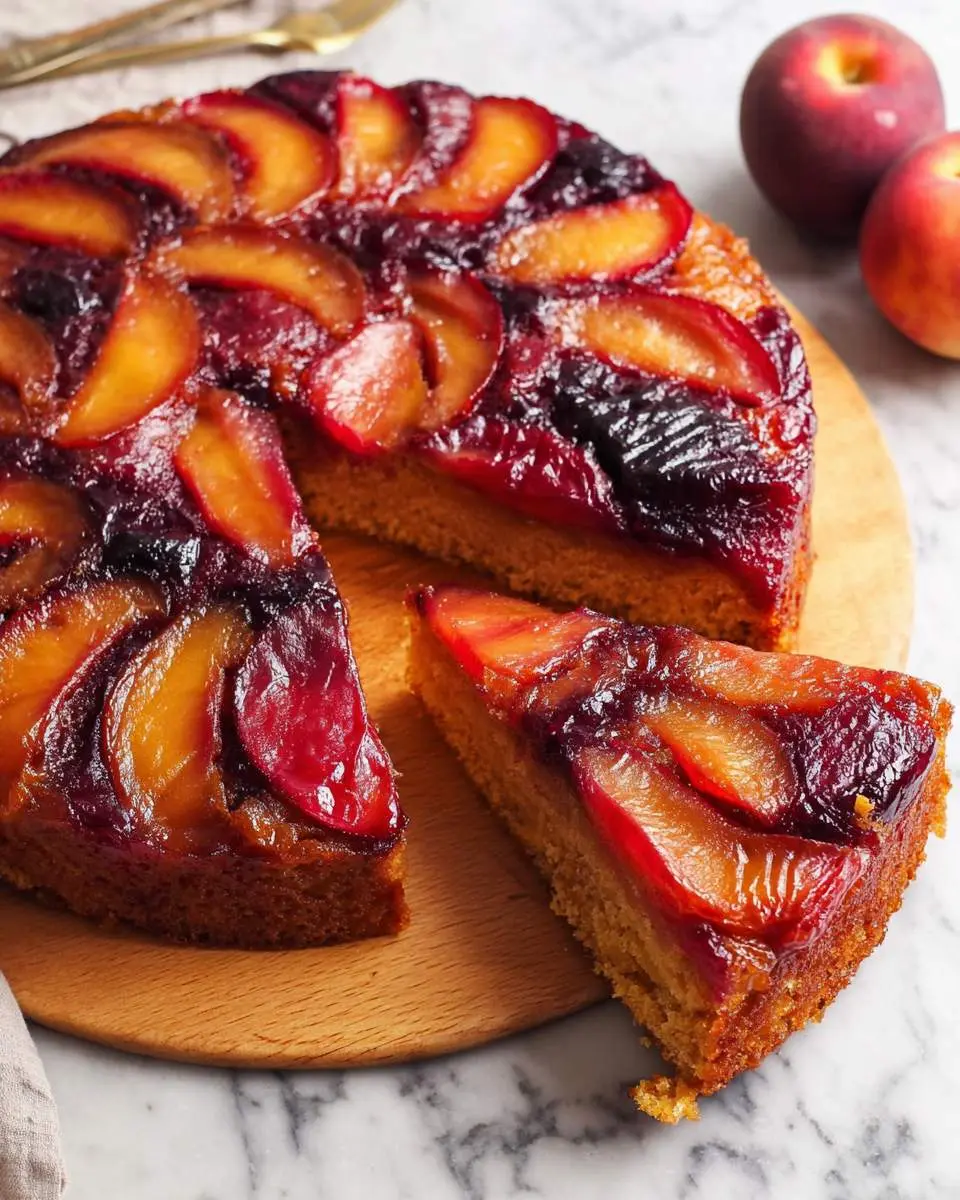
How to Make Peach-Plum Upside-Down Cake
I start with the fruit arrangement because once the batter is mixed, things move quickly. The butter and brown sugar get spread across the bottom of the pan, not melted together first, which I learned creates better caramelization. The peaches and plums get tucked in tight, overlapping slightly, since they shrink as they bake. The sizzle when this hits the oven is immediate and satisfying.
The batter comes together in one bowl, which I appreciate on lazy summer mornings. I fold it over the fruit gently so nothing shifts out of place. The cake bakes until the top springs back and the edges pull slightly from the pan, about forty minutes in my oven. The hardest part is the ten-minute wait after it comes out, that agonizing window where the caramel sets just enough to release cleanly. I learned this timing from my mini pineapple upside-down cake experiments, where patience pays off in clean slices.
What I Learned After Three Attempts
My first try, I sliced the fruit too thin and it disappeared into the cake. Now I keep peach wedges about half an inch thick and plums slightly thicker since they hold more moisture. This matters because the fruit needs to maintain presence through the bake.
I also stopped using underripe fruit after one disappointingly firm batch. The peaches and plums should give slightly to pressure, that perfect moment before they turn mealy. Underripe fruit never softens properly, leaving you with crunchy bites in an otherwise tender cake.
The pan choice changed everything for me. A well-seasoned cast iron skillet gives the best caramel edge, though a standard cake pan works if you watch it closely. The cast iron retains heat longer, so the bottom keeps cooking slightly after removal, developing that almost-burnt sugar complexity I crave.
My Secret Trick: I sprinkle a tiny pinch of flaky salt over the brown sugar layer before adding fruit. It doesn’t make the cake salty, it makes the sweetness taste more like itself, amplifying the caramel without adding extra sugar.

How to Store Peach-Plum Upside-Down Cake
- Room temperature: Wrap tightly and store up to 2 days, though the fruit releases moisture and the bottom softens slightly
- Refrigerator: Cover with plastic wrap pressed directly to the cut surface, store up to 5 days, bring to room temperature before serving for best texture
- Freezer: Wrap individual slices in plastic then foil, freeze up to 2 months, thaw overnight in refrigerator
- Reheating: Warm slices in 300°F oven for 8-10 minutes or microwave 20 seconds, the caramel re-liquifies beautifully
Why This Cake Belongs in Your Summer Rotation
Stone fruit season is brief and precious, and this Peach-Plum Upside-Down Cake honors that urgency without demanding perfection. The plums bring anthocyanins, those deep purple pigments tied to heart health, while peaches contribute vitamin C and fiber that you actually want to eat. More importantly, this cake feeds a crowd without last-minute fuss, tastes better the day after baking, and transforms slightly bruised farmers market fruit into something you can’t stop picking at. I’ve served it warm with ice cream, cold for breakfast, and once at room temperature with coffee at three in the afternoon when the day needed rescuing.
FAQs
Can I use frozen peaches and plums?
Fresh fruit really matters here. Frozen releases too much water during baking, creating a soggy layer and preventing proper caramelization. If you must use frozen, thaw completely and pat extremely dry, though the texture suffers. I wait for peak season and make this repeatedly while fruit is abundant.
Why did my fruit stick to the pan?
The ten-minute resting period is non-negotiable. Too soon and the caramel hasn’t set, too long and it hardens permanently to the pan. Run a knife around the edge immediately after removing from oven, then let it sit undisturbed. Your patience determines whether you get that gorgeous reveal or a broken cake.
Can I make this in a different size pan?
A nine-inch round works perfectly, or a ten-inch cast iron for slightly thinner cake with more caramel surface. Avoid eight-inch pans, the batter overflows. Adjust baking time by five minutes either direction, watching for the spring-back test rather than strict timing.
What other fruits work in this cake?
Nectarines substitute beautifully for peaches, and Italian prune plums work when regular plums fade from markets. I’ve had success with apricots though they’re smaller and require more arrangement. This Peach-Plum Upside-Down Cake is forgiving, but the peach-plum combination remains my standard for good reason.

Peach-Plum Upside-Down Cake
Ingredients
Equipment
Method
Notes
Conclusion
This cake taught me that some of the best recipes come from indecision, from wanting two things and refusing to choose. Make it once and you’ll understand why I now buy extra fruit every August, just to ensure I can bake this again before the season ends. For another stone fruit favorite that leans into brown sugar’s warmth, try this brown sugar peach cake that carries similar comfort in every bite.
Follow us on Social Media : Pinterest