
The first time I tasted Korean chicken wings, I was standing in a cramped bar in Seoul, fingers sticky with sauce, completely unable to stop eating. That balance of sweet heat, the way the glaze clings to every ridge of crispy skin. it haunted me for months after I got home. I knew I had to crack that code in my own kitchen, and honestly, I think I got pretty close.
My obsession started innocent enough. I was homesick for travel, scrolling through old photos, when I found that snapshot of my sauce-stained napkin pile. I could almost smell the gochujang and garlic. That night I rummaged through my pantry and made my first attempt. It was fine. Edible. But not the thing I remembered.
Three batches later, standing over my air fryer at 10 PM, I finally nailed it. The skin shattered just right. The sauce had that slow-building heat that makes you reach for another wing before you have finished the first. If you are looking for other wing inspiration, my BBQ chicken wings are where I started my air fryer wing journey.
The Ingredients That Make These Wings Sing
Gochujang is the heart of this recipe, and do not let anyone tell you otherwise. That fermented Korean chili paste brings depth that sriracha or plain hot sauce simply cannot touch. it is funky, sweet, and complex in a way that makes Korean chicken wings taste like Korean chicken wings. I use it in my chicken lettuce wraps too, and it transforms everything it touches. The rice vinegar cuts through the richness, keeping each bite bright instead of heavy. And do not skip the sesame oil. just a tablespoon perfumes the whole batch with something unmistakably right.
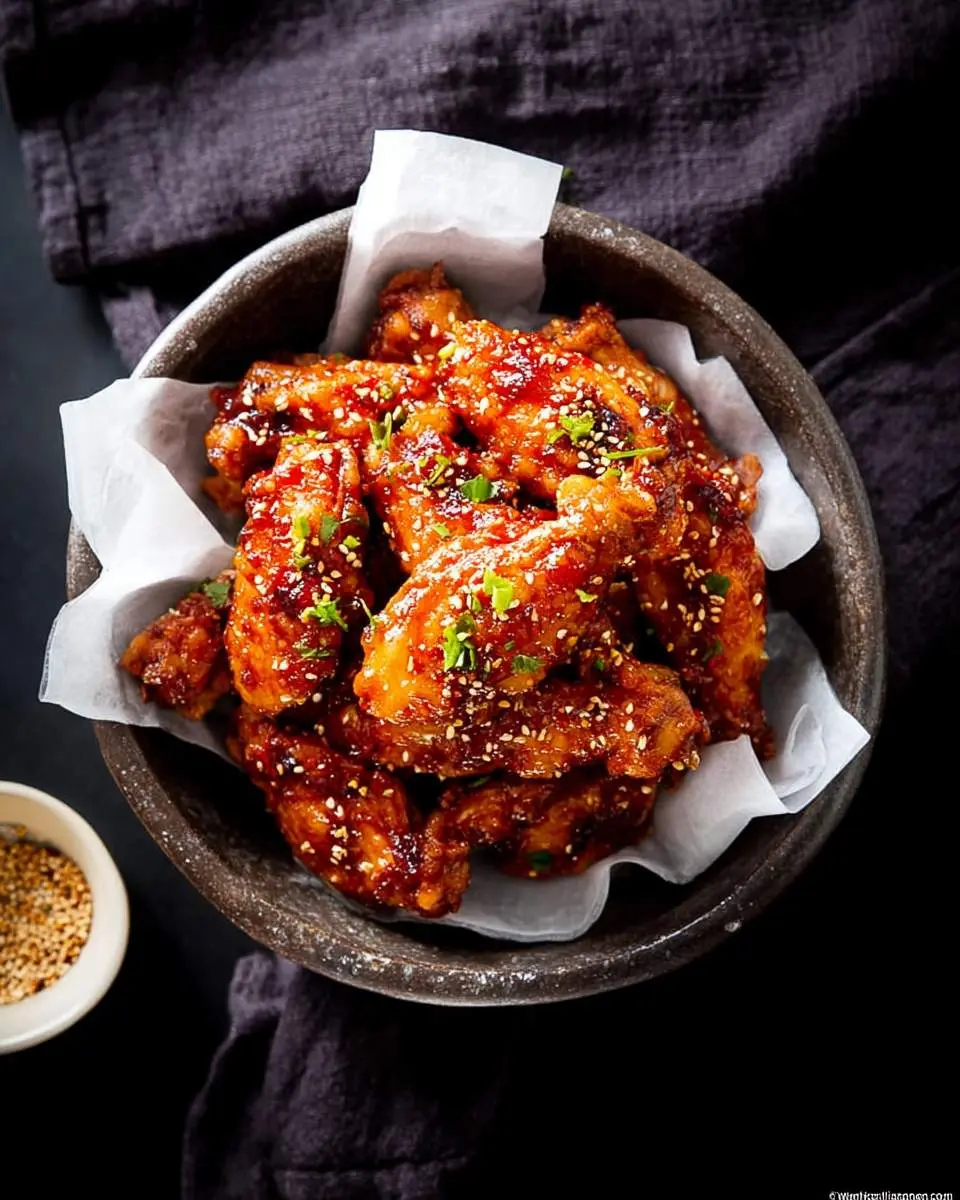
How to Make Korean Chicken Wings
I start by patting the wings aggressively dry. this is non-negotiable for that glass-shatter skin. Into the air fryer they go, and I do not touch them for the first fifteen minutes. The sound changes when they are ready: from a wet sizzle to a dry, almost papery crackle. That is when I know.
While they cook, I whisk the sauce together in a small pot. The gochujang melts into the soy and brown sugar, turning glossy and thick. It smells like every good Korean restaurant I have ever loved. When the wings emerge, golden and blistered, I toss them hot into that sauce. They sputter and soak it up, the skin softening just enough to let the flavor penetrate without losing all its crunch. I learned the base technique from my gochujang chicken recipe, but wings are a different beast entirely. they need less time, more attention to that final texture.
What I Learned After Three Batches of These Wings
Do not sauce until the end. I tried brushing the gochujang mixture on halfway through cooking once, and the sugars burned bitter and black. The high heat of the air fryer needs bare skin to work its magic.
Double-fry in the sauce bowl. I toss the hot wings in sauce, let them rest thirty seconds, then toss again. That second coating grabs the thick, reduced glaze that pooled at the bottom. the good stuff.
Save some sauce for dipping. I always set aside two tablespoons before tossing. Some people want more heat, some want less, and having that control makes guests happy.
My Secret Trick: I add a teaspoon of cornstarch to my wing coating before air frying. It sounds wrong, but it creates the most shatteringly crisp skin that holds up even after saucing. something I discovered by accident when I grabbed the wrong container.
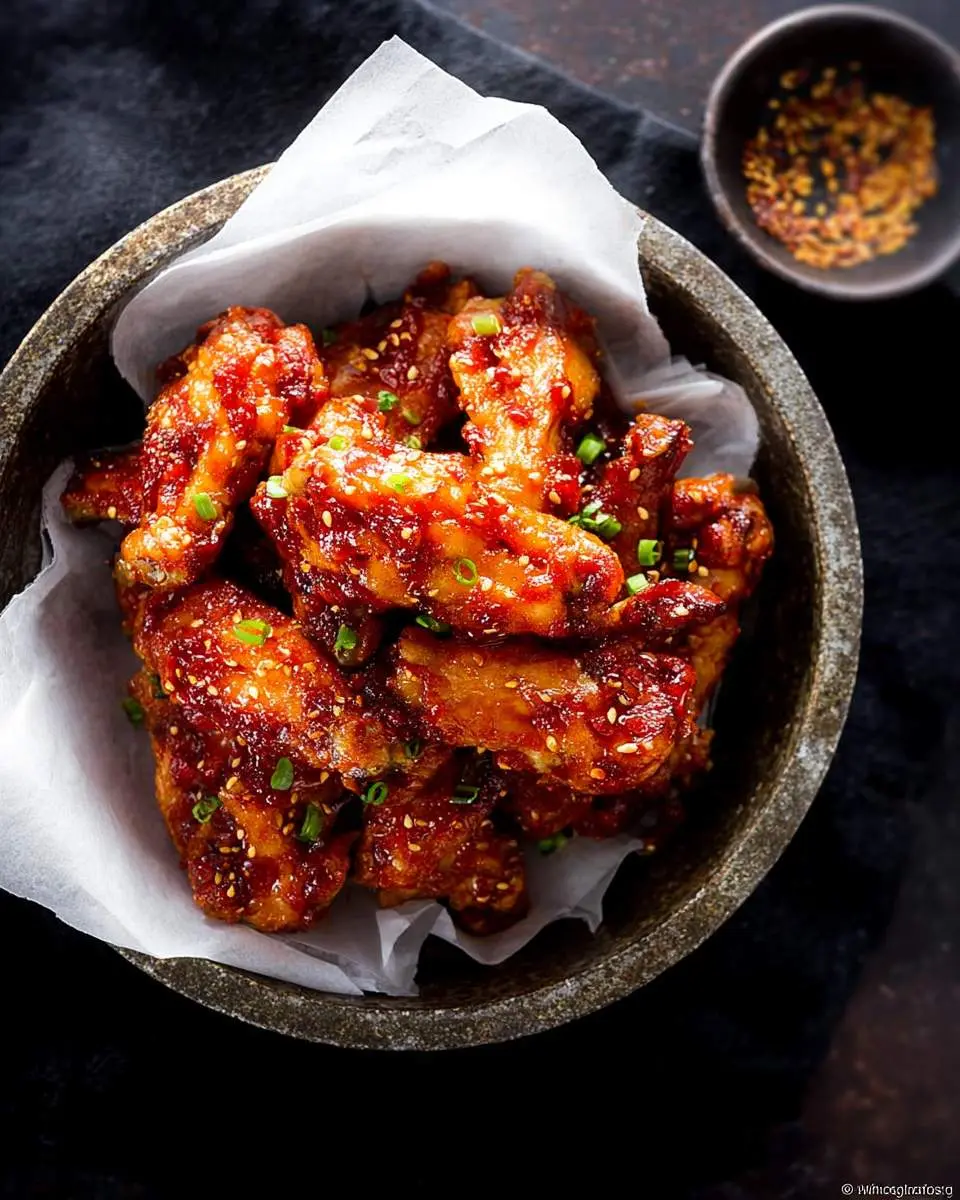
How to Store Korean Chicken Wings
- Refrigerate in an airtight container for up to 3 days. the skin softens but the flavor deepens
- Freeze unsauced cooked wings for up to 2 months; sauce fresh when reheating
- Reheat in a 375F air fryer for 6-8 minutes, tossing once, until skin recrisps
- Do not microwave. the texture becomes rubbery and sad
Why These Wings Fit a Lighter Eating Plan
Korean chicken wings in the air fryer deliver serious satisfaction without the oil bath of traditional frying. Gochujang itself is virtually fat-free and packed with capsaicin, that compound that makes you feel oddly energized after eating. I serve these with a quick cucumber salad dressed in rice vinegar, and the whole meal feels indulgent without the heaviness that usually follows fried food. The protein keeps me full, the heat keeps me reaching for water instead of a second beer, and I never feel like I need a nap afterward.
FAQs
Can I use frozen wings for this recipe?
Yes, but thaw them completely first. I learned this the hard way. ice crystals steam the skin from within, and you will never get that crackle. Pat them extra dry after thawing; they hold more moisture than fresh wings.
Is gochujang very spicy?
It has heat, but it is rounded and fermented, not sharp. My spice-averse sister eats these happily. If you are nervous, start with half the amount and taste the sauce before tossing. You can always add more, but you cannot take it back.
Can I make these Korean chicken wings in a regular oven?
Absolutely. Use a wire rack on a sheet pan at 425F for 45-50 minutes, flipping once. They will not get quite as shatter-crisp as the air fryer version, but they are still excellent. The sauce application remains exactly the same.
What can I substitute for gochujang?
Honestly, nothing truly replicates it. Some suggest sriracha mixed with miso, but you lose that fermented complexity. I keep my gochujang in the fridge for months; it is worth buying for this and my sesame chicken recipe.
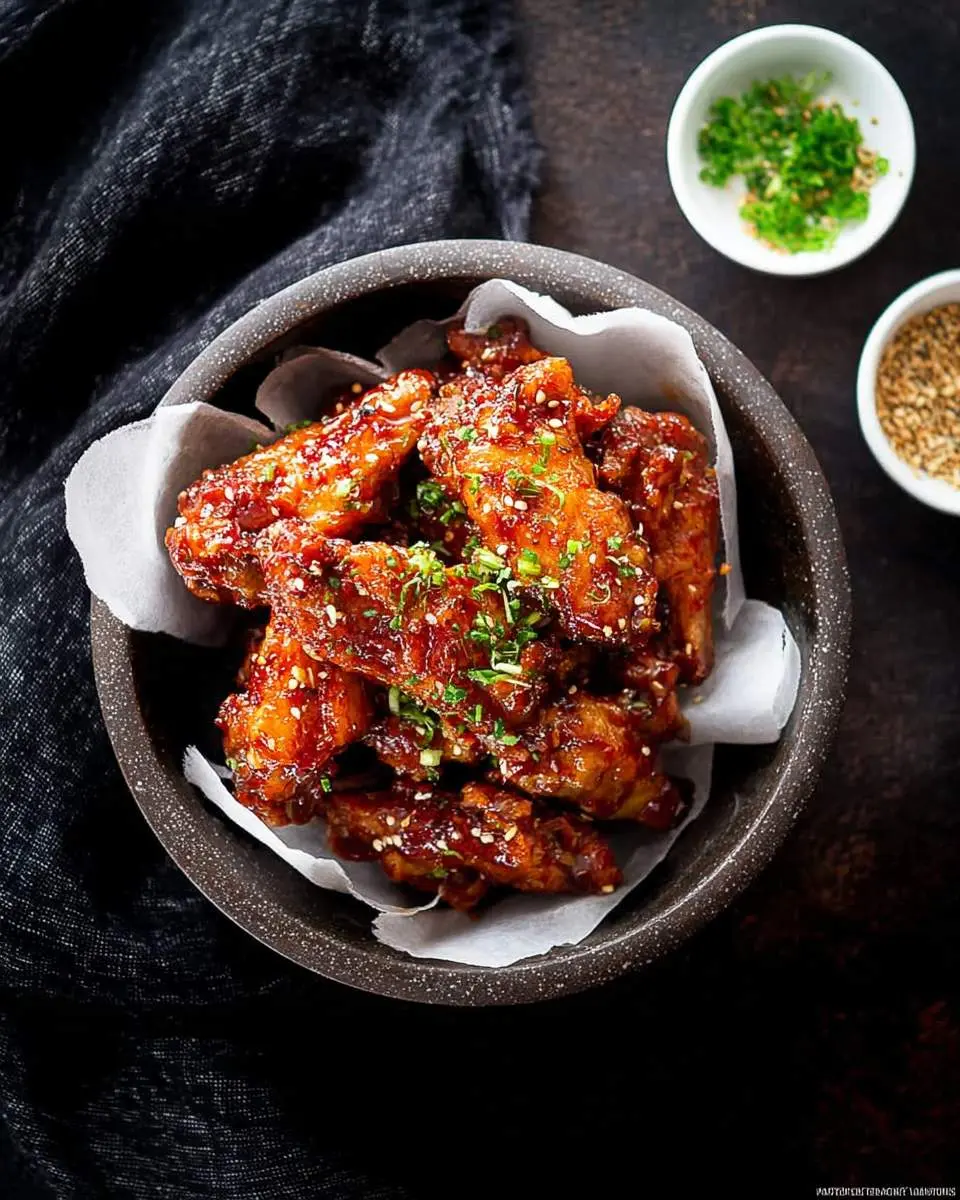
Korean Chicken Wings
Ingredients
Equipment
Method
Notes
Conclusion
These Korean chicken wings have become my signature when friends come over. the dish that makes people ask for the recipe before they have finished eating. They are messy, they are loud, they are absolutely worth every sticky finger. If you try them, I want to hear how they go. And if you loved these, my sesame chicken uses similar flavors in a completely different format.
Follow us on Social Media : Pinterest