
Korean Beef Noodles have become a true staple in my kitchen, a dish that consistently brings a smile to my face with every flavorful bite. The way the tender flank steak sizzles and caramelizes, coated in that incredible spicy gochujang sauce, combined with perfectly chewy udon noodles, is simply irresistible. If you love quick, flavor-packed meals, much like my easy beef and broccoli ramen, then this recipe is about to become your new favorite too!

I remember first trying a similar dish years ago at a small Korean eatery with my family, and the memory of that rich, savory, and spicy flavor lingered. It sparked a mission to recreate that magic at home, leading me to this simplified version that captures all the essence without the fuss.
This recipe for Korean Beef Noodles truly delivers on both comfort and convenience, making it ideal for those busy weeknights when you crave something hearty without the stress. My practical tip? Don’t skimp on the fresh ginger and garlic—they make all the difference!
My Favorite Things About Korean Beef Noodles
I absolutely adore these Korean Beef Noodles because they perfectly balance robust flavors with incredible speed. In just 20 minutes of prep and 15 minutes of cook time, you can have a restaurant-quality meal on your table. The combination of savory soy sauce, fiery gochujang, and tender flank steak creates an unforgettable experience that even rivals my hoisin beef noodles. It’s proof that truly delicious meals don’t need to take hours!
Ingredient Notes for Korean Beef Noodles
When it comes to my Korean Beef Noodles, the key is quality. I always opt for a good flank steak, sliced thinly against the grain for maximum tenderness. And gochujang? It’s non-negotiable! This Korean chili paste provides that signature spicy, savory depth. If you’re exploring other beef recipes, I think you’ll also love how easily it comes together in dishes like my one-pot beef giouvetsi.
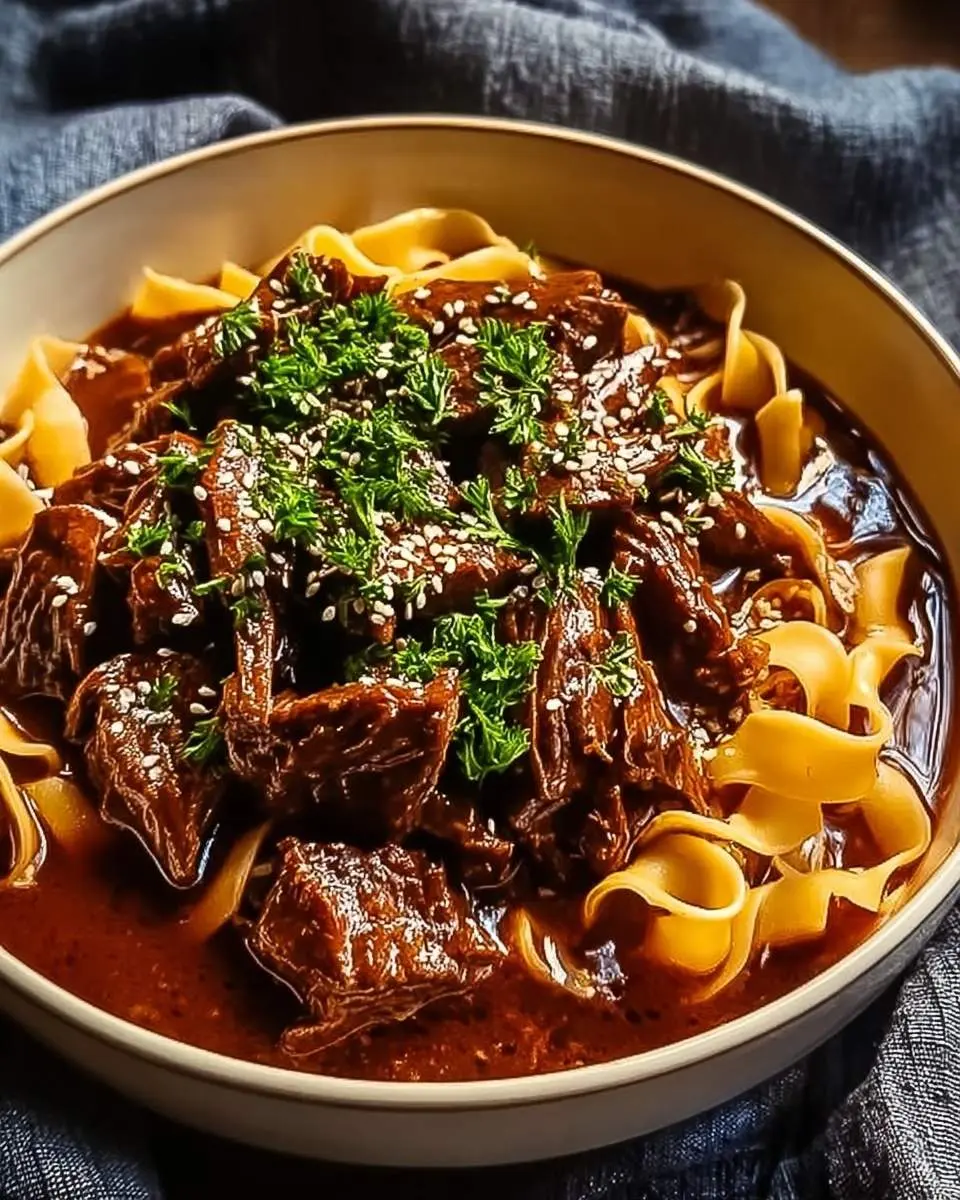
How I Make Korean Beef Noodles
Bringing these Korean Beef Noodles to life in my kitchen is always a joy! I start by marinating the flank steak, letting it soak up all those incredible flavors. While that’s happening, I get my noodles and veggies ready—slicing onions and bell peppers. Then, it’s a quick sear for the beef, a toss with the noodles and vegetables, and a final stir with the rich sauce. It’s a process so straightforward, similar to my Korean ground beef bowl, that you’ll feel like a pro!

My Secrets for Success with Korean Beef Noodles
Here are my personal tips for making these Korean Beef Noodles absolutely shine:
- Slice your flank steak against the grain for the most tender bites.
- Don’t overcrowd the pan when searing the beef; work in batches if necessary for a good crust.
- Taste and adjust the sauce! A little extra brown sugar or gochujang can really make it pop.
- Garnish generously with toasted sesame seeds and fresh green onions for a vibrant finish.
How I Serve and Store This Dish
I love serving these Korean Beef Noodles immediately, piping hot, right out of the wok! They’re fantastic on their own, but sometimes I’ll add a side of quick-pickled cucumbers for a refreshing crunch. If I have any leftovers, I store them in an airtight container in the refrigerator for up to 3 days. Reheat gently on the stovetop or in the microwave, adding a splash of broth if needed to loosen the noodles.
FAQs
Can I use a different cut of beef for this recipe?
While flank steak is my go-to for these Korean Beef Noodles due to its tenderness and ability to absorb flavor, you could also use sirloin or even skirt steak. Just be sure to slice any cut very thinly against the grain to ensure it cooks quickly and remains tender in the stir-fry.
How spicy are these Korean Beef Noodles, and can I adjust the heat?
The spiciness of these Korean Beef Noodles can definitely be customized to your preference! Gochujang has a moderate heat, but you can always add less if you’re sensitive to spice, or a bit more for an extra kick. A sprinkle of red pepper flakes at the end also boosts the heat.
Can I make these noodles ahead of time for meal prep?
Absolutely! These Korean Beef Noodles are a great meal prep option. You can prepare the beef and sauce ahead of time and store them separately. Cook the noodles and vegetables just before serving to maintain their best texture, then combine everything for a fresh, quick meal.
What kind of noodles work best for Korean Beef Noodles?
I highly recommend using fresh udon noodles for these Korean Beef Noodles; their thick, chewy texture is simply perfect. However, if udon isn’t available, you could substitute with ramen noodles, lo mein, or even wide rice noodles for a similar comforting and satisfying experience.
Spicy Gochujang Korean Beef Noodles
Ingredients
Equipment
Method
Notes
I hope you give these Spicy Gochujang Korean Beef Noodles a try! They’ve become such a beloved dish in my home, offering that fantastic balance of spicy, sweet, and savory in every forkful. If you enjoy creating delicious, high-protein meals like this or my easy beef and broccoli ramen, I’d love to hear how it turns out for you in the comments below!
Follow us on Social Media : Pinterest