
The smell of garlic hitting hot olive oil takes me straight back to my grandmother’s cramped kitchen in Queens. She never measured anything, but her steaks always came out with this impossible crust and a whisper of something herbal that made you close your eyes on the first bite. That memory is what sent me hunting for this Italian rib eye. a way to capture that Sunday feeling without needing her cast iron pan that’s probably still seasoning in some cousin’s cabinet.
I made this three times before I got it right. The first attempt, I burned the rosemary because I was too busy trying to find the right playlist. The second, I under-seasoned, afraid of overwhelming the beef. But the third time. standing at my stove at 6 p.m. on a Tuesday, wine already poured. everything clicked. The fat started to render just so, and the kitchen filled with that same weight I remember from childhood.
This isn’t fancy restaurant food. It’s the kind of dinner that makes you slow down and actually taste what’s on your plate. If you’re craving more Italian comfort, my Instant Pot Osso Buco with rice hits that same Sunday supper note.
The Ingredients That Make This Dish Work
Good beef needs so little, but what you add matters enormously. I use a bone-in ribeye at least an inch thick. anything thinner and you lose that gorgeous gradient from crust to pink center. The fat cap is non-negotiable; it bastes the meat as it cooks and carries all that Italian rib eye flavor straight through every bite. Fresh rosemary, not dried, because the needles crisp in the pan and release this piney perfume that dried herbs simply cannot touch. And good olive oil. the kind you would dip bread into. because you’re essentially making a quick sauce in the pan as you go. I also reach for a Vietnamese Instant Pot beef brisket when I want something that cooks low and slow, but this ribeye is all about speed and heat.
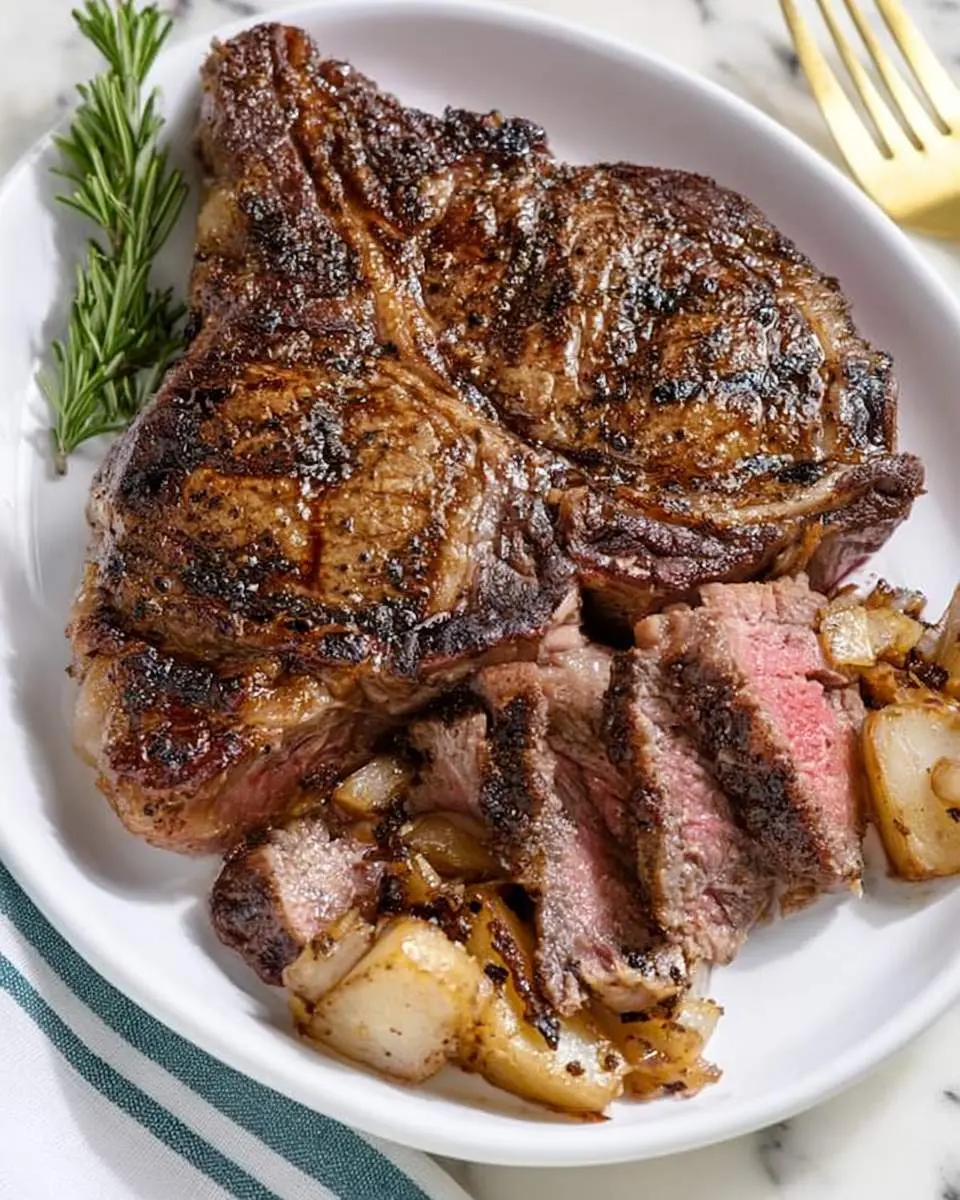
How to Make Italian Rib Eye
I pull the steak from the fridge a full hour before cooking. cold meat seizes up and cooks unevenly, and I’ve learned that patience here pays off everywhere else. While it comes to temperature, I strip rosemary leaves from their stems and roughly chop enough garlic to make my cutting board smell like a trattoria. The pan gets ripping hot, almost smoking, before any oil touches it. That’s when I know we’re ready.
The steak hits the pan with a sound that makes my dog leave the room. I don’t touch it for a solid three minutes. no peeking, no nudging. because that crust is forming in real time, and disturbing it is like opening an oven door on a soufflé. Once flipped, I drop the heat slightly and add butter, garlic, and rosemary to the pan’s edge. The butter foams and browns almost immediately, and I tilt the pan, spooning that aromatic mixture over the steak again and again. The garlic turns golden, not burnt, and the rosemary fries into these crisp little needles that I pile on top when the steak rests. Speaking of resting. ten minutes under loose foil, minimum. I used to skip this, and I used to wonder why my steaks leaked everywhere. Now I know. For another approach to perfect steak, my garlic butter ribeye steak uses a similar technique with different aromatics.
What I Learned Making This Three Times
Dry brining changes everything: Salting the steak right when you take it out of the fridge, not right before cooking, gives the salt time to penetrate and seasons the meat all the way through. Surface salt tastes like surface salt. Deep salt tastes like flavor.
Room temperature is not optional: I tested this with a thermometer once, out of curiosity. The room-temp steak reached medium-rare in exactly the time the cold steak was still raw in the center. The cold one ended up overcooked on the outside by the time the inside caught up.
Resting is cooking: That ten minutes under foil isn’t passive time. The internal temperature rises another five degrees, and the juices redistribute so they stay in the meat instead of pooling on your cutting board. I set a timer now because I cannot be trusted.
My Secret Trick: I finish the Italian rib eye with a tiny splash of high-quality balsamic right after it comes out of the pan. not enough to make it sweet, just enough to wake up all the savory notes and add this subtle brightness that makes people ask what you did differently.

How to Store Italian Rib Eye
- Refrigerate cooled steak in an airtight container within two hours of cooking; keeps up to 3 days at 40°F or below
- Wrap tightly in plastic wrap, then foil, before refrigerating to prevent odor absorption and moisture loss
- Freeze individual portions wrapped in plastic and placed in freezer bags; best within 2 months for optimal texture
- Thaw frozen steak overnight in the refrigerator, never at room temperature
- Reheat gently in a 250°F oven wrapped in foil with a pat of butter until warmed through, about 15-20 minutes
- Slice cold leftovers thin against the grain for sandwiches or salads; the flavor actually deepens overnight
Why This Recipe Fits a Real Food Routine
This Italian rib eye delivers serious protein and iron without the heavy cream sauces or butter-laden sides that often accompany steakhouse meals. The rosemary brings natural antioxidants, and using olive oil as your cooking fat means you’re working with monounsaturated fats that support heart health. It’s indulgent without being excessive. the kind of meal that satisfies deeply but doesn’t leave you needing a nap. I make this when I want to feel like I treated myself, not like I derailed myself.

FAQs
How thick should the ribeye be for this recipe?
I never go thinner than one inch, and one and a half inches is even better. Thinner steaks cook too quickly to develop that deep crust while keeping the center pink. If your butcher only has thin cuts, ask for a double-cut and split it yourself, or reduce the heat and accept a less dramatic crust.
Can I use dried rosemary instead of fresh?
You can, but you shouldn’t. Dried rosemary is woody and sharp, and it doesn’t crisp or perfume the pan the way fresh needles do. If fresh is absolutely unavailable, use half the amount and add it to the butter off-heat so it doesn’t burn into bitterness.
What pan works best for Italian rib eye?
Cast iron is my only answer. It holds heat evenly, develops the best crust, and can go from stovetop to oven if you need to finish thicker steaks. Stainless steel works in a pinch, but avoid nonstick. you need the fond that develops on the pan’s surface for flavor.
How do I know when the steak is done without cutting into it?
I use the touch test. pressing the base of my thumb for rare, the center for medium-rare, the tip for medium. After a few steaks, you develop muscle memory. A instant-read thermometer removes all guesswork: 125°F for rare, 130°F for medium-rare, 135°F for medium.
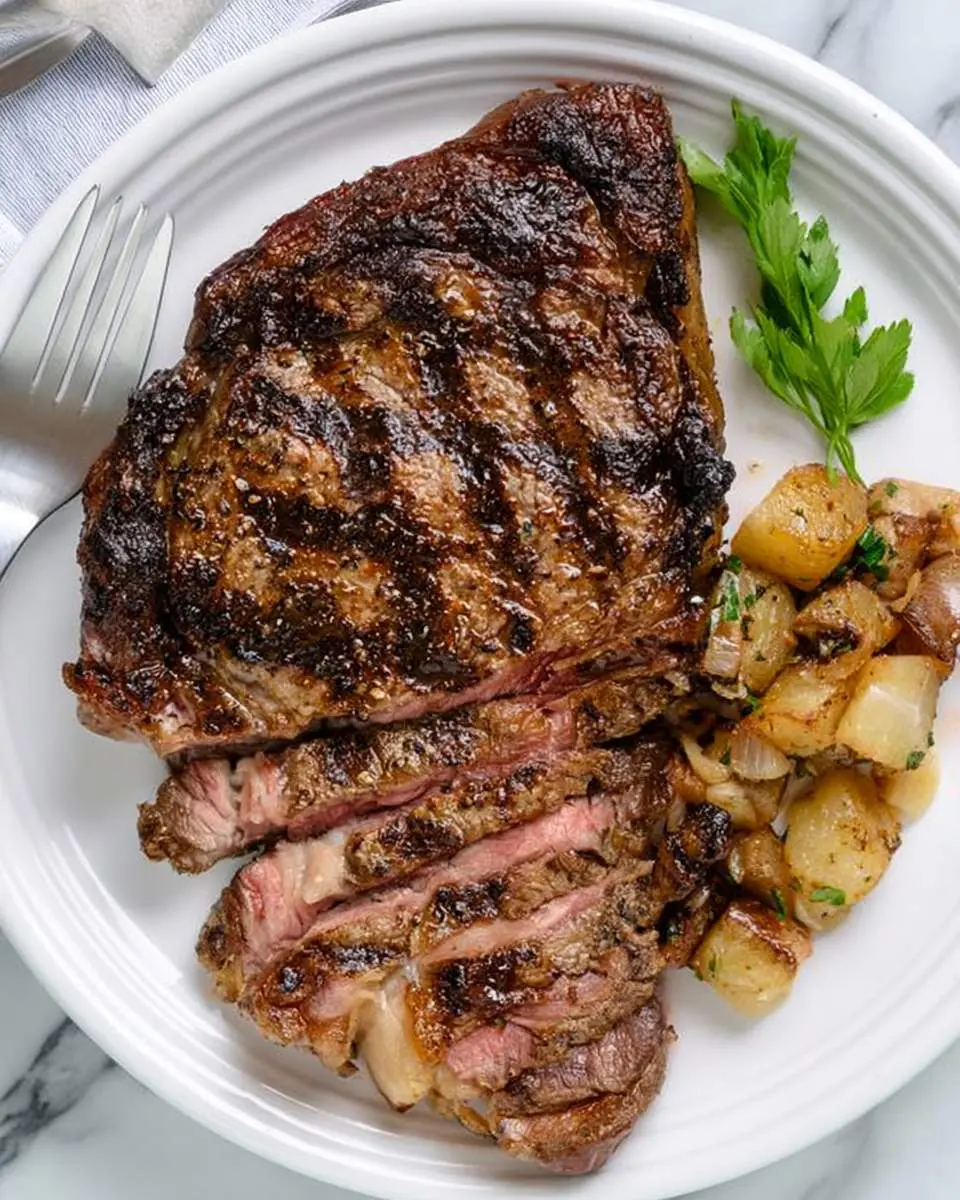
Italian Rib Eye
Ingredients
Equipment
Method
Notes
Conclusion
This Italian rib eye has become my answer to the question of what to cook when I want to feel capable and cared for in the same evening. It’s not difficult, but it demands attention. and that attention always pays me back. If you’re looking for another steak dinner with a different kind of richness, my pan-seared steak in Tuscan cream sauce brings that same satisfaction with a completely different mood. Make this soon, and don’t skip the resting. I promise it’s worth it.
Follow us on Social Media : Pinterest