
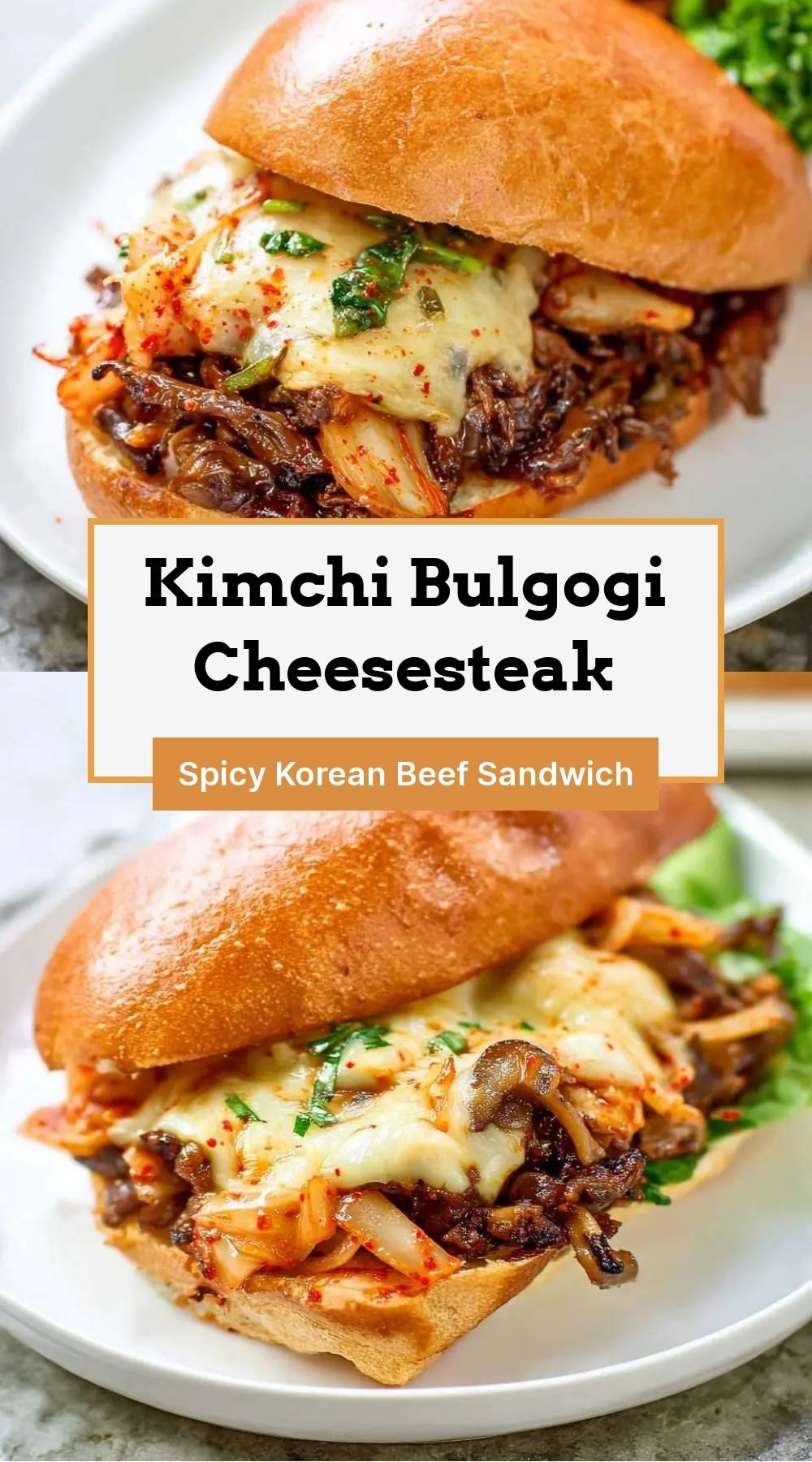
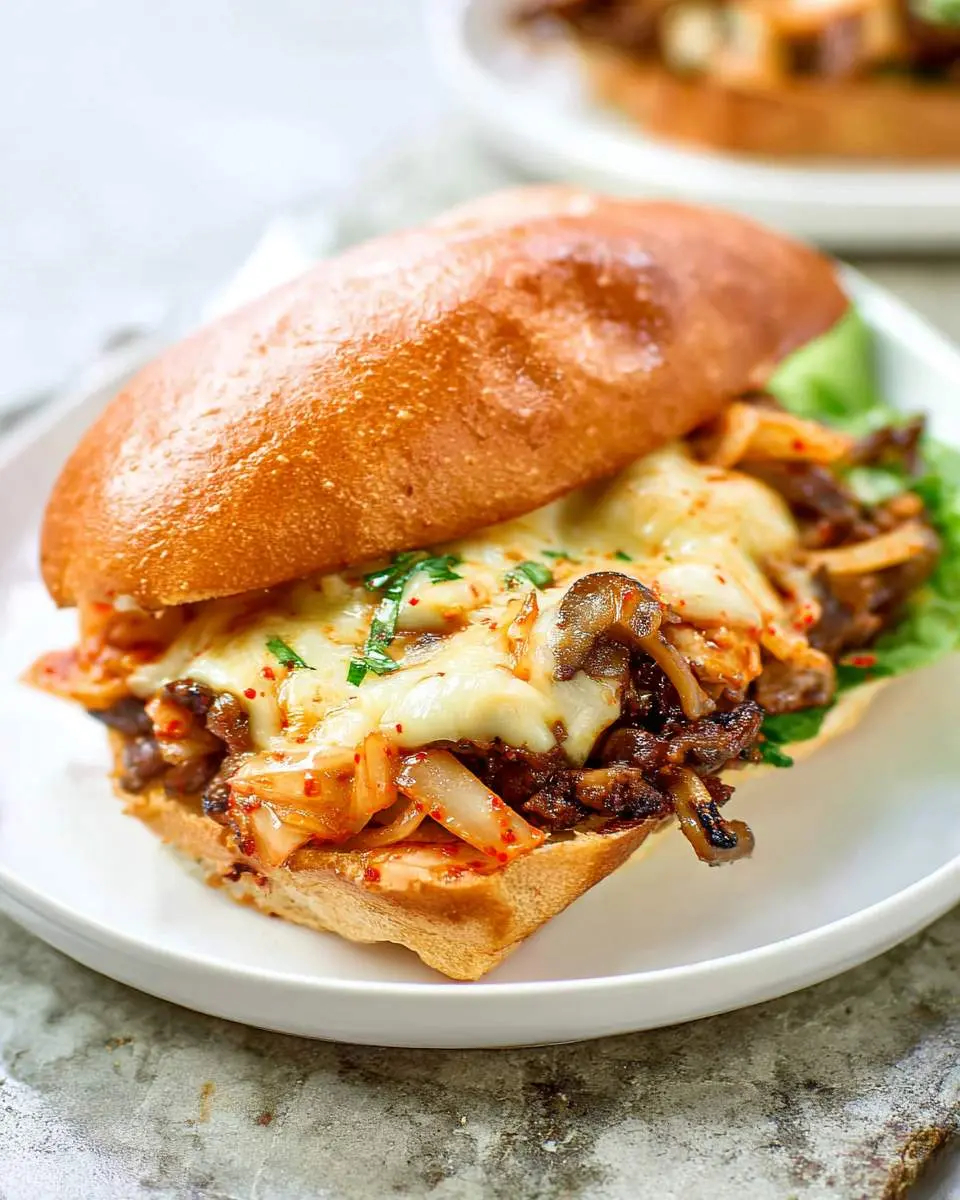
The first time I bit into a Kimchi Bulgogi Cheesesteak, I was standing in my kitchen at 10 PM, still in my work clothes, wondering why I had never thought to combine these two obsessions before. The sweet-savory beef, the funky heat of kimchi, the molten cheese pulling in strings that caught the light. it was one of those moments where you actually stop chewing just to appreciate what is happening in your mouth.
I grew up eating classic Philly cheesesteaks at a little shop near my grandmother’s house, the kind with thin-sliced ribeye and that unmistakable smell of griddled onions. Years later, I fell hard for Korean food. the banchan, the barbecue, the way fermentation transforms simple cabbage into something alive. This sandwich lives exactly where those two food memories overlap, and honestly, it feels like it was always meant to exist.
What I love most is how weeknight-friendly this turned out to be. If you have ever made my kimchi grilled cheese, you already know the magic that happens when fermented heat meets dairy. This is that energy, amplified.
Why These Particular Ingredients Matter
The foundation is thinly sliced ribeye, and I cannot stress enough. ask your butcher to shave it paper-thin, almost shaved. It cooks in seconds, staying tender instead of turning rubbery. The bulgogi marinade does double duty here: the pear and soy tenderize while the garlic and ginger build that deep, caramelized crust when it hits the hot pan. Then there is the kimchi. I use well-fermented, at least two weeks old, so it brings serious funk and enough acidity to cut through all that rich beef and cheese. For the cheese itself, I landed on a mix of provolone for meltability and a little American for that nostalgic creaminess. If you are looking for another sandwich that balances bold flavors with weeknight ease, my grilled shrimp caesar wrap uses a similar approach. big taste, minimal fuss.

How to Make Kimchi Bulgogi Cheesesteak
I start by marinating the beef for at least thirty minutes, though overnight transforms it into something almost buttery. The kitchen fills with garlic and sweet pear. that is how I know it is working. When I am ready to cook, I get my biggest skillet screaming hot, no oil needed because the fat from the ribeye renders quickly. The meat goes in a single layer, and I resist the urge to touch it for a full minute. That undisturbed contact creates the charred edges that make bulgogi so addictive.
Once the beef is just cooked through, I push it to one side and tumble in the kimchi. The sound changes immediately. a sharper sizzle as the moisture hits the hot metal. I let it caramelize slightly, which mellows the funk and adds sweetness. Then everything gets mixed together, cheese draped over top, and I cover the pan for thirty seconds until it collapses into the meat. The hoagie rolls get a quick toast in the same pan, picking up all those browned bits. Pile it high, and do not be neat about it. If you want to see how another steak sandwich comes together with similar technique, my marry me steak sandwich walks through the same high-heat principles.
What I Learned Making This Three Times
My first attempt, I squeezed the kimchi dry and lost all that flavorful juice. Now I save it. that liquid gold gets drizzled over the finished sandwich for an extra punch of umami and heat.
Second lesson: do not overstuff. I know, it is tempting. But this Kimchi Bulgogi Cheesesteak needs to close, needs to be eaten with two hands and a stack of napkins. Moderation in the moment of assembly pays off in structural integrity.
The cheese layering matters more than I expected. I put provolone directly on the hot beef so it melts into every crevice, then American on top for that glossy finish. Two distinct textures, one perfect bite.
My Secret Trick: I freeze the ribeye for exactly twenty minutes before slicing. The slight firmness lets me cut it thinner than the butcher can, and those whisper-thin pieces cook so fast they barely have time to toughen.

How to Store Kimchi Bulgogi Cheesesteak
- Refrigerate components separately for best results: cooked beef and kimchi mixture in an airtight container for up to 3 days, cheese wrapped tightly, rolls at room temperature in a paper bag
- Assembled sandwiches do not store well. the kimchi moisture makes the bread soggy within hours
- Freeze only the cooked bulgogi mixture: cool completely, portion into freezer bags with air pressed out, store up to 2 months at 0°F
- Reheat frozen or refrigerated beef in a hot skillet with a splash of water, covered, until just warmed through. about 3 minutes
- Revive day-old rolls in a 350°F oven for 5 minutes before assembling fresh
Why This Sandwich Actually Fits a Healthy Routine
I used to assume cheesesteaks were strictly indulgence food, but this version surprised me. The kimchi brings genuine probiotic benefits. those live cultures support gut health, and the fermentation process actually increases certain B vitamins. The beef provides complete protein and heme iron, and because we are using a modest amount of cheese rather than a heavy sauce, the saturated fat stays reasonable for an occasional meal. A Kimchi Bulgogi Cheesesteak will never be salad, but it delivers far more nutritional complexity than the original inspiration, and that matters when you are trying to eat well without sacrificing joy.
FAQs
Can I use ground beef instead of ribeye?
Ground beef works in a pinch, though you lose that signature tender-chewy texture. If you go this route, use 80/20 for enough fat to carry the marinade, and brown it well without stirring too early. The caramelization compensates somewhat for the missing slice structure.
What kind of kimchi works best here?
Aged napa cabbage kimchi, at least two weeks fermented, gives the most complex flavor. Fresh kimchi tastes too raw and one-dimensional. I also love using the kimchi juice as a finishing drizzle. it adds moisture without making the bread soggy during assembly.
Is there a good cheese substitute if I do not like provolone?
Low-moisture mozzarella melts beautifully and stays neutral enough to let the bulgogi shine. For more punch, aged white cheddar brings sharpness that plays well against the sweet marinade. Avoid pre-shredded cheese. the anti-caking agents prevent proper melting.
Can I make this Kimchi Bulgogi Cheesesteak in an air fryer?
The air fryer excels at toasting the rolls and reheating components, but I still prefer a hot skillet for the beef itself. The direct contact with metal creates superior browning. If you do use an air fryer for assembly, 375°F for 3 minutes melts everything together nicely.
Kimchi Bulgogi Cheesesteak
Ingredients
Equipment
Method
Notes
Conclusion
This Kimchi Bulgogi Cheesesteak has earned permanent rotation in my kitchen. it satisfies the cheesesteak craving while keeping things interesting enough that I never get bored. If fusion sandwiches speak to you, my banh mi Vietnamese sandwich explores similar territory with equally delicious results. Make this soon, and tell me if you also end up standing in your kitchen at 10 PM, marveling at what just happened.
Follow us on Social Media : Pinterest