
The first time I smelled tamarind paste hitting hot oil in my kitchen, I knew I was in trouble. That sweet-sour tang wrapped around me like a memory I didn’t know I had, and suddenly I was craving chicken pad thai at ten in the morning on a Tuesday. There’s something about that particular combination of sticky noodles, tender chicken, and crushed peanuts that feels like comfort food from somewhere far away.
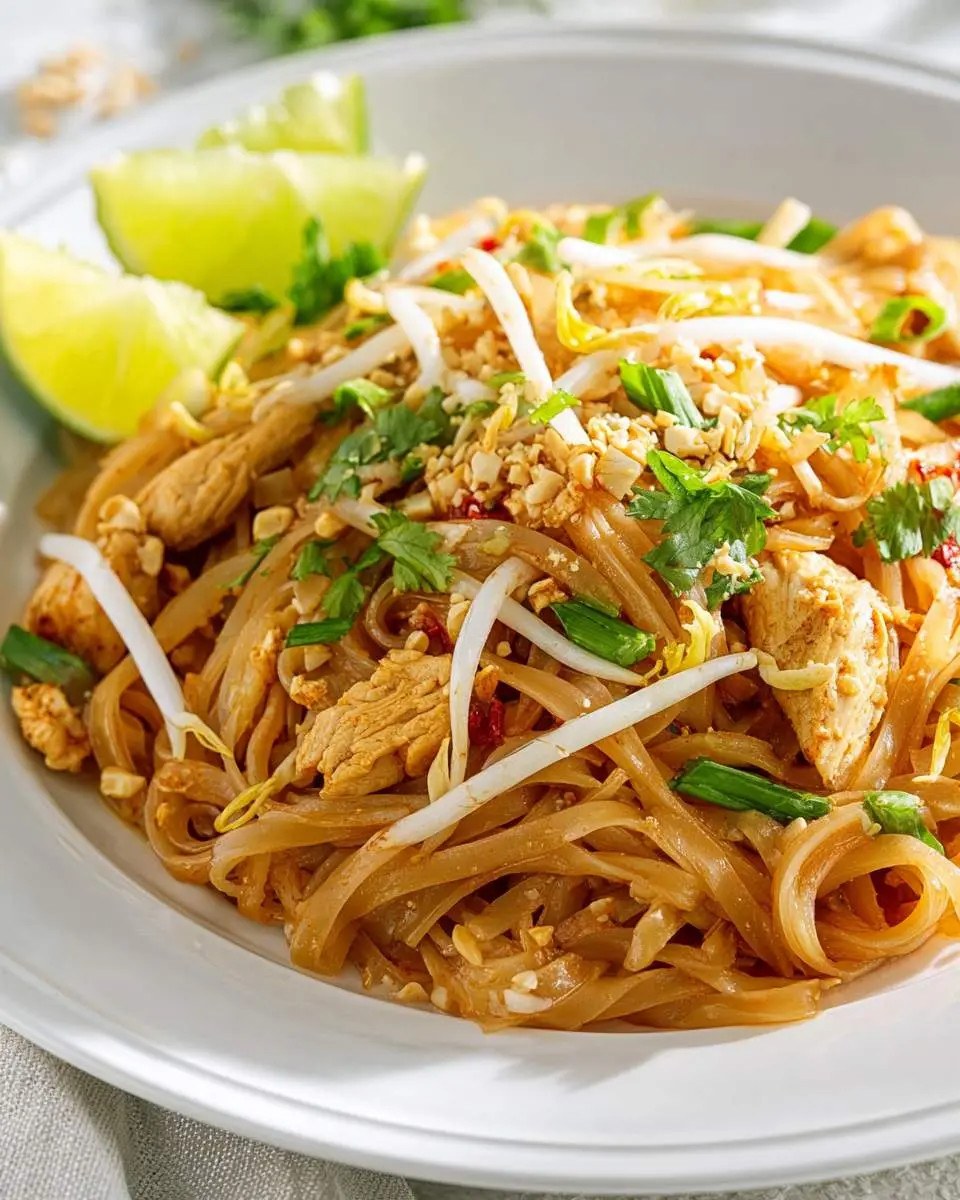
My neighbor brought me leftovers from her favorite Thai spot last year when I was recovering from a nasty cold. I ate them cold, straight from the container, standing at my kitchen counter in pajamas at midnight. That night I decided I needed to learn how to make this myself, not just rely on takeout containers and generous neighbors.
After a dozen attempts and one spectacularly failed batch where my noodles turned to mush, I’ve finally landed on a version that makes me genuinely proud to serve. It’s become my go-to when I want to impress without stress. If you’re building confidence with Asian-inspired chicken dishes, my chicken kofta with garlic yogurt sauce was my gateway recipe into bolder flavors.
What You Need to Make This Recipe
The magic of chicken pad thai lives in three non-negotiable ingredients that took me forever to stop substituting. Tamarind concentrate gives you that impossible-to-fake sour backbone, fish sauce delivers the savory depth that salt alone can’t touch, and rice noodles provide that perfect chewy resistance when you bite down. I spent months trying lime juice instead of tamarind and soy sauce instead of fish sauce, and the results were always flat, always missing that thing I couldn’t name. Palm sugar matters too, its caramel notes rounding out the sharp edges. For another weeknight chicken dinner that leans on fresh vegetables, my stuffed zucchini boats with chicken uses a similar fresh approach.
How to Make Chicken Pad Thai
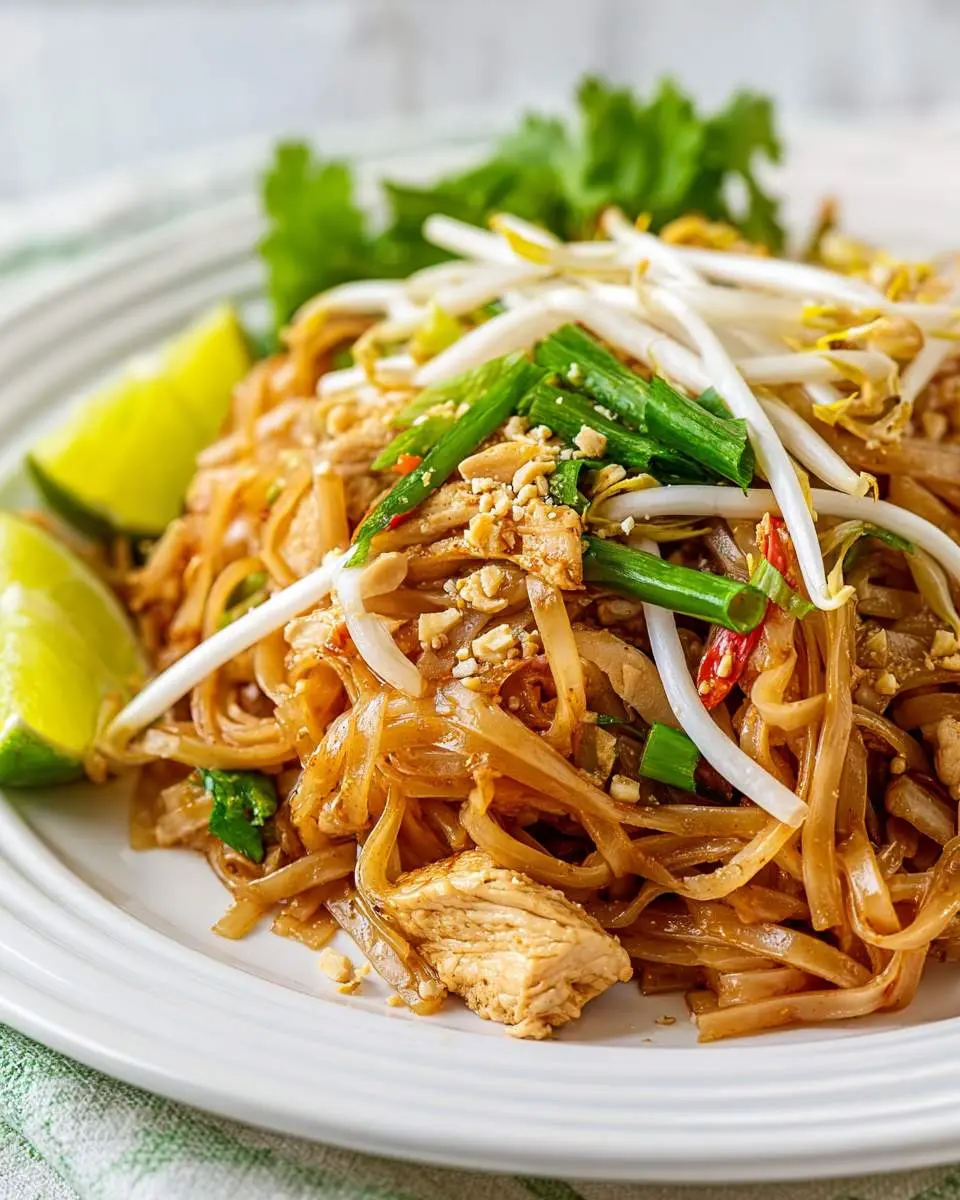
I start by soaking my rice noodles in warm water, never boiling, while I whisk together the sauce in a small bowl. The tamarind and fish sauce smell intense and almost wrong at this stage, but trust the process. I slice my chicken thin against the grain so it cooks in seconds, then heat my wok until it barely smokes. The chicken hits first, sizzling loudly, and I push it aside to make room for beaten eggs that scramble into soft curds. Garlic and shallots follow, fragrant and sharp, then the drained noodles go in along with that dark, glossy sauce. Here’s where patience matters: I let everything sit undisturbed for thirty seconds so the noodles caramelize slightly, then toss vigorously. Bean sprouts and scallions go in last, barely wilting, keeping their crunch. The whole thing comes together in under ten minutes once your mise en place is ready. If you want another fast chicken dinner with a creamy sauce, my creamy garlic chicken uses a similar high-heat technique.
Pro Tips
Soak, don’t boil your noodles. Boiling makes them mushy and prone to breaking during the high-heat toss. Warm water gives you that essential chew and helps them absorb sauce properly.
Let your wok actually get hot. I mean scary hot, where water droplets evaporate in two seconds. Anything less and you’ll steam instead of sear, ending up with soggy noodles and grey chicken.
Prep absolutely everything first. Once the heat is on, this moves fast. I arrange my ingredients in little bowls in order of use, because there’s no time to chop garlic while your eggs are burning.
My Secret Trick: I save a few tablespoons of the noodle soaking water, starchy and warm, to loosen the sauce if it tightens up too quickly. This gives you that glossy, restaurant-quality coating without adding extra oil.

How to Store Chicken Pad Thai
- Refrigerate in an airtight container for up to 3 days; the noodles will soften further but the flavor holds well
- Store sauce and noodles separately if possible, though I rarely have the discipline for this
- Freeze for up to 1 month in a freezer-safe bag with air pressed out; thaw overnight in refrigerator
- Reheat in a hot skillet with a splash of water or oil, not the microwave, to restore some texture
- Add fresh bean sprouts and crushed peanuts after reheating, not before storing
Nutritional Benefits
Chicken pad thai delivers a solid protein punch from the chicken and eggs, roughly 25 grams per serving, which keeps me satisfied for hours without the heavy feeling of cream-based pasta. The tamarind brings actual nutritional value too, with antioxidants and a small amount of iron and magnesium that most people don’t expect from a comfort food dinner.

FAQs
Can I make this with shrimp instead of chicken?
Absolutely, and I do this often. Use the same weight of large shrimp, peeled and deveined, and cook them for just ninety seconds per side until pink and curled. They release moisture faster than chicken, so work quickly.
Why do my noodles always clump together?
You’re either overcooking them during soaking or not using enough oil in the wok. The noodles need to be slightly underdone when they hit the pan, and you need that slick of oil to keep them separate during the toss.
Is there a substitute for fish sauce?
Vegetarian fish sauce exists and works reasonably well, or use a combination of soy sauce and a pinch of mushroom powder for umami depth. The flavor profile shifts but remains delicious.
How do I make this less spicy for kids?
Omit the dried chili flakes entirely and serve sriracha on the side for adults. The base recipe is mild and kid-friendly, with sweetness from palm sugar that balances the tangy sauce.
Chicken Pad Thai
Ingredients
Equipment
Method
Notes
Conclusion
This chicken pad thai has earned its spot in my regular rotation not because it’s authentic, but because it’s genuinely mine now. I’ve made it enough times that my hands know the rhythm, and that confidence is worth every failed batch that came before. For another globally-inspired chicken dinner, my Peruvian chicken brings similar bold flavors with a completely different technique.
Follow us on Social Media : Pinterest