
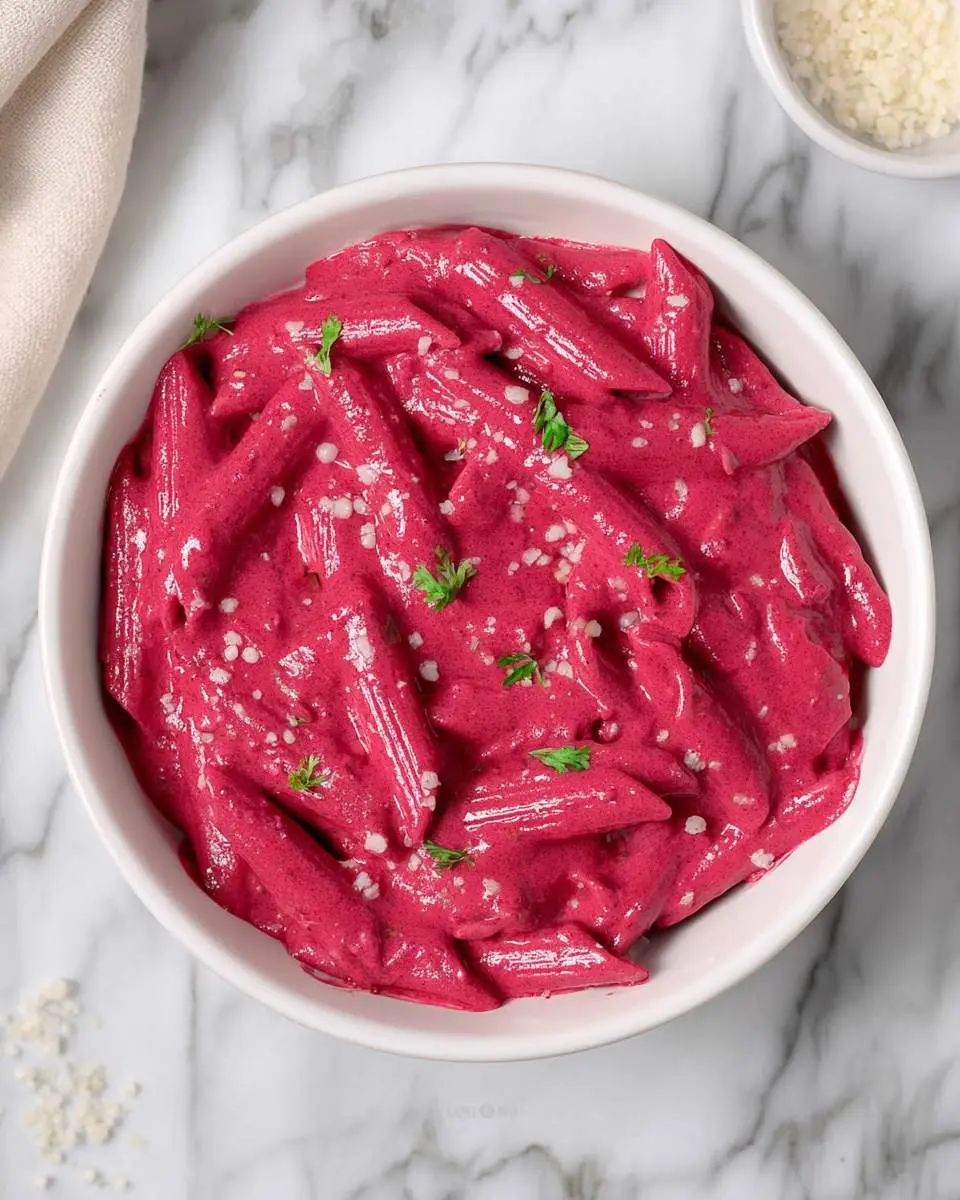
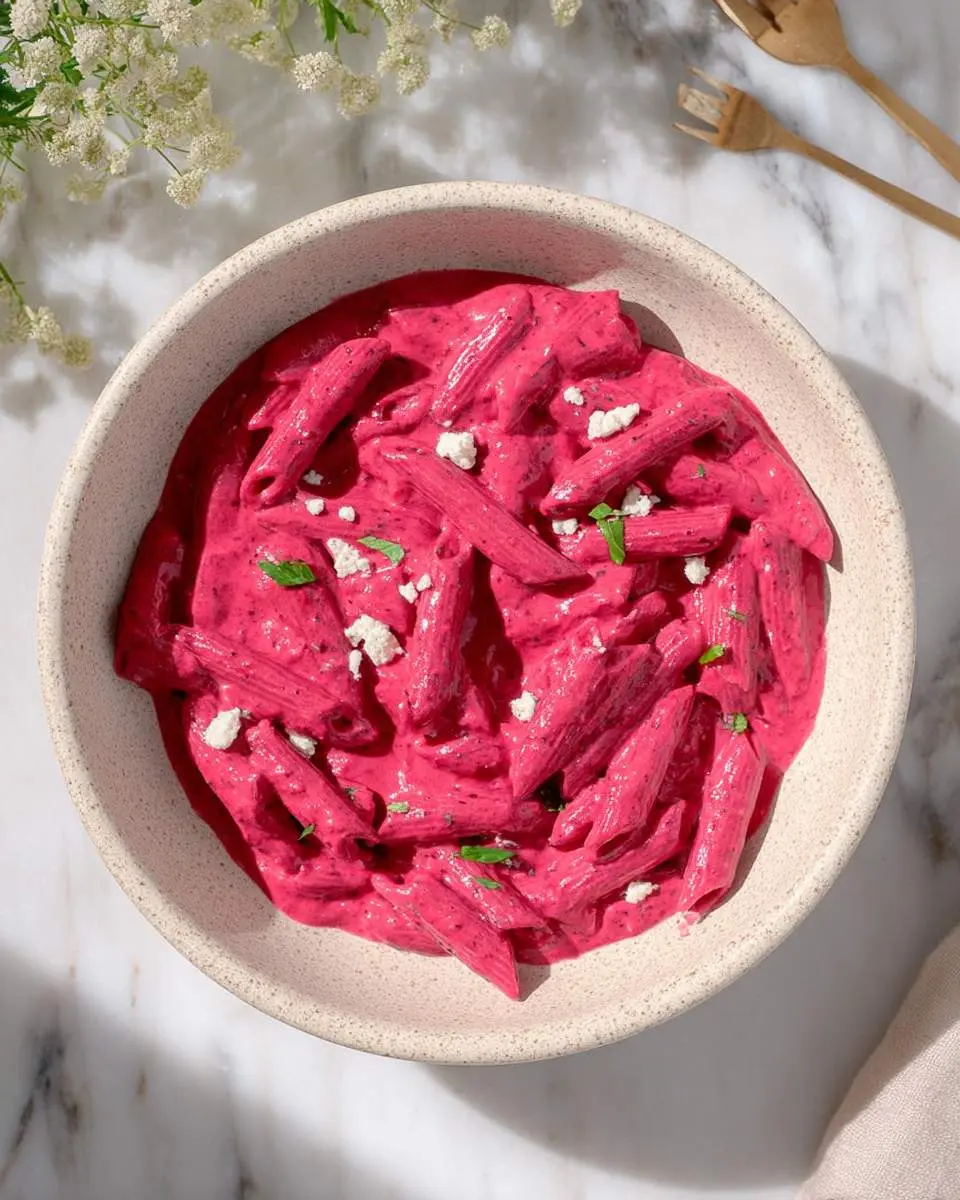
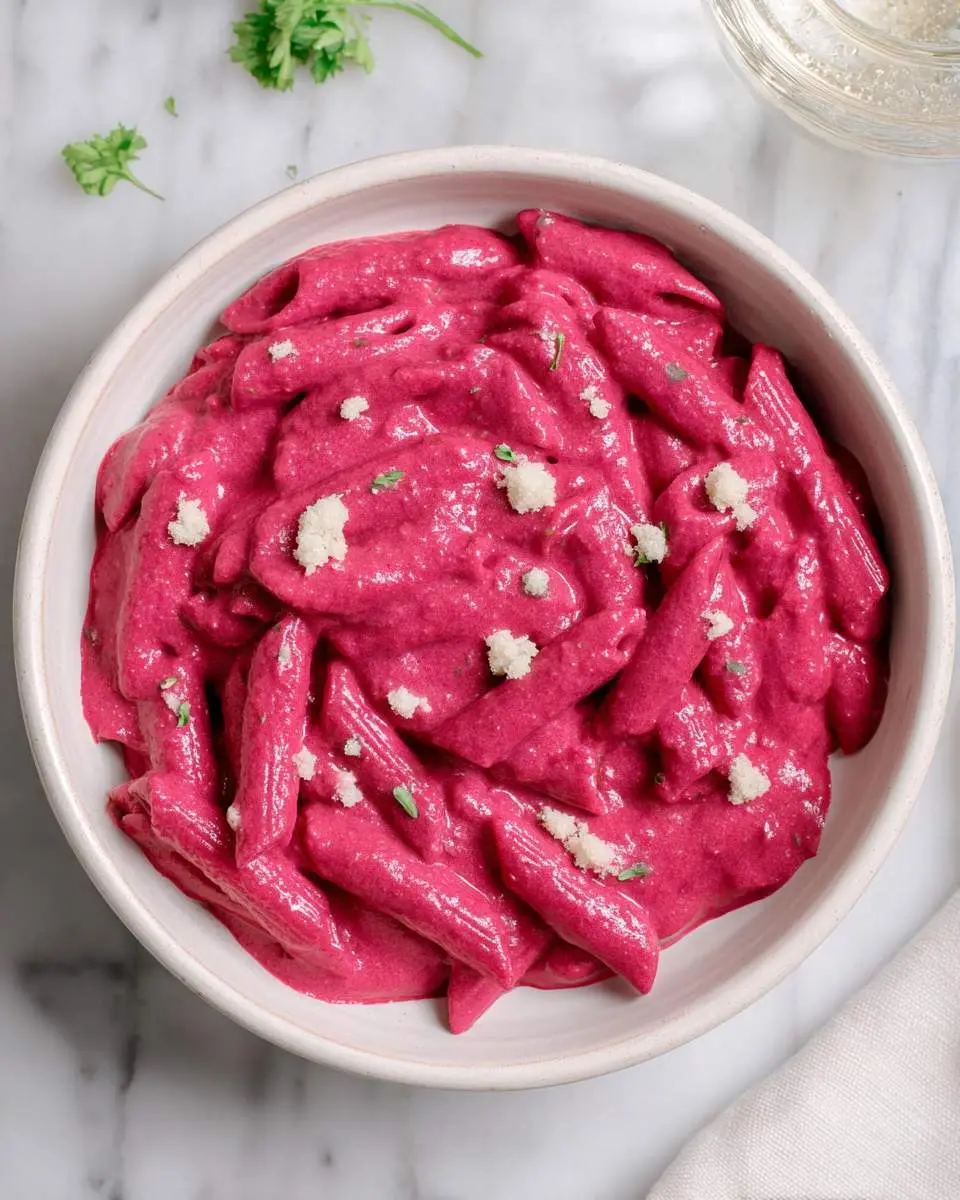
The first time I spooned this sauce over hot pasta, I actually gasped. That deep magenta color bleeding into creamy noodles stopped me mid-bite. I had never made a beetroot pasta sauce before, and honestly, I worried it would taste like dirt and disappointment. It did not. It tasted like someone had distilled early autumn into a bowl.
My grandmother grew beets in her Ohio garden, and I hated them as a kid. Boiled, slippery, vaguely metallic. But last October, I found myself with a farmer’s market haul and a stubborn refusal to waste food. Roasting those beets changed everything. The kitchen filled with this sweet, almost caramelized smell that had nothing to do with my childhood trauma.
Now this sauce lives in my regular rotation, right alongside my orecchiette with sausage and broccoli. It is the recipe I make when I want to feel like I tried without actually trying that hard.
Why Roasted Beets Beat Boiled Every Time
The foundation of this sauce is roasted beets, not boiled, and that distinction matters more than I expected. Roasting concentrates their sugars and strips away that earthy harshness that makes people swear off beets entirely. I wrap mine in foil and let them go until they are knife-tender and slightly caramelized at the edges. The goat cheese is non-negotiable too. It adds this sharp, tangy counterpoint that keeps the sauce from feeling one-dimensional. A splash of pasta water at the end creates the silky emulsion that makes everything cling properly. If you want something heartier, this sauce pairs beautifully with the flavors in my creamy kielbasa smoked sausage pasta, though I usually keep this one vegetarian.
How to Make Beetroot Pasta Sauce
I start by scrubbing the beets and wrapping them individually in foil. Into a hot oven they go, usually around 400 degrees, for about 45 minutes until a paring knife slides through without resistance. While they roast, I toast walnuts in a dry skillet until they smell like warm bread and butter. That smell is my signal to pull them off before they burn.
Once the beets are cool enough to handle, the skins slip off with just my fingers running under water. I chop them roughly and drop them into the blender with the toasted walnuts, soft goat cheese, garlic that I have grated on a microplane, and enough olive oil to get things moving. The blender whirs and sputters, and I stop to scrape down the sides more often than I want to admit.
The magic happens when I toss the hot pasta directly into a wide skillet with the sauce and a splash of that starchy cooking water. The heat and the starch transform the thick puree into something that coats every strand. I finish it with more goat cheese crumbled on top and those reserved walnuts for crunch. The whole process feels almost meditative now, though the first time I made it, I was convinced I had ruined everything until that final toss. If you enjoy building sauces from roasted vegetables, you might also love my roasted red pepper pasta, which uses a similar technique with completely different results.
What I Learned After Three Batches
Raw garlic will punish you here. I learned this the hard way when my first attempt cleared my sinuses in a way that was not pleasant. Now I grate it fine and let it sit in the blender with the other ingredients for ten minutes before pureeing. Something about that brief rest mellows the harshness without losing the flavor entirely.
The pasta water is not optional. I used to skip this step when I was in a hurry, and the sauce would seize up and coat the pasta unevenly. That starchy liquid is what creates the emulsion that makes restaurant pasta feel different from home pasta. I save more than I think I need.
Walnut quality matters more than walnut quantity. The first time I used pre-chopped nuts from the baking aisle, and they tasted like the cardboard box they came in. Now I buy whole walnuts and toast them myself. The difference in a beetroot pasta sauce this simple is dramatic.
My Secret Trick: I blend a small cooked potato into the sauce when I want it extra creamy without adding more cheese. The starch from the potato creates this velvety texture that fools everyone into thinking there is heavy cream involved. I started doing this after accidentally dropping a leftover roasted potato into the blender, and now I keep cooked potatoes in my freezer specifically for this purpose.
How to Store Beetroot Pasta Sauce
- Refrigerate in an airtight container for up to 4 days. The color deepens slightly, but the flavor holds beautifully.
- Freeze flat in a freezer bag for up to 2 months. Thaw overnight in the refrigerator before reheating.
- Reheat gently in a skillet over medium-low heat, adding a splash of water or milk to loosen the sauce as it warms.
- Do not microwave on high power. The goat cheese can separate and become grainy.
Why This Recipe Fits a Healthy Routine
I keep coming back to this sauce because it satisfies my craving for comfort food without the heaviness I usually associate with creamy pasta. Beets bring actual nutrients to the table, folate and manganese and those pigments that make nutritionists enthusiastic. The walnuts add omega-3s and a protein boost that keeps me full longer than I expect from a meatless dish. A beetroot pasta sauce like this one proves that healthy eating does not have to mean sacrificing the pleasure of a proper bowl of pasta.

FAQs
Does this sauce taste like dirt?
Not if you roast the beets properly. Boiling concentrates the earthy compounds that people find off-putting, but roasting caramelizes the natural sugars and creates something sweet and complex. My beet-hating husband asks for this specifically.
Can I use pre-cooked beets from the store?
You can, but the flavor will be flatter. Vacuum-packed cooked beets work in a pinch, though they lack the depth that roasting develops. I have done it when I am truly desperate, and I always wish I had roasted them myself.
What pasta shape works best?
Short shapes with ridges or hollows grab the sauce best. I like rigatoni or casarecce. Long strands work too, but you need to really toss aggressively to get even coating. Avoid delicate shapes that might break under the weight of this thick sauce.
Can I make this vegan?
Absolutely. I have substituted cashew cream for the goat cheese with good results, though the tang is different. Nutritional yeast adds some of that funky depth back in. The beetroot pasta sauce base itself is naturally plant-based, so the adaptation is straightforward.
Beetroot Pasta Sauce
Ingredients
Equipment
Method
Notes
Conclusion
This sauce changed my mind about an entire vegetable. It is now my answer to what should I make that feels special but does not require a special occasion. I hope you try it and find your own reason to keep beets in the rotation. For another sauce that comes together in the time it takes to boil water, check out my pesto pasta.
Follow us on Social Media : Pinterest