
I remember the aroma of slow-cooked meat filling our home on a chilly Sunday afternoon, instantly transporting me to warmth and comfort. That deep, rich scent always signals something truly special is happening in my kitchen, and lately, it’s been all about mastering these incredible Beef Short Ribs. They’ve become my new obsession.
For years, I thought this kind of dish was reserved for fancy restaurants or complicated holiday meals, something way beyond my everyday cooking skills. But then I tried it myself, and oh, what a revelation it was! My family still talks about the first time I made them.
The process feels like a comforting ritual, and the reward is a dish so tender it practically melts away on your tongue. Trust me, if you’re looking for a dish that truly nourishes the soul, you’ll want to dive into this roast beef experience with me.
What You Need to Make This Recipe
For me, the magic of this dish really begins with selecting the right cuts; meaty, bone-in Beef Short Ribs are non-negotiable for that deep, rich flavor that only comes from the bone. We’ll also lean on a good quality red wine—something dry and robust—because it adds such incredible depth to the braising liquid, transforming it from good to absolutely sublime. And honestly, I swear by a touch of balsamic vinegar; it brightens everything up and cuts through the richness beautifully, making each bite sing, perhaps even more than my favorite creamed chipped beef recipe.
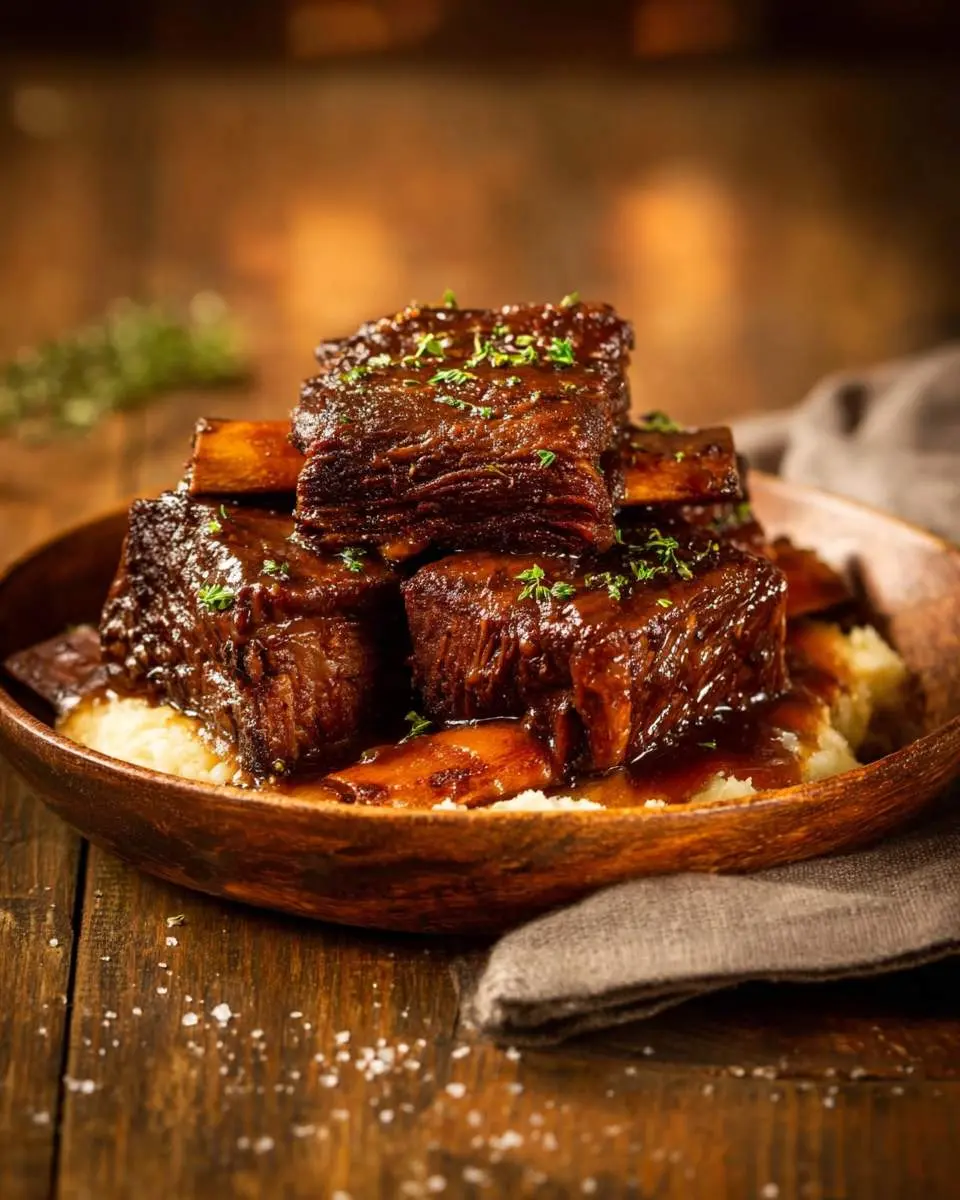
How to Make Beef Short Ribs
My journey to these perfect short ribs always starts with a good sear; I love the sound of that sizzle as the beef hits the hot pan, creating a beautiful crust that locks in all those juices. It’s messy, a little smoky, but utterly essential for building flavor from the ground up.
Once everything is nicely browned, I pull out the ribs and sauté my aromatics—onions, carrots, celery—until they’re soft and fragrant, filling my kitchen with such a comforting aroma. This is where the foundation of the sauce really takes shape, absorbing all those delicious fond bits from the pan.
Then comes the deglazing, scraping up all those browned bits with a splash of wine, watching it transform into a rich liquid. Adding the broth and herbs, I nestle the seared ribs back into the pot, ensuring they’re mostly submerged in that glorious liquid. The slow braise in the oven is where the real alchemy happens, filling the whole house with an anticipation that even my trusty corned beef brisket can’t quite match.
Hours later, when the meat is literally falling off the bone and the sauce has thickened into a velvety dream, I know we’re in for a treat. The texture is pure heaven, yielding with the gentlest touch of a fork.
Pro Tips
Don’t crowd the pan when searing: I’ve learned the hard way that trying to rush the browning process just steams the meat instead of creating that beautiful, flavorful crust. Give your Beef Short Ribs plenty of space to get deeply caramelized on all sides; it makes a huge difference in the final taste.
Choose a good quality, dry red wine for braising: The wine isn’t just for deglazing; it’s a major flavor component in the sauce. Don’t use anything you wouldn’t drink yourself. A decent Cabernet Sauvignon or Merlot will lend a deep, complex richness that cheap wine just can’t deliver.
Braise low and slow: Patience is truly a virtue with this dish. Keep your oven temperature around 300-325°F (150-160°C) and give it the time it needs, typically 3-4 hours. This low and slow method is what breaks down the tough connective tissues, resulting in incredibly tender, fall-off-the-bone meat.
My Secret Trick: After braising, I always let the short ribs rest in their liquid, then refrigerate the whole pot overnight. The next day, I skim off the solidified fat from the top, reheat gently, and finish the sauce. This resting period really deepens the flavors and makes the sauce incredibly silky.
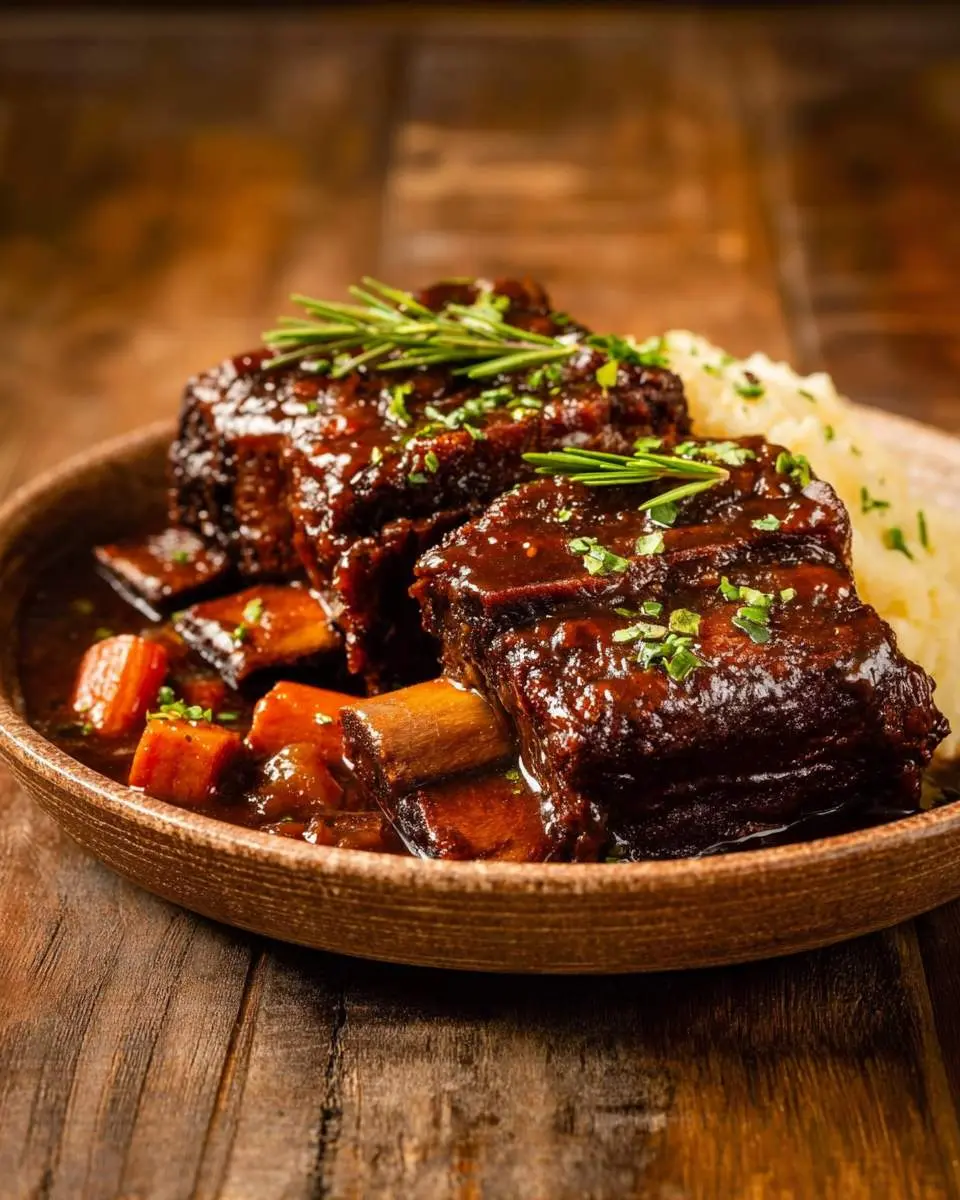
How to Store Beef Short Ribs
- Leftover short ribs can be stored in an airtight container in the refrigerator for up to 3-4 days.
- For longer storage, freeze the cooked short ribs and their sauce in a freezer-safe container or heavy-duty freezer bag for up to 3 months.
- To reheat, gently warm on the stovetop over low heat, adding a splash of broth or water if the sauce is too thick. You can also reheat in the oven at 300°F (150°C) until warmed through.
Nutritional Benefits
Beyond the comforting deliciousness, I always appreciate that my Beef Short Ribs also offer some genuine nutritional perks. Beef is a fantastic source of high-quality protein, which is so important for building and repairing tissues, and these ribs provide essential iron and B vitamins. Plus, when I incorporate all those colorful vegetables like carrots and celery into the braising liquid, I’m adding a good dose of vitamins and fiber to our meal.
FAQs
What cut of beef should I use for short ribs?
I always opt for bone-in English cut short ribs; they offer the best flavor and texture after hours of slow braising. Flanken-style ribs are also delicious but tend to cook a bit faster and might be better for grilling or quicker preparations.
Can I make these short ribs ahead of time?
Absolutely, I highly recommend making your delicious Beef Short Ribs a day in advance! The flavors actually deepen overnight, and it allows you to easily skim off any excess fat from the chilled sauce. It’s my favorite way to enjoy a stress-free meal.
What should I serve with these ribs?
Oh, the possibilities! I love serving mine with creamy mashed potatoes or polenta to soak up all that rich sauce. A side of roasted root vegetables or a simple green salad also provides a lovely balance to the dish.
Why are my short ribs tough?
If your short ribs are tough, it usually means they haven’t cooked long enough. The magic of this cut is in the low and slow braise, which breaks down connective tissue. Keep cooking them gently until they’re fork-tender; patience is key here.
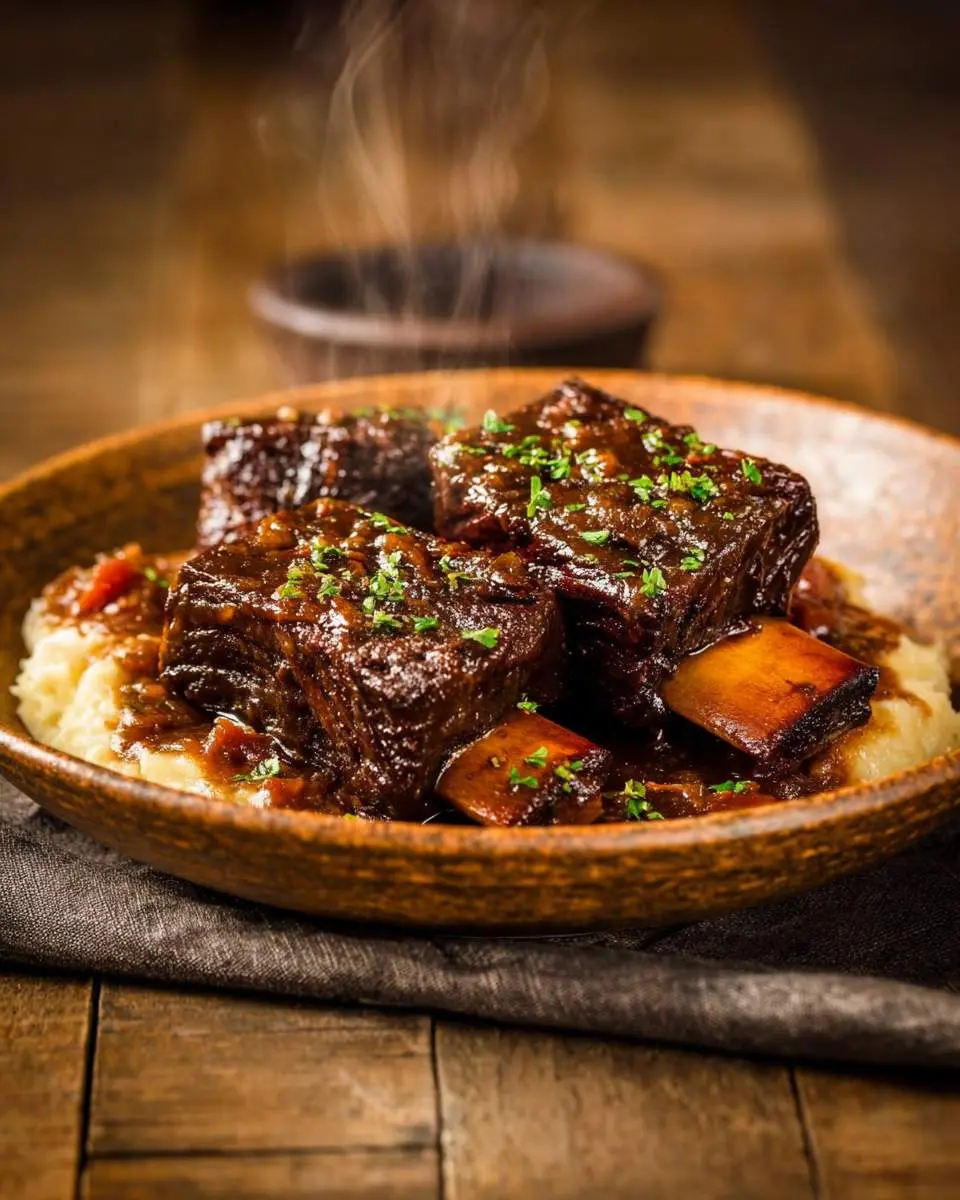
Beef Short Ribs
Ingredients
Equipment
Method
Notes
Conclusion
I truly hope you give these Beef Short Ribs a try in your own kitchen; they’ve brought so much joy and warmth to our dinner table. There’s something incredibly satisfying about creating such a tender, flavorful dish with just a bit of patience and love. I promise, it’s a meal that will impress and nourish, perhaps even making it into your regular rotation alongside dishes like my beef bulgogi.