
The steam rising from my first bowl of wonton soup carried me straight back to my grandmother’s kitchen, though I’d never actually eaten this dish with her. That ginger-scented broth, those silky little dumplings bobbing like treasure. I understood immediately why this soup has comforted generations. There’s something almost magical about lifting a wonton with your spoon and watching it release a wisp of aromatic steam before you take that first bite.
My actual wonton journey started three winters ago at a tiny counter in Manhattan’s Chinatown. I was nursing a brutal cold, and the woman behind the counter pushed a bowl toward me without me ordering. “You look like you need this,” she said. She was right. I sat there for forty minutes, slowly working through sixteen perfect wontons, feeling something fundamental shift in my understanding of what soup could do for a person.
Now I make this at home when I need that same kind of care, or when I want to offer it to someone I love. The process has become meditative for me. the folding, the gentle simmering, the way the kitchen fills with that particular smell of ginger and white pepper. If you’re craving something similarly restorative, my Mediterranean lemon chicken soup carries that same healing energy in a completely different direction.
The Building Blocks of a Proper Wonton Soup
Ground pork with a generous fat ratio. I insist on 80/20. creates that juicy, tender filling that distinguishes memorable wontons from dry disappointments. The fat carries flavor and keeps the meat succulent even after simmering. Fresh ginger, grated on a microplane until it’s almost a paste, provides that distinctive warmth that defines the broth; dried ginger simply cannot replicate the bright, almost floral quality of the fresh root. And those thin wonton wrappers, the square ones specifically, transform from stiff paper into silky, translucent pockets that barely hold themselves together around the filling. that’s when you know you’ve got the right ones. For another soup where the starch component makes the dish, my clam chowder recipe depends equally on its potatoes for that essential comfort.
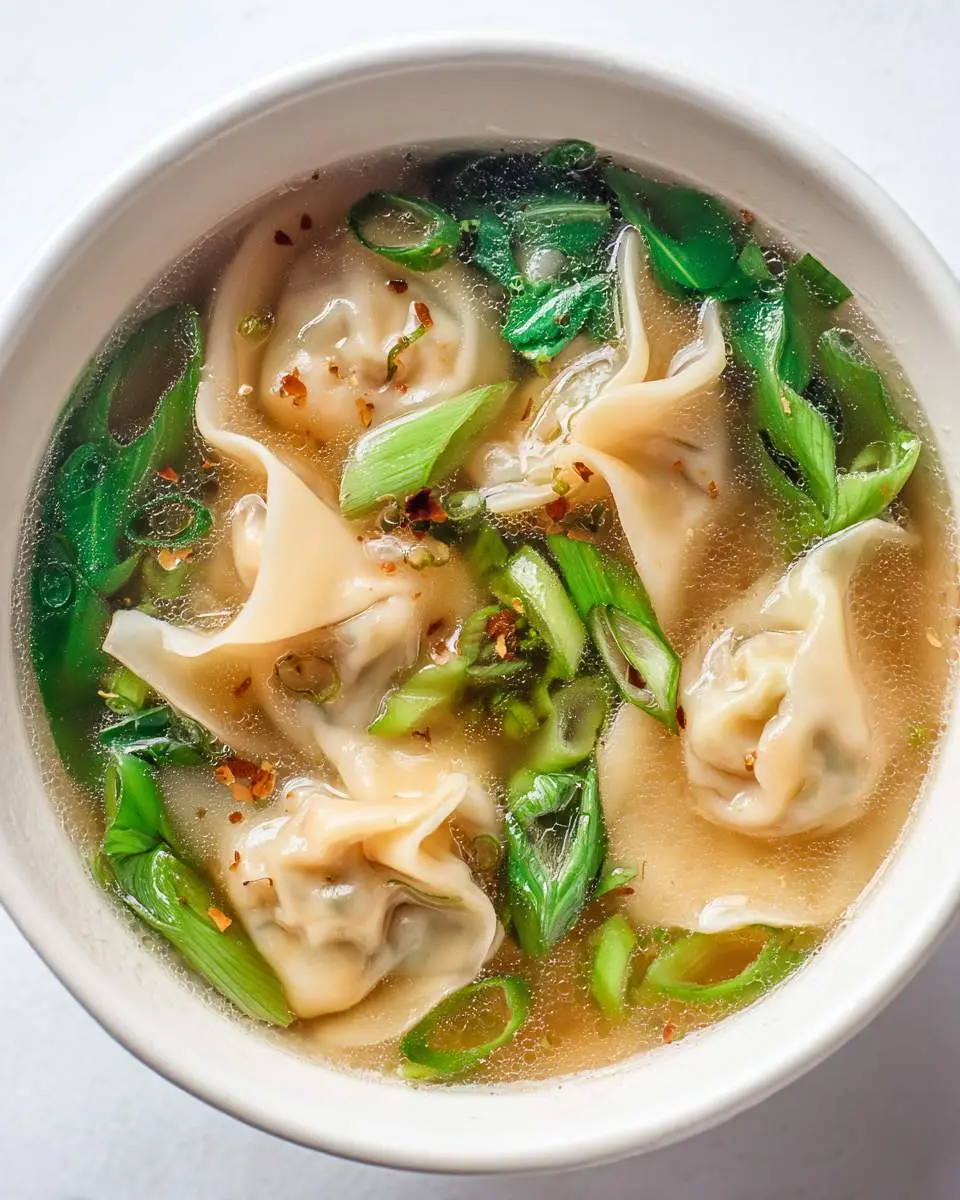
How to Make Wonton Soup
I start by waking up the aromatics. ginger, garlic, the white parts of scallions. in a pot with just a shimmer of oil until the ginger starts to smell almost candied and the edges of the garlic turn golden. That smell is my signal to add the broth. While that simmers and marries, I fold wontons at my kitchen table, which I’ve learned is the most comfortable position for this particular meditation. The filling goes in the center, I wet two adjacent edges, fold into a triangle, then bring the two long points together with another dab of water and pinch firmly. They look like little gold ingots, or hats, or whatever your imagination sees.
The wontons cook in the simmering broth for just three to four minutes. you’ll know they’re done when they float and the wrappers turn slightly translucent, showing shadows of the pink filling inside. I never rush this part. There’s something deeply satisfying about watching each one rise to the surface, like they’re announcing their own readiness. The Thai curry dumpling soup on my site uses a similar technique but with completely different aromatics if you want to explore that parallel.
What Three Batches Taught Me About Wonton Folding
My first batch fell apart because I was timid with the water sealing. those edges need to be genuinely wet, almost slippery, to create a proper bond. Dry edges open in the broth and you end up with floating filling and sad, empty wrappers. The second batch taught me that overfilling is worse than underfilling; a teaspoon feels small but expands as the meat cooks, and overstuffed wontons burst or cook unevenly. By my third attempt, I’d learned to listen for the specific sound of properly sealed edges. a soft squish rather than a dry crinkle.
My Secret Trick: I freeze my folded wontons on a parchment-lined baking sheet before they ever touch liquid, then transfer them to a bag once solid. They go directly from freezer to simmering broth with no thawing, and somehow this makes them hold together even better than fresh. the quick temperature shock seems to set the wrapper structure immediately.
The broth temperature matters more than I’d initially understood. A rolling boil violently tears wrappers; a gentle simmer, just barely breaking the surface, coaxes them to tenderness without destruction. I watch for those tiny bubbles that gather at the pot’s edge rather than the center.
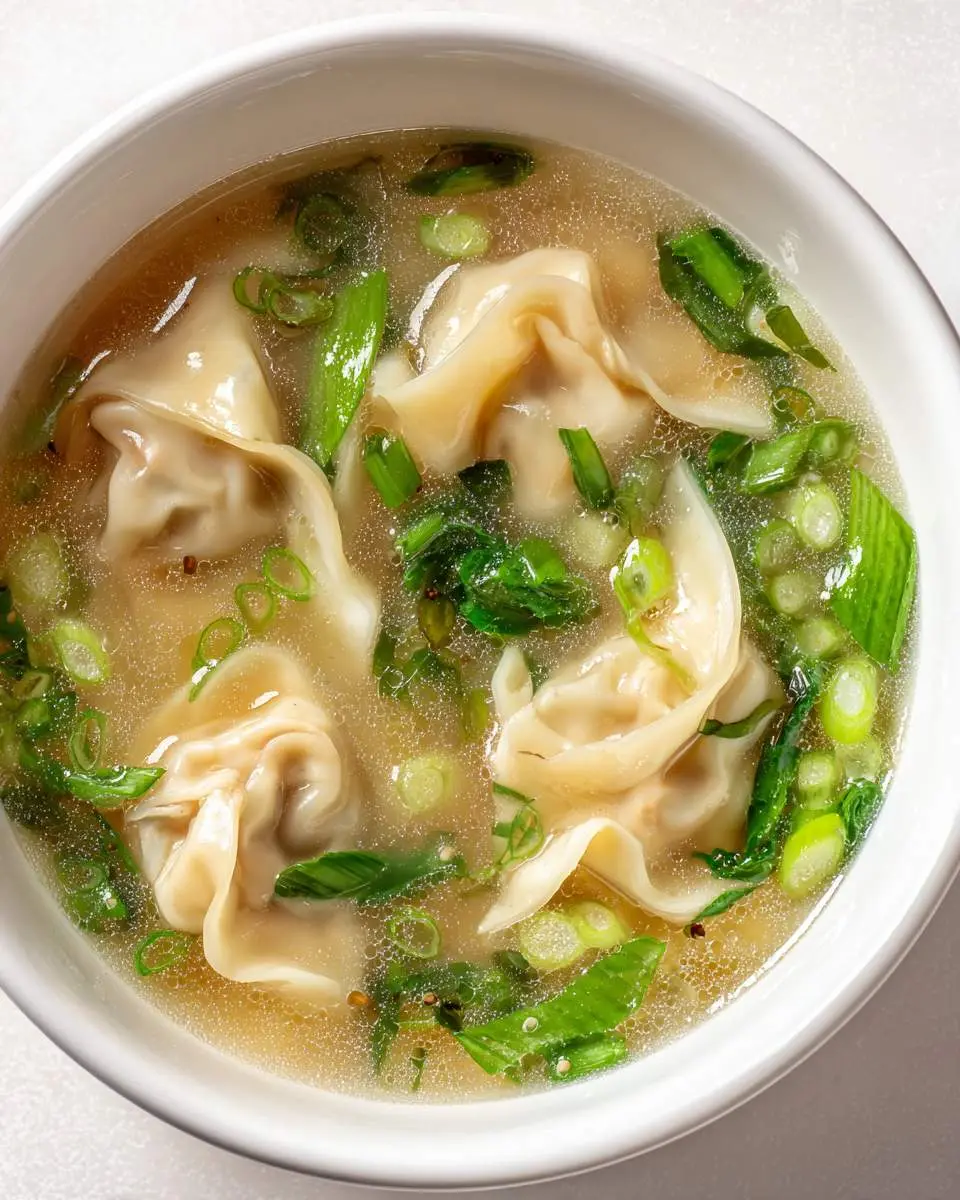
How to Store Wonton Soup
- Refrigerate broth and cooked wontons separately in airtight containers for up to 3 days. storing together makes the wrappers bloated and mushy
- Freeze uncooked folded wontons on a baking sheet until solid, then transfer to freezer bags for up to 2 months; cook directly from frozen, adding 2 extra minutes
- Reheat broth to a gentle simmer on the stovetop over medium-low heat, then add cold or frozen wontons fresh rather than reheating already-cooked ones
- Never microwave assembled wonton soup. the uneven heating destroys wrapper texture and can cause explosive splattering
Why This Bowl Earns Its Place in My Regular Rotation
Between the ginger’s anti-inflammatory properties and the complete protein from the pork filling, wonton soup genuinely sustains me through busy weeks without the heavy feeling that follows richer comfort foods. The broth itself, built on real chicken stock rather than powder, delivers collagen and minerals in a form my body seems to recognize and absorb. I notice I sleep better on nights when this is dinner. something about that combination of warmth, protein, and gentle spice settles my system in a way that more elaborate meals rarely achieve.
FAQs
Can I use store-bought wontons instead of making my own?
Absolutely, and I won’t judge you for it. Look for frozen wontons in Asian markets rather than mainstream grocery stores. the texture and filling quality differ significantly. Cook them straight from frozen, adding an extra minute or two to the simmering time. Homemade wrappers are thinner and more delicate, so store-bought versions hold up slightly better to longer cooking.
Why did my wonton wrappers tear in the broth?
Three common culprits: boiling too vigorously, overfilling the wontons, or insufficient sealing at the edges. The wrapper needs gentle heat to cook evenly without stress. Check that your pot maintains a bare simmer. those tiny bubbles at the edges rather than a rolling center. Also verify your sealed edges feel genuinely bonded before cooking.
What can I substitute for ground pork in the filling?
Shrimp, finely minced, creates the classic Cantonese version with a sweeter, bouncier texture. Ground chicken works but needs extra fat. add a tablespoon of sesame oil to prevent dryness. For vegetarian, pressed tofu crumbled fine with mushrooms and a beaten egg for binding produces surprisingly satisfying results, though the cooking time shortens slightly.
How do I get the broth that clear, restaurant-quality appearance?
Start with a clarified or well-strained stock, and never let it boil once the wontons enter. agitation clouds the liquid. Skim any foam that rises during the first minute of cooking. The final clarity comes from patience: a gentle, almost lazy simmer that cooks the wontons without disturbing the broth’s surface.
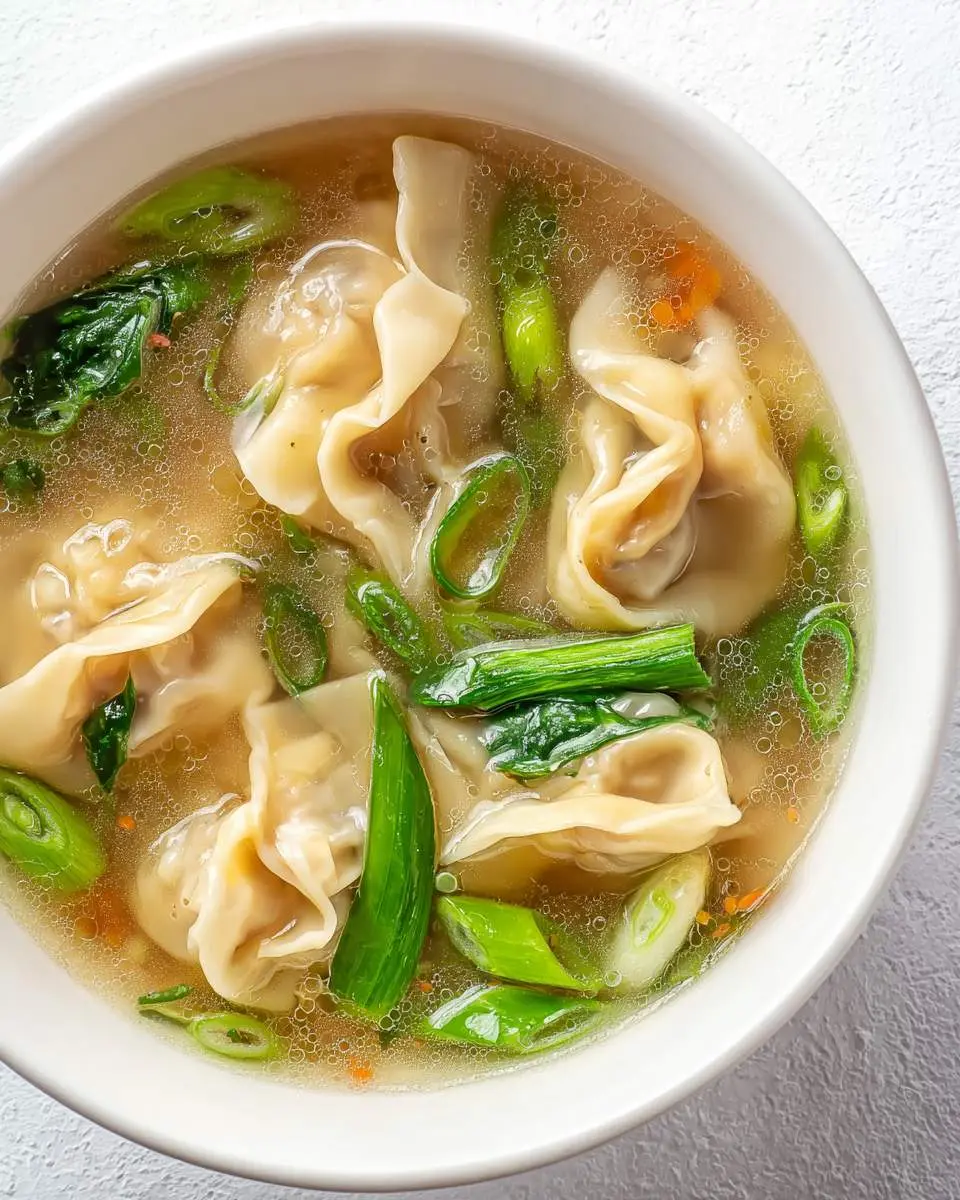
Wonton Soup
Ingredients
Equipment
Method
Notes
Conclusion
There’s a particular pride in lifting a spoonful of wonton soup that you folded yourself, in broth you built from actual bones and time. This recipe has become my offering to friends with new babies, to colleagues with winter colds, to myself when I need reminding that comfort can be crafted. If dumplings in spicy broth speak to you more directly, my spicy dumpling soup takes these same skills in a bolder direction. Either way, I hope this bowl finds you when you need it.
Follow us on Social Media : Pinterest