
The first spoonful stopped me mid-sentence. I had been talking to my sister on the phone, complaining about the heat and how I refused to turn on my oven, when I dipped my spoon into what I thought would be a simple experiment. That strawberry mousse melted on my tongue like summer itself decided to become dessert. The color alone made me smile,this impossible pink that only fresh berries can give you, not the sad artificial shade from a box.
My grandmother used to make something similar when strawberries piled up at the farm stand in June. She called it “fool,” which never made sense to me as a child because there was nothing foolish about eating berries folded into clouds of cream. I remember standing on a step stool, watching her macerate strawberries with sugar until they wept red juice, then folding everything together with a patience I did not inherit. Mine always ended up streaky and over-mixed. Hers looked like it came from a French pastry shop.
This version bridges that gap. It is forgiving enough for impatient cooks like me, yet elegant enough to serve when people you want to impress come for dinner. The texture is what dreams are made of,lighter than my chocolate mousse, which I adore but save for colder months when richness feels right.
Why Gelatin and Cream Matter Here
The magic of this dessert lives in two ingredients that do not seem related until they meet. Fresh strawberries bring acidity and that haunting floral note that makes you close your eyes when you taste it. But berries alone would give you soup. Gelatin is the invisible architecture,just enough to hold the mousse together without turning it rubbery. I use powdered, blooming it in cold water until it looks like applesauce, then melting it gently. The cream must be cold, straight from the fridge, and whipped to soft peaks that barely hold their shape. Too stiff, and you will deflate everything when you fold. I learned this the hard way, standing over a bowl of pink soup that was supposed to be dessert for a dinner party.
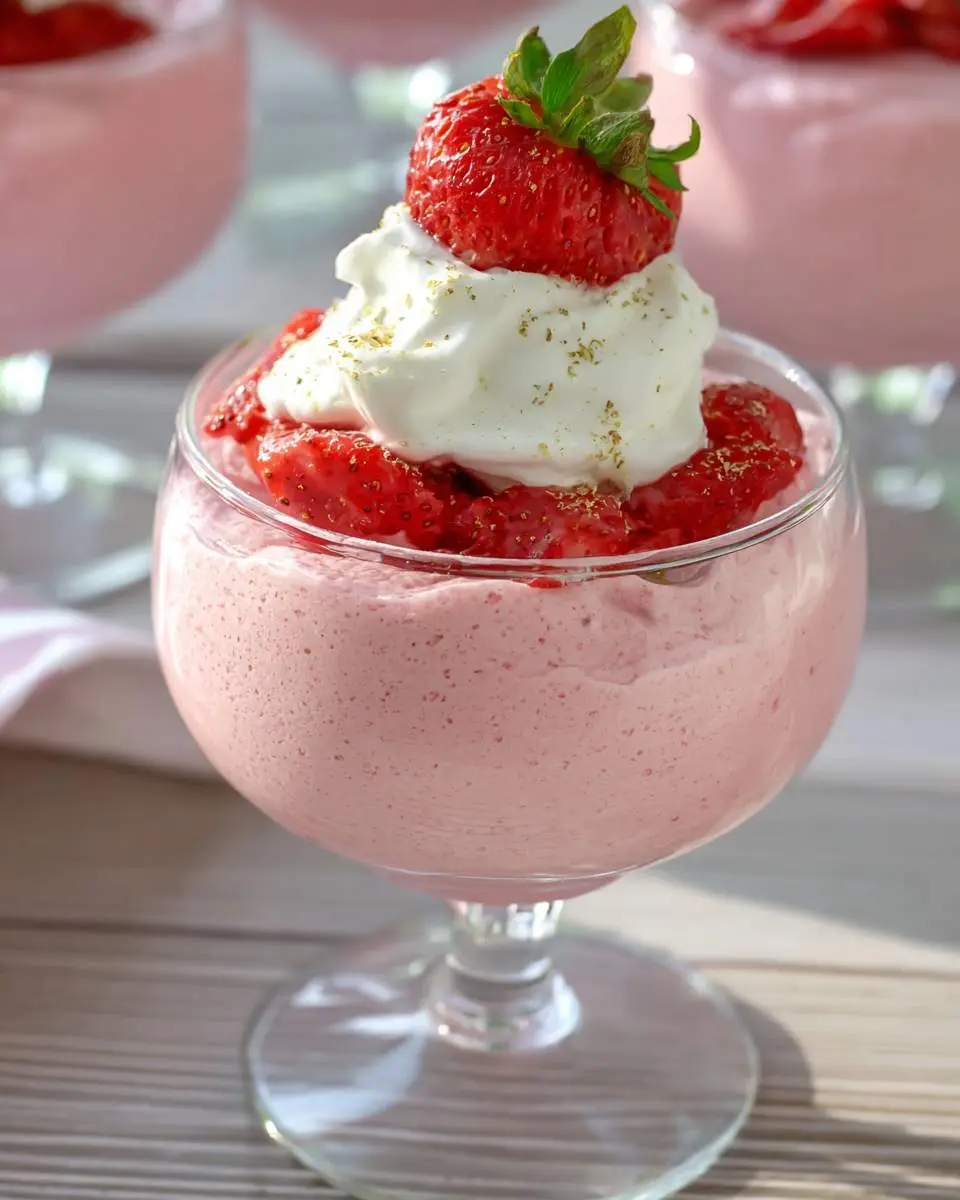
How to Make strawberry mousse
I start by hulling more strawberries than I need, because I always eat a handful standing at the counter. They get blended with sugar and a squeeze of lemon,just a little, to wake everything up,until completely smooth. The smell hits first, that green-top sweetness that means real berries, not the hollow red rocks from winter. This puree gets strained through a fine mesh sieve, which feels tedious but removes the seeds that would ruin the silky texture. You will press and scrape with a spatula, watching the bowl fill with glossy pink liquid while the seeds stay behind, clinging to the mesh like they know they are not invited.
The gelatin blooms in cold water for five minutes, then melts into a few tablespoons of warm strawberry puree. This step matters,if the gelatin goes in too hot, it will seize; too cool, and it will never incorporate. I whisk it into the remaining puree, then let it sit until it thickens slightly, like loose pudding. This is the moment to whip the cream. I use a hand mixer on medium speed, watching the cream go from liquid to foam to something that holds a soft curl when I lift the beaters. The folding happens in stages: a third of the cream gets sacrificed to lighten the berry mixture, then the rest gets gently incorporated with a rubber spatula, turning and scraping the bowl until no streaks remain but the mixture still feels airy.
Into glasses or ramekins it goes, tapping gently to settle any large bubbles. The refrigerator does the rest, transforming the mixture into something that holds a spoon upright but dissolves the moment it meets warmth. I made strawberry tiramisu last month with similar technique, but this mousse is simpler, more immediate, more purely about the berry itself.
What I Learned After Three Attempts
My first batch tasted perfect but looked grainy. I had whipped the cream too far, to stiff peaks that fought the folding process and broke into tiny butter-like flecks. Now I stop when the cream still flows slightly, when it looks like it might collapse but does not. The mousse stays smooth, almost shiny.
Temperature patience changed everything. I used to rush the gelatin, melting it over high heat or adding it to cold puree. Now I bloom it properly, melt it gently, and wait for the puree to cool to room temperature before combining. The mousse sets evenly, no rubbery bottom layer, no soupy top.
Sweetness needs adjusting based on your berries. Early season strawberries can be tart, needing more sugar. Late summer ones are candy-sweet and need barely any. I taste the puree before adding gelatin, remembering that cold dulls sweetness slightly. What tastes perfect warm will taste muted after chilling.
My Secret Trick: I save a few tablespoons of the strained strawberry puree before adding gelatin, then drizzle it on top of the set mousse as a sauce. It adds intensity, that pure berry flavor without the cream, and looks beautiful trailing down the sides of the glass.

How to Store strawberry mousse
- Refrigerate in airtight containers or covered glasses for up to 3 days. The texture stays perfect, though the color deepens slightly as the berries oxidize.
- Do not freeze,the gelatin structure breaks down when thawed, turning the mousse grainy and weeping liquid. I learned this with a batch I thought I was being clever about prepping ahead.
- If transporting, keep cold with ice packs and serve within 2 hours of removing from refrigeration. The mousse softens quickly at room temperature, especially in summer.
- Individual portions store better than one large bowl, as repeated scooping introduces air bubbles and compromises the smooth texture.
Why This Dessert Belongs in Your Rotation
Beyond the obvious pleasure of eating something that tastes like strawberry fields in cream form, this recipe fits a particular need in my kitchen. It is naturally gluten-free without trying to be, which matters when I have friends with celiac disease coming for dinner. The protein from the gelatin and the fat from the cream mean a small portion satisfies,unlike airy cakes that leave me hungry an hour later. I have served this strawberry mousse after heavy meals when no one claims room for dessert, then watched every spoon get scraped clean. There is something about the lightness, the way it feels like it could not possibly be filling, that tricks us into saying yes.
FAQs
Can I use frozen strawberries instead of fresh?
Yes, but thaw them completely first and drain off excess liquid, or your mousse will be too soft. Frozen berries work best in winter when fresh ones lack flavor, though the color may be slightly less vibrant. I add an extra teaspoon of sugar to compensate for the milder taste.
Why did my mousse separate into layers?
The gelatin likely was not fully incorporated or the cream was over-whipped. Both cause the mixture to weep liquid as it sets. Next time, ensure the gelatin mixture is smooth and at room temperature before folding, and stop whipping cream when soft peaks form.
Can I make this dairy-free?
Full-fat coconut cream works as a substitute, though the flavor changes significantly. Chill two cans overnight, scoop only the thick cream from the top, and whip as directed. The strawberry mousse will taste tropical, which I actually enjoy, but it is a different dessert entirely.
How far in advance can I prepare this?
Up to 24 hours is ideal. The mousse needs at least 4 hours to set properly, but after a full day the texture begins to degrade slightly, becoming denser as the gelatin continues to firm. I prefer making it the morning I plan to serve, or the night before at the earliest.
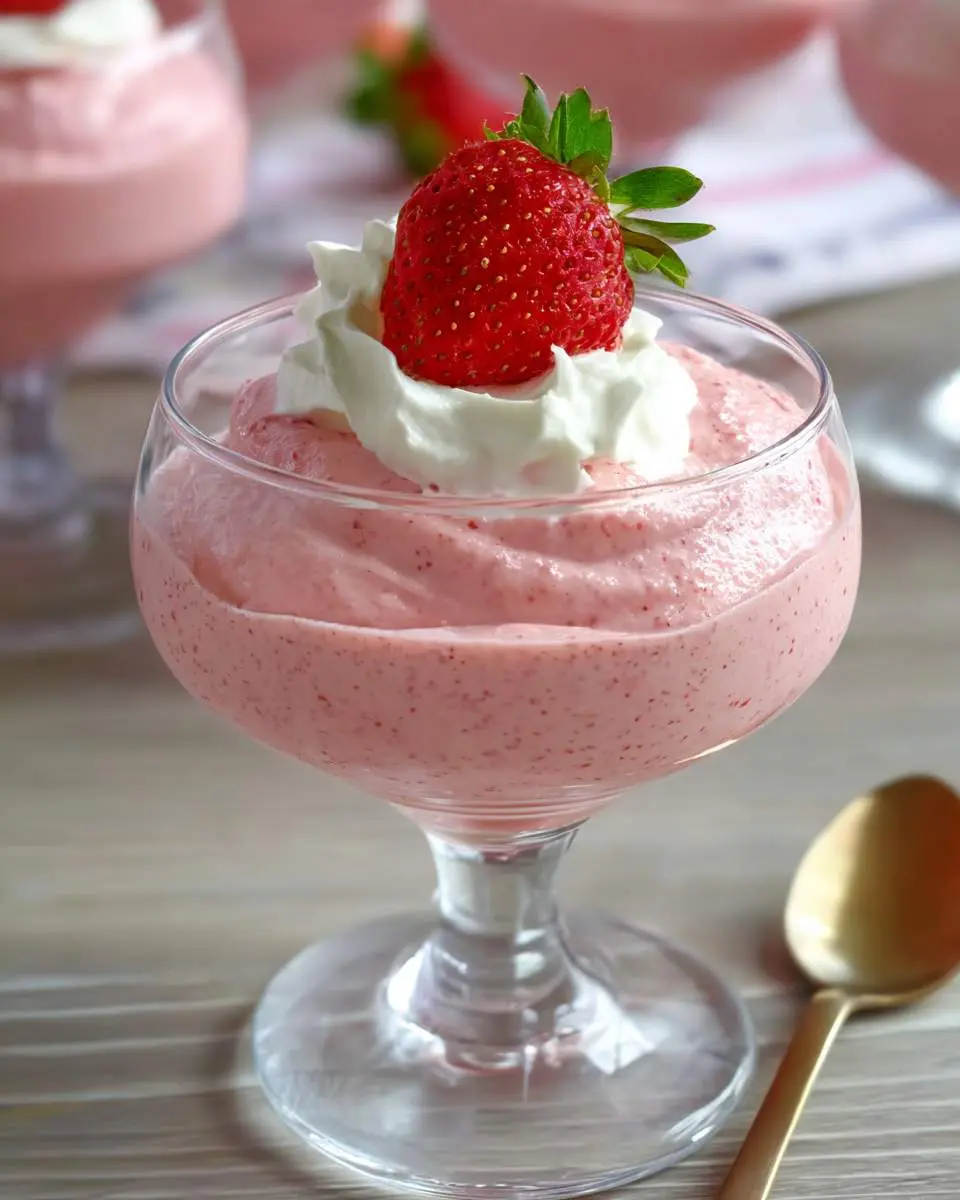
Strawberry Mousse
Ingredients
Equipment
Method
Notes
Conclusion
I keep coming back to this strawberry mousse because it reminds me that elegance does not require complication. Four ingredients, a little patience, and I have something that makes people pause and smile. If berries are calling your name, my strawberry cheesecake is waiting for you next. Follow us on Social Media : Pinterest