
The first time I pulled a roasted squash from the oven and scraped it with a fork, I actually gasped. Those golden strands fell away like pasta, and the kitchen smelled of caramelized edges and roasted garlic. I had finally found a way to love spaghetti squash without pretending it was something it wasn’t.
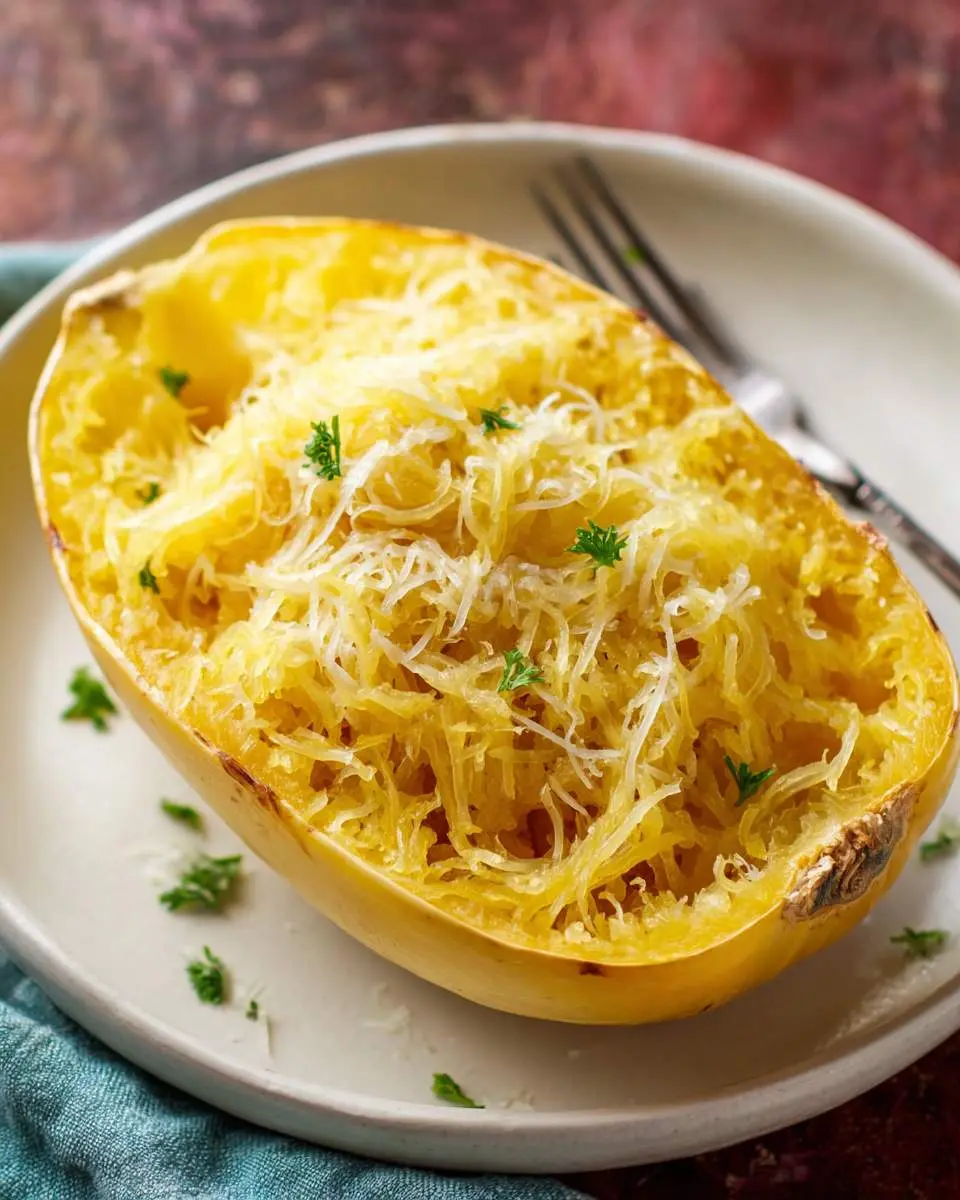
My grandmother would have laughed at me for getting excited about squash. She made her noodles from semolina and eggs, and anything less was sacrilege. But last October, when she visited and I served her this dish, she went quiet for a moment, then asked for the recipe. That silence meant more than any compliment.
This recipe came from my need for something simple that still feels like a meal. I’ve been making variations of it for three years now, tweaking the garlic, adjusting the parmesan. It pairs beautifully with lighter sides, and I’ve found myself reaching for garlic butter beans with spinach when I want to round out the plate without heaviness.
What You Need to Make This Recipe
The squash itself matters more than you’d think. I always choose one that feels heavy for its size with a stem that’s dry and firm, not moldy. That weight means more moisture inside, which translates to those tender, separate strands we want. The parmesan should be the real thing, aged and grated fresh, because pre-shredded versions never melt into that silky coating. I finish with good olive oil and plenty of garlic, roasted until it’s soft enough to spread like butter. If you’re looking for another way to use that parmesan, my zucchini parmesan has become a weeknight staple in my house.
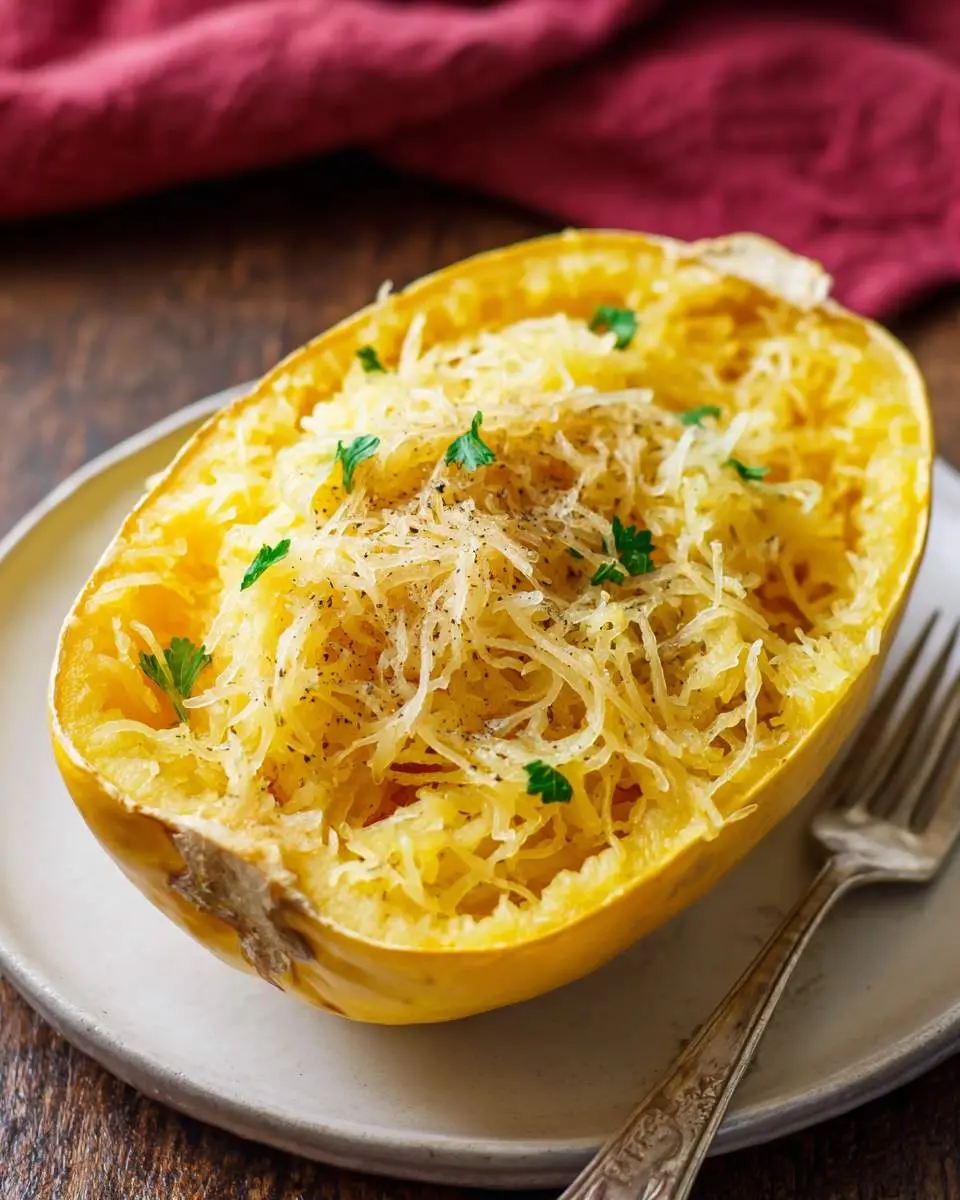
How to Make spaghetti squash
I start by cutting the squash crosswise into rings rather than lengthwise. This changes everything. The strands grow in circles around the center, so cutting across them gives you longer, more pasta-like pieces. The knife needs some muscle behind it, and I always use my heaviest chef’s knife with a towel under the board for grip.
The squash roasts cut-side down on a sheet pan with a thin film of water. This creates steam that softens the flesh without drying it out. After about thirty minutes, the kitchen fills with this sweet, nutty smell that makes people wander in asking what’s for dinner. I flip the rings and let the cut edges brown slightly while the garlic roasts alongside, wrapped in foil with a drizzle of oil.
Once the squash is cool enough to handle, I run my fork around each ring and watch the strands release. The roasted garlic squeezes out like paste, and I toss everything with parmesan while the squash is still warm enough to melt the cheese into every crevice. The whole process feels almost meditative now, though I remember when it stressed me out. For a more involved squash dish that builds on these same techniques, I’ve been loving this butternut squash risotto for special occasions.
Pro Tips
Cut across the equator, not the poles. This single change transformed my results. The strands run horizontally, so rings give you those long, twirlable pieces that actually feel like eating pasta rather than short, broken bits.
Don’t skip the water in the pan. That quarter-inch of liquid creates steam that keeps the squash tender rather than stringy and dry. I’ve tested both ways, and the difference is dramatic.
Season after scraping, not before. The squash releases moisture as it roasts, and salt draws out even more. Waiting until after scraping lets you control the final texture and prevents waterlogged strands.
My Secret Trick: I save the roasted garlic oil from the foil packet and drizzle it over the finished dish. That infused oil carries all the mellow sweetness of the roasted cloves without any bitterness, and it makes the parmesan cling to every strand.
How to Store spaghetti squash
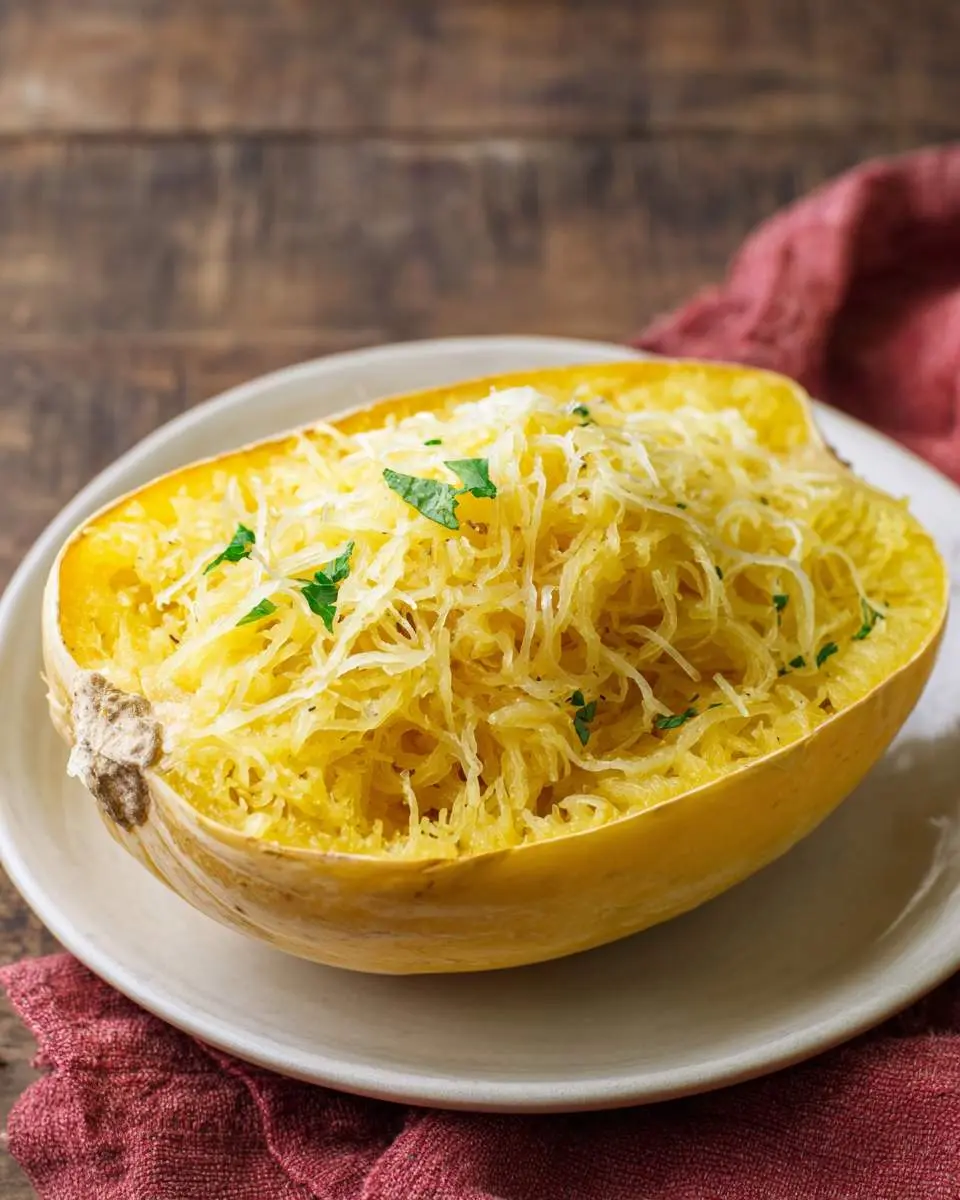
- Refrigerate in an airtight container for up to 4 days. The strands hold up surprisingly well without turning mushy.
- Freeze only the plain roasted squash, not the finished dish with cheese. Portion into freezer bags, press flat, and store up to 3 months. Thaw overnight in the refrigerator.
- Reheat gently in a skillet over medium-low heat with a splash of water or broth to restore moisture. The microwave works in 30-second bursts, but the texture suffers slightly.
- Add fresh parmesan after reheating, not before storing. The cheese becomes greasy and unpleasant when reheated from cold.
Nutritional Benefits
Spaghetti squash delivers real satisfaction without the heaviness of traditional pasta, and this preparation keeps things light while still feeling indulgent. The squash itself brings fiber and vitamin C, while the roasted garlic contributes compounds that support immune function. I notice I don’t crash after eating this the way I do with heavier carb loads, which matters more to me now than it did in my twenties.

FAQs
Why are my squash strands mushy instead of separate?
You likely overcooked or cut lengthwise. Crosswise rings cook more evenly, and checking at 30 minutes prevents that waterlogged texture. The fork test matters more than time.
Can I make this without an oven?
Yes, though I prefer roasting. The air fryer works at 375°F for 25-30 minutes, and the microwave steams it in 12-15 minutes pierced whole. Both methods sacrifice some caramelization.
How do I know when the squash is perfectly cooked?
The skin should give slightly when pressed, and a fork should slide through the flesh with gentle pressure. If you meet resistance, give it five more minutes.
What can I add to make this a complete meal?
I toss in white beans or top with a fried egg. For something heartier, roasted chicken works beautifully. The neutral base welcomes almost anything.
Roasted Spaghetti Squash with Garlic and Parmesan
Ingredients
Equipment
Method
Notes
Conclusion
This roasted spaghetti squash has earned its place in my regular rotation not because it’s healthy, but because I genuinely crave it. The combination of sweet squash, mellow garlic, and salty cheese satisfies something specific in me. If you’re looking to expand your meatless repertoire, my roasted eggplant pasta uses similar techniques with equally comforting results. I hope this finds its way to your table soon.
Follow us on Social Media : Pinterest