
The first time I threaded smoky sausage onto skewers with sweet peppers and onions, I knew I’d found my summer obsession. There’s something almost primal about cooking over open heat, watching the edges char and caramelize while the fat renders down into the vegetables below. These sausage kabobs have become my answer to every “what should I make?” moment when the weather turns warm and I can’t bear to turn on the oven.
Last Memorial Day, my brother-in-law showed up with a cooler full of bratwurst and a skeptical look on his face. “Kabobs?” he said, like I’d suggested we cook on the engine block of his truck. Three skewers later, he was asking for the recipe and texting his wife about buying a new grill. That’s the thing about food on sticks. it disarms everyone.
I love serving these with something that soaks up all those glorious drippings. My hibachi-style fried rice has become the go-to pairing, though honestly, a simple loaf of crusty bread works wonders too.
Why Sausage Changes Everything on a Skewer
Most kabobs suffer from the same problem: dry, overcooked protein that tastes like penance. Sausage solves this completely. it’s already seasoned, already fatty, already designed to stay juicy under high heat. I reach for smoked kielbasa or spicy Italian links, the kind that snap when you bite them. The peppers matter too. I like a mix of colors not for aesthetics, but because red peppers get sweeter while green ones keep some bite. And those thick-cut onions? They become silky and sweet in the spots where they touch the metal, almost burnt at the edges where they don’t. I learned about the magic of sausage and starch together from my mac and cheese meatloaf experiments, and that same principle applies here. fat carries flavor everywhere.
How to Make Sausage Kabobs
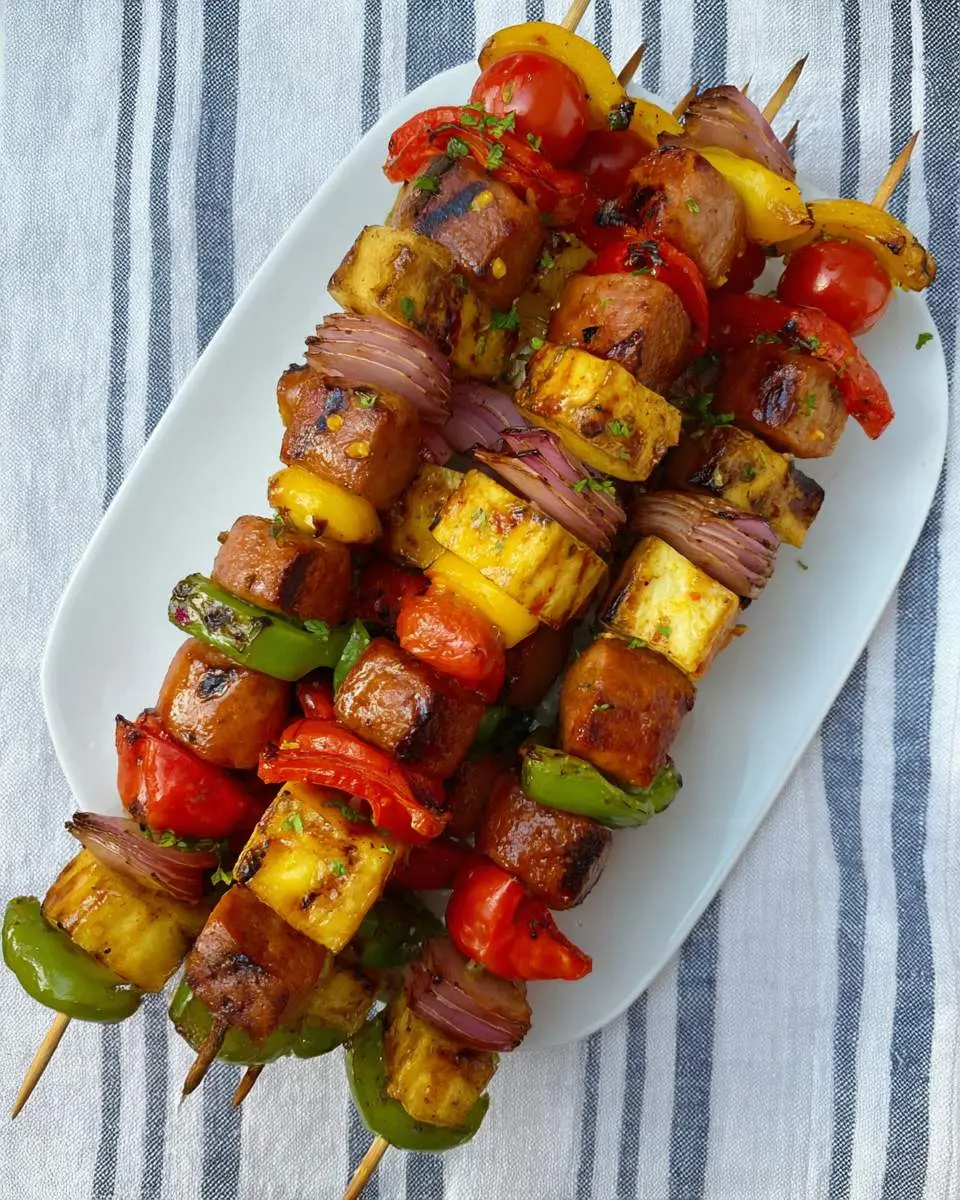
I start by cutting everything into roughly the same size. about inch-and-a-half chunks for the sausage, slightly larger for the vegetables since they’ll shrink more. The threading matters more than you’d think: sausage, pepper, onion, repeat, with the sausage pieces placed so their cut sides face the heat. That flat surface against the grates is where the magic happens.
My grill goes medium-high, and I never rush the first side. Five minutes undisturbed builds that crust I crave. The sound changes when they’re ready to turn. from a gentle sizzle to a sharper crackle. I rotate each skewer a quarter turn, chasing those grill marks like a perfectionist. The onions will try to fall off; let them. The charred ones that escape become the cook’s treat. By the time the sausage is blistered in spots and the peppers have collapsed slightly, the whole skewer smells like a backyard party. I’ve adapted some techniques from my BBQ sausage peppers and potato skillet. that same low-and-slow finish after the sear keeps everything tender.
What I Learned After Burning the First Batch
Not all sausage is created equal for skewering. Fresh breakfast links will fall apart; you want the fully cooked, smoked variety that holds its shape. I learned this the hard way when half my dinner slipped through the grates into the fire.
Soaking wooden skewers for thirty minutes isn’t optional. unless you enjoy the taste of scorched bamboo. I keep a dedicated container in my kitchen just for this purpose now.
The vegetables need headroom. Crowd them and they steam instead of char. I leave a finger’s width between pieces, which feels wasteful until you taste the difference.
My Secret Trick: Brush the finished kabobs with a mixture of melted butter and your favorite hot sauce right off the grill. The fat carries the heat into every crevice, and the slight gloss makes them look like they came from a restaurant kitchen.
How to Store Sausage Kabobs
- Refrigerate cooled kabobs in an airtight container within two hours of cooking; they stay good for 3-4 days at 40°F or below
- Remove from skewers before storing. the metal or wood can affect flavor and texture over time
- Freeze individual portions in freezer bags with air pressed out; lasts up to 2 months at 0°F
- Reheat in a 375°F oven for 12-15 minutes on a wire rack set over a baking sheet. this restores crispness better than the microwave
- Leftover vegetables and sausage also work cold, chopped into a next-day salad with vinaigrette
The Protein-Packed Dinner That Doesn’t Feel Like Health Food
Each skewer delivers around 20 grams of protein thanks to the sausage, which keeps me full well past bedtime. no midnight snacking required. The peppers contribute more vitamin C than an orange, and that matters to me during cold season when I’m trying to keep my immune system humming. What I love most about these sausage kabobs is how they satisfy without the heavy, weighed-down feeling that comes from cream-based sauces or deep-fried anything. It’s substantial food that still lets you move afterward, which is exactly what I want from a weeknight dinner.
FAQs
Can I make these in the oven instead of on a grill?
Absolutely. I’ve done it many times when the weather doesn’t cooperate. Use a broiler pan or wire rack set over a baking sheet to allow airflow. Broil on high for 4-5 minutes per side, watching carefully since ovens vary. You won’t get the same smoky depth, but the caramelization still happens beautifully.
What other vegetables work well on these skewers?
Zucchini and summer squash are my favorites when they’re in season. cut them thick or they’ll turn mushy. Mushrooms work surprisingly well too, especially cremini, which hold their texture instead of releasing all their moisture. Cherry tomatoes are risky; they tend to explode and make a mess.
How do I keep the sausage from drying out?
The key is starting with fully cooked smoked sausage, not raw links that need to reach a safe internal temperature. Since they’re already cooked, you’re just heating through and adding char. Pull them when the vegetables are done, not when you think the meat needs more time.
Can I prepare these ahead of time for a party?
You can thread everything onto skewers up to 24 hours ahead and keep them covered in the refrigerator. I actually prefer this. the flavors start to mingle, and the cold sausage holds its shape better on the grill. Just bring them to room temperature for 15 minutes before cooking so they heat evenly.
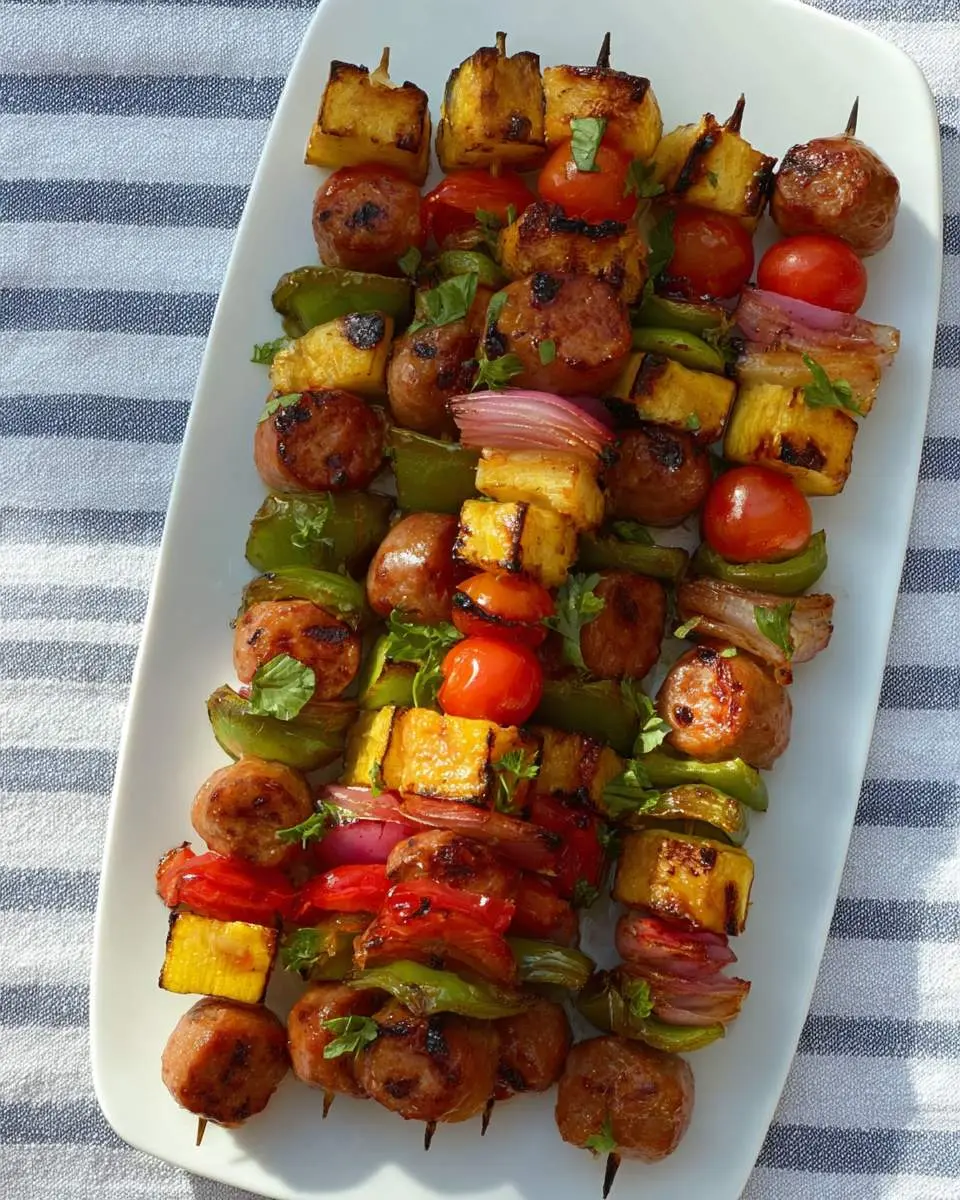
Sausage Kabobs
Ingredients
Equipment
Method
Notes
Conclusion
These sausage kabobs have earned their spot in my regular rotation because they deliver maximum flavor with minimum fuss. Fire up your grill, call over some skeptical relatives, and watch them convert in real time. If you’re craving more sausage and pepper magic, my classic sausage and peppers recipe hits all the same notes in skillet form. Either way, you’re in for a good meal.
Follow us on Social Media : Pinterest