
The first time I tasted pickled red onions, I was standing at a taco truck in Austin, sweating through my shirt in July. That sharp, tangy crunch cut through the rich barbacoa like nothing else, and I remember thinking, why don’t I make these at home? Now I keep a jar in my fridge at all times, and they’ve become my secret weapon for turning ordinary meals into something I actually get excited about.
My grandmother would pickle everything come late summer. cucumbers, beets, even watermelon rinds. but onions were always her favorite. She’d say they were the lazy person’s pickle because they transform in minutes, not weeks. I didn’t believe her until I tried it myself, standing at her yellow Formica counter, watching thin rings of red onion turn from harsh and raw to something almost sweet, still crisp but completely tamed.
What I love most is how versatile they are. I’ve been piling them on everything from my blackberry avocado arugula salad to weeknight grain bowls, and they never fail to wake up a dish.
The Simple Ingredients That Transform Raw Onion
You need so little to make pickled red onions work, which is part of their magic. The red onion itself matters. those purple skins hold anthocyanins that bleed into the brine and create that gorgeous magenta color everyone recognizes. I use apple cider vinegar for its mellow fruitiness; white vinegar works but tastes one-dimensional, like you’re eating a science experiment. A pinch of sugar balances the acid without making things sweet, and salt does what salt always does. pulls moisture, concentrates flavor, makes everything taste more like itself. I made a batch last month to go with this crisp cucumber and beetroot salad with herb dressing, and the colors alone were worth the five minutes of effort.
How to Make Pickled Red Onions
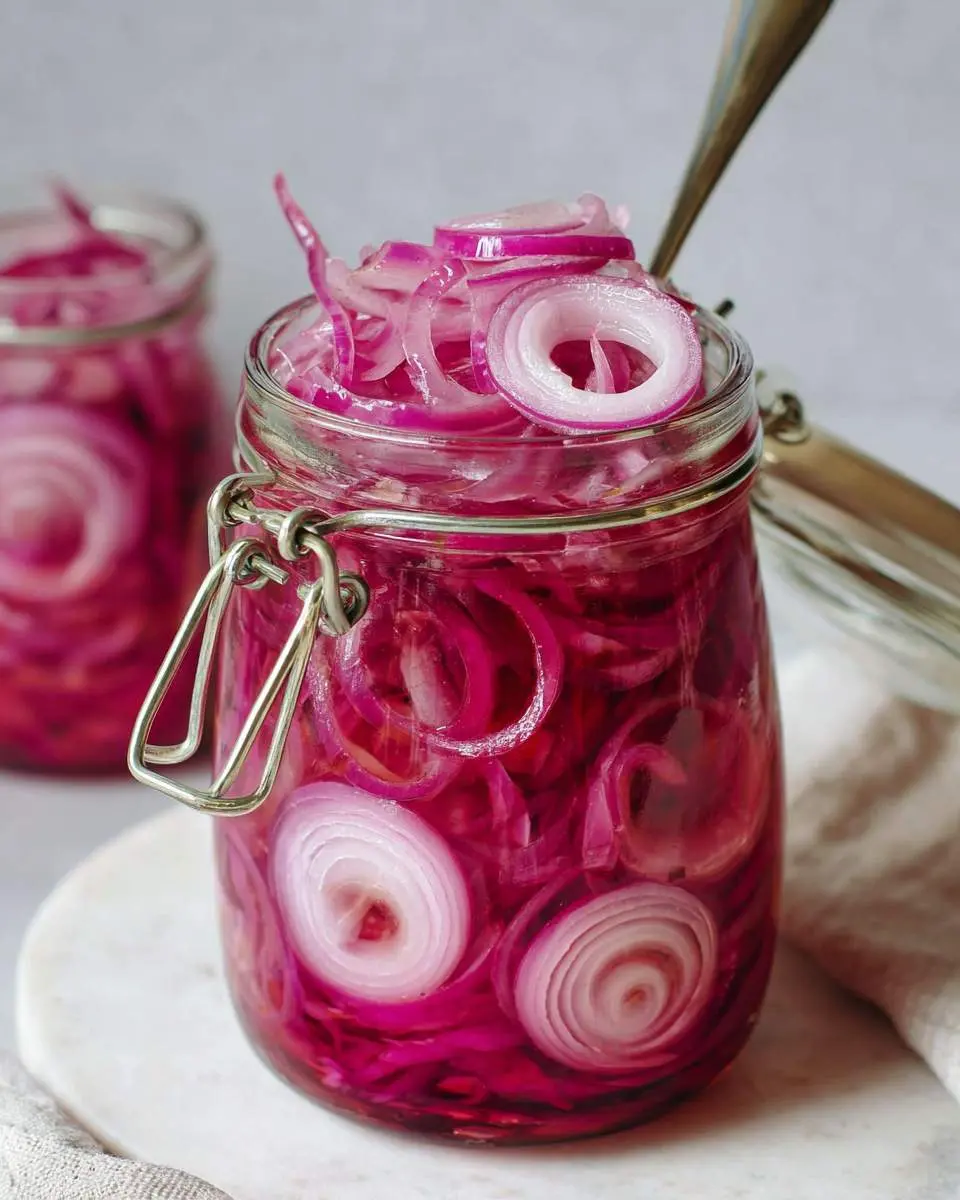
I start by slicing my onion as thin as I can manage with a sharp knife. paper-thin, almost translucent, so the brine can penetrate fast. The vinegar goes into a small pot with water, salt, and sugar, and I bring it just to a simmer, not a rolling boil. There’s a moment when the kitchen fills with this sharp, clean smell, acidic and warm, and that’s when I know it’s ready. I pack the raw onion rings into a heat-safe jar, pressing them down slightly, then pour the hot liquid over everything. The onions sizzle and soften on contact, turning that impossible pink within seconds. I let the jar sit on the counter until it cools to room temperature, listening to the occasional pop of the lid as it seals. The whole process takes maybe fifteen minutes of actual attention. I learned the rhythm making this cucumber yogurt salad on repeat last summer, and now the method lives in my muscle memory.
What I Learned After Making Twelve Batches
Slice against the grain of the onion rings, not with it. this gives you shorter pieces that don’t slither out of tacos and sandwiches. The difference is small but real, the kind of thing you only notice after wearing a pickled red onion down your shirt at a picnic.
Let them sit at least thirty minutes before eating, but the sweet spot is overnight in the fridge. The harsh sulfur compounds need time to mellow; patience rewards you with complexity that quick-pickled onions lack.
Save the brine when the onions are gone. It’s essentially a finished vinaigrette. whisk with olive oil and drizzle over roasted vegetables or grilled fish.
My Secret Trick: Add a single bay leaf to the hot brine. It contributes this subtle woodsy depth that people can’t identify but always ask about. I stole this from a Oaxacan cook who laughed when I tried to guess her secret.

How to Store Pickled Red Onions
- Refrigerate in a clean glass jar with a tight-fitting lid for up to 3 weeks. the acid preserves them, but they lose crunch over time
- Keep fully submerged in brine; add a small piece of parchment pressed directly on the surface if needed to prevent oxidation
- Do not freeze. the texture turns mushy and unpleasant when thawed
- No reheating required; serve cold or at room temperature straight from the jar
Why These Belong in Your Weekly Rotation
Pickled red onions deliver the kind of functional nutrition that actually fits real life. The fermentation-adjacent process creates beneficial organic acids that support digestion, and raw red onions bring quercetin to the table. that compound everyone talks about for its anti-inflammatory properties. But honestly? I make them because they make me want to eat more vegetables, more beans, more simple good food. That’s the health benefit that matters most to me.
FAQs
Can I use white or yellow onions instead of red?
Yes, though you lose that signature magenta color. White onions pickle faster and taste sharper, while yellow onions become sweeter and softer. I prefer red for visual impact and their slightly milder bite, but the method works with whatever you have.
Why did my onions turn blue or gray?
This happens when anthocyanins in red onions react with minerals in hard water or certain metals. Use filtered water and avoid aluminum pots. The flavor remains fine even if the color looks strange. though I admit I’ve hidden a gray batch in the back of the fridge.
How do I fix onions that taste too harsh?
Soak the sliced raw onions in cold water for ten minutes before pickling. This draws out some of the sulfur compounds responsible for that aggressive bite. Drain well, then proceed with the hot brine. Your pickled red onions will taste noticeably mellower.
Can I add other flavors to the brine?
Absolutely. this is where you make the recipe yours. I love whole black peppercorns, coriander seeds, or a dried chile de árbol for heat. Fresh garlic cloves work beautifully but turn blue-green over time; harmless but alarming if you don’t expect it.
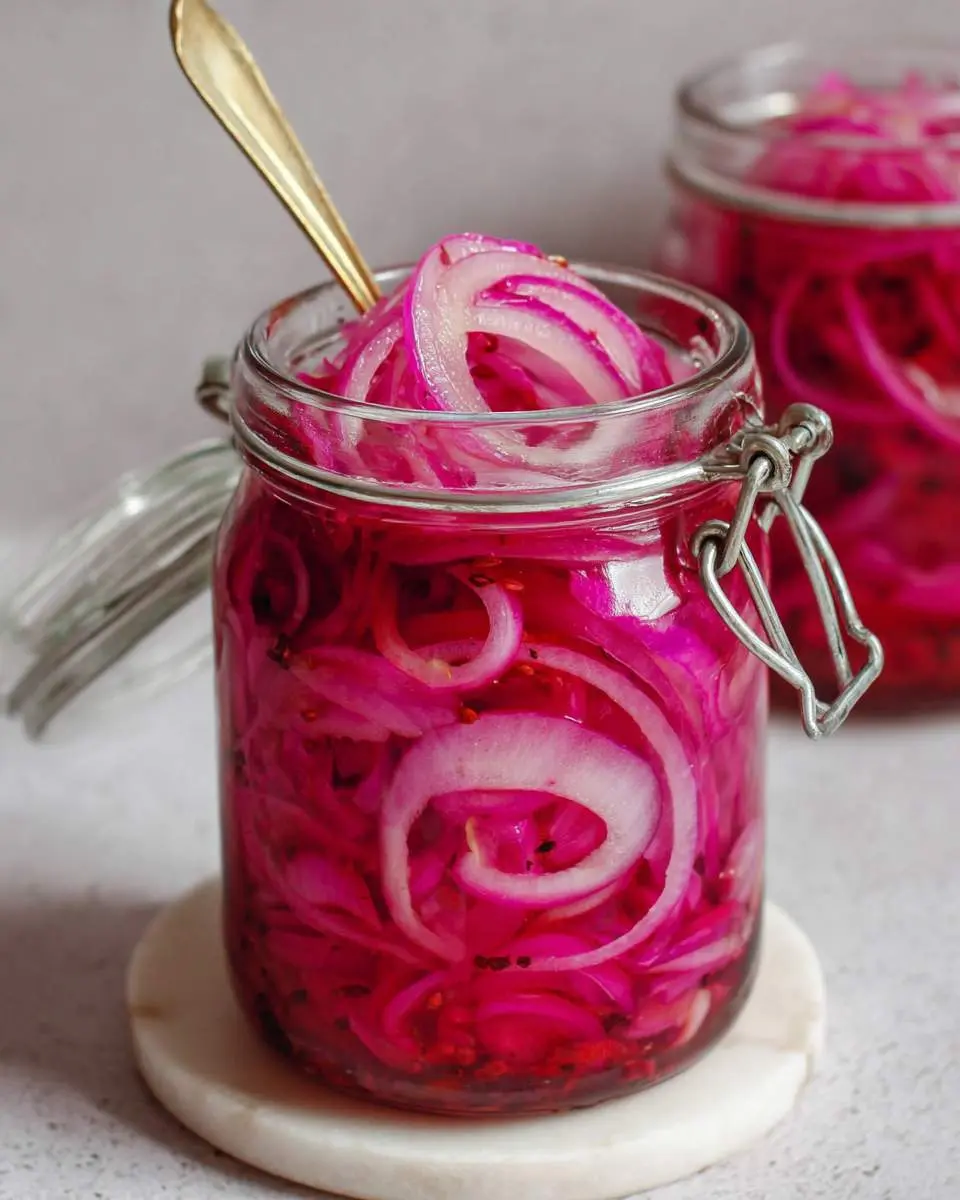
Pickled Red Onions
Ingredients
Equipment
Method
Notes
Conclusion
I hope you make these pickled red onions this week and find yourself reaching for the jar more often than you expected. They have that rare quality of making everything around them better without demanding attention. Try them on this Mexican coleslaw recipe and tell me I’m wrong.
Follow us on Social Media : Pinterest