
The smell of basil hitting hot olive oil is what pulled me into the kitchen that Saturday afternoon. I had no plan, just a craving for something green and garlicky that didn’t feel like salad again. That’s how my favorite pesto pizza recipe was born. out of hunger and a half-empty jar of pine nuts I forgot I bought.
My grandmother made pesto once a year, always in August when her basil went wild. She’d stand at the counter with her ancient mortar and pestle, refusing my mother’s offers of a food processor. I never understood the patience until I tried making this pizza three times in one week, adjusting little things, tasting the difference that fresh versus jarred pesto makes. Now I get it. Some things deserve the extra ten minutes.
This pizza has become my go-to when friends come over and I want to look like I tried harder than I actually did. It’s also surprisingly forgiving. I’ve made it with store-bought dough at midnight and with homemade dough when I’m feeling ambitious. If you want something with more kick, my jalapeno popper pizza hits that same easy-but-impressive note.
The Ingredients That Make This Green Sauce Shine
The basil is everything here. I buy two big bunches and don’t look back. Genovese basil has that peppery sweetness that holds up against the heat, and it turns almost black if you use too much olive oil, so I measure carefully now. The parmesan needs to be the real stuff, the kind you break off in chunks and grate yourself; the pre-grated bags taste like sawdust once they melt. Pine nuts are traditional but I’ve used walnuts in a pinch, and honestly, toasted walnuts add this earthy depth that made my husband ask what my “secret” was. For the dough, I keep it simple. store-bought works, but if you want that chewy, blistered crust, nothing beats making it yourself. I learned some tricks from my eggplant pizza bites that carry over here, especially about getting the oven screaming hot.
How to Make Pesto Pizza Recipe
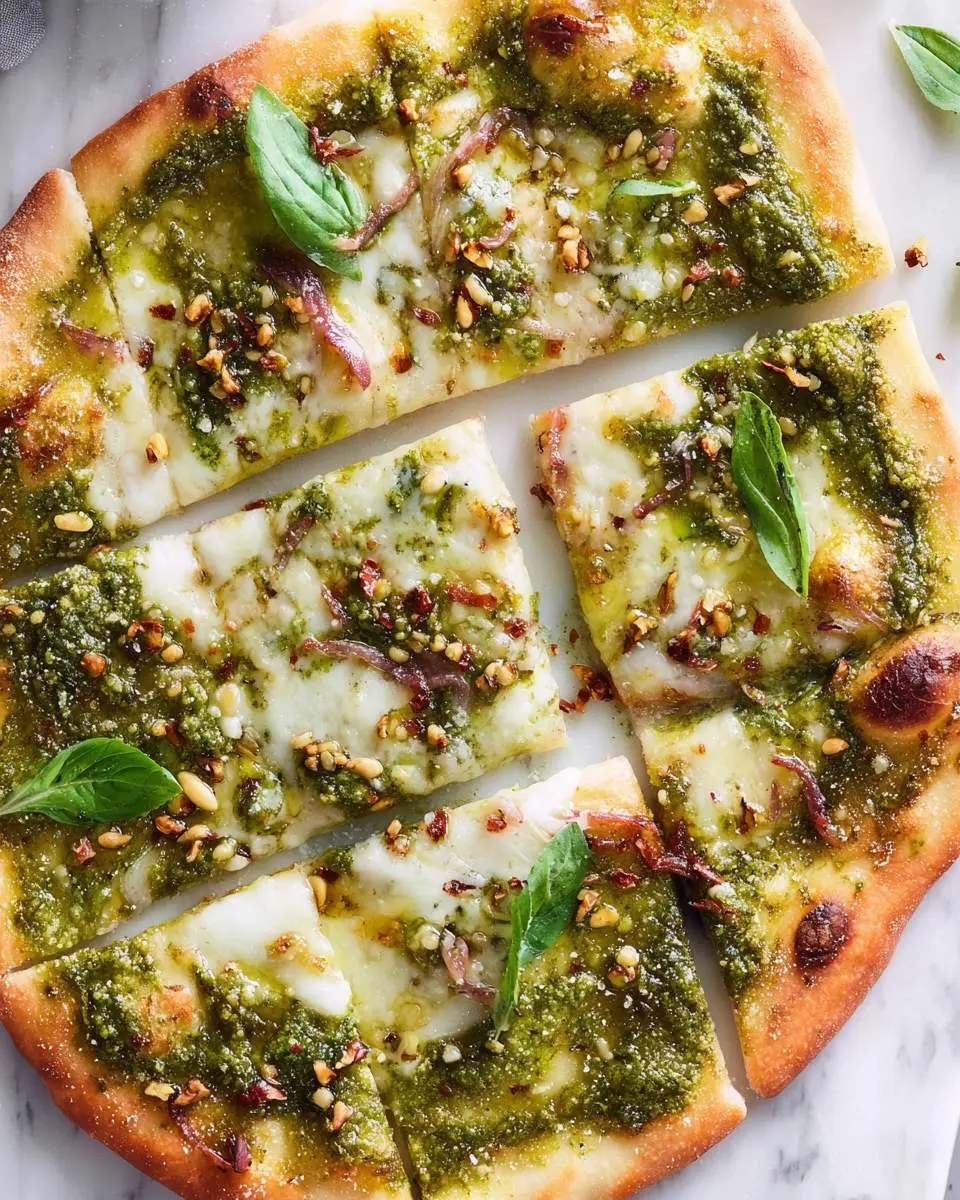
I start with the pesto because it needs to sit for ten minutes. something about the flavors melding while I roll out the dough. The food processor makes quick work of it, but I pulse the basil with garlic first, then add nuts, then stream in the oil while it’s running. It should look loose, almost too loose, because it tightens up as it sits. The dough gets stretched by hand, no rolling pin, because I want those irregular bubbles that char in spots. My oven goes to 475 with a pizza stone inside for at least forty minutes. this is non-negotiable. The stone needs to be nuclear.
Sauce goes on thin, just a smear really, because pesto is intense and you want to taste the crust too. I add mozzarella in torn pieces, not shredded, so you get pockets of melted cheese and bare spots where the pesto can caramelize. The first time I made this, I overloaded it and the center turned soggy. Now I resist. Eight to ten minutes and I’m watching through the oven window like a kid at a bakery, waiting for those leopard-spotted edges. The smell when you open that door. garlic, toasted nuts, burning basil. it’s why I keep making this. For a creamier variation, my spinach ricotta pizza uses a similar technique with different results.
What I Learned After Making This Six Times
Don’t process the pesto completely smooth. I leave tiny flecks of basil visible, maybe even a small chunk or two. Those bits toast on the hot pizza and create these intense flavor bursts that blended pesto can’t replicate. It’s the difference between good and memorable.
The order of toppings matters more than you’d think. I used to put cheese directly on the dough, then pesto on top. Wrong. The pesto needs direct contact with the hot stone for that nutty, almost fried flavor. Cheese on top protects it from burning while letting the oils seep through.
Let the dough rest at room temperature. Cold dough fights back. I take mine out thirty minutes before stretching, and suddenly it cooperates, thinning in the center without tearing. This one small change fixed my lopsided pizzas permanently.
My Secret Trick: I save a tablespoon of the pasta water when I make pesto for pasta, and I use that starchy, salty water to thin my pizza pesto instead of more oil. It helps the sauce cling to the dough instead of sliding off, and the salt concentration is perfect.

How to Store Pesto Pizza Recipe
- Refrigerate leftover slices in an airtight container with parchment paper between layers. keeps for 3 days at 40°F or below
- Do not store the assembled unbaked pizza; the pesto will make the dough gummy within an hour
- Freeze baked pizza slices on a baking sheet first, then transfer to freezer bags. lasts 1 month, though the basil flavor fades slightly
- Reheat refrigerated slices in a 375°F oven directly on the rack for 8 minutes, or in a cast-iron skillet covered for 5 minutes then uncovered for 2
- Avoid microwave reheating. the pesto turns bitter and the crust becomes rubbery
Why This Green Pizza Fits My Weeknight Rotation
Basil brings more than flavor to this pesto pizza recipe. it’s loaded with vitamin K and antioxidants that survive brief high-heat cooking better than you’d expect. The pine nuts add magnesium and healthy fats that keep me satisfied, so one slice actually fills me up instead of leaving me hungry an hour later. I started making this on Mondays when I need something that feels like a treat but doesn’t derail the week. The protein from the cheese, the good fats from the nuts and olive oil, the fresh herbs. it balances out in a way that heavy meat pizzas never did for me. Plus my kids eat it without complaint, which is my real measure of success.

FAQs
Can I use store-bought pesto for this pizza?
You can, but I find most jarred versions are too oily and lack the fresh garlic punch. If that’s what you have, drain off excess oil and stir in one minced garlic clove per half cup. The texture will be smoother than homemade, so spread it thinner to avoid sogginess. I’ve done this in emergencies and nobody complained, though I always notice the difference.
What cheese works best besides mozzarella?
Fresh mozzarella is my standard, but I’ve used burrata added after baking for extra creaminess, or a mix of fontina and parmesan for more depth. Goat cheese crumbles beautifully here too, creating tangy pockets against the sweet basil. Just avoid pre-shredded mozzarella. the anti-caking agents prevent proper melting and you’ll get a rubbery layer instead of that stretchy pull.
Why does my pesto turn brown on the pizza?
Basil oxidizes with heat and air exposure, which is completely normal and doesn’t mean it’s burned. To minimize this, work quickly once the pesto is exposed, and don’t overload the pizza with sauce. A light drizzle of fresh olive oil right after baking helps preserve that vibrant green color. The flavor remains excellent even when the color darkens slightly.
Can I make this pesto pizza recipe in a regular oven without a pizza stone?
Yes, though the crust won’t get quite as crisp. Use an inverted heavy baking sheet preheated for thirty minutes, or a cast-iron skillet stretched to fit. The skillet method actually creates a fantastic crispy bottom and puffy edge. just start it on the stovetop over high heat for two minutes before transferring to the oven. I’ve used this technique when my stone cracked and was surprised how well it worked.
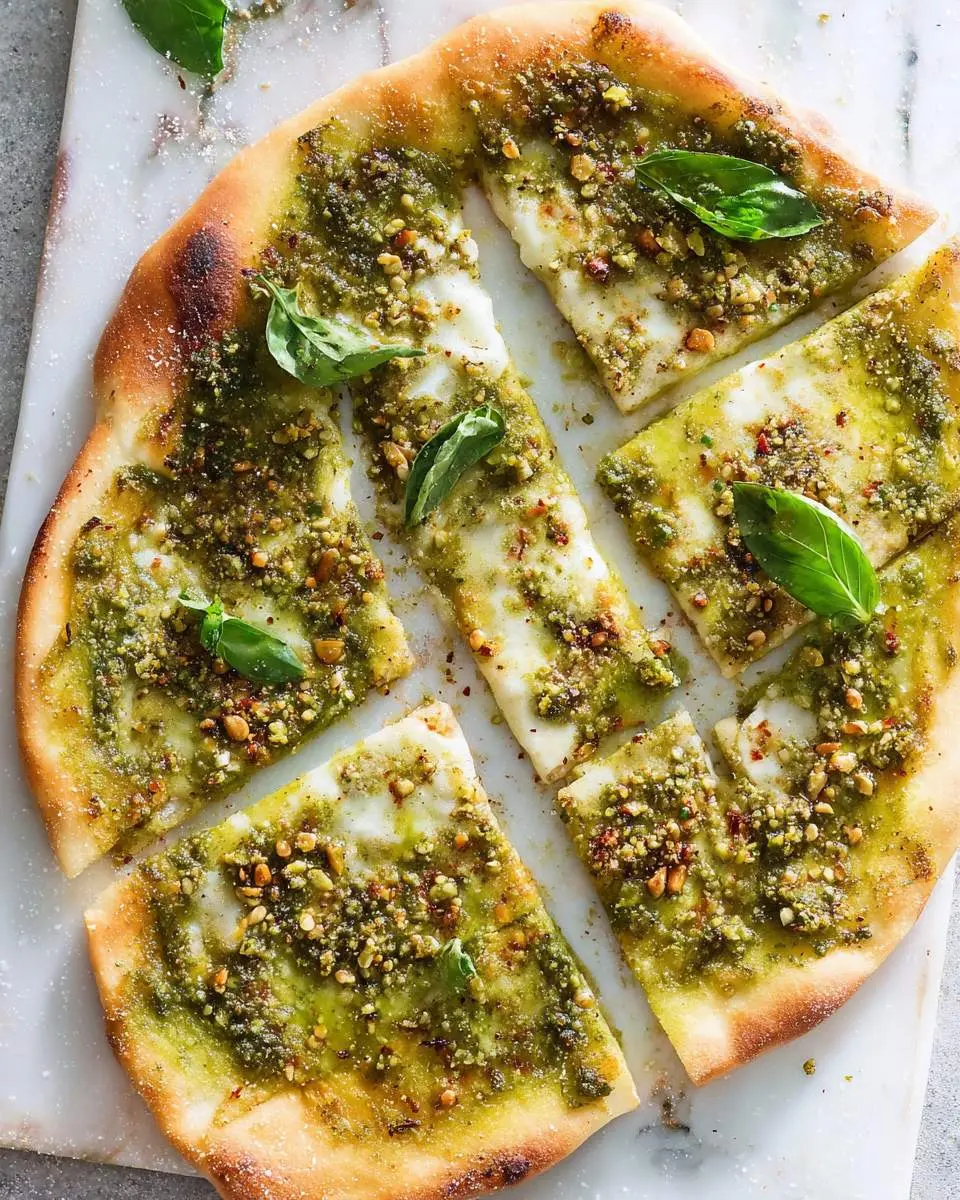
Pesto Pizza
Ingredients
Equipment
Method
Notes
Conclusion
This pesto pizza recipe has earned its place in my regular rotation not because it’s fancy, but because it delivers every single time. The combination of fresh, bright flavors with that chewy, blistered crust hits something primal in me. comfort and excitement at once. If you’re ready to try your hand at the dough itself, my guide to homemade pizza dough will get you there. Make this soon, while basil is abundant. Your kitchen will smell like summer.
Follow us on Social Media : Pinterest
