
The first time I made a rustic tart with summer fruit, I stood at my kitchen counter at ten o’clock at night, too impatient to wait for morning. The smell of butter and stone fruit drifting from my oven was absolutely intoxicating. That was my introduction to the nectarine galette, and I’ve been chasing that feeling ever since.
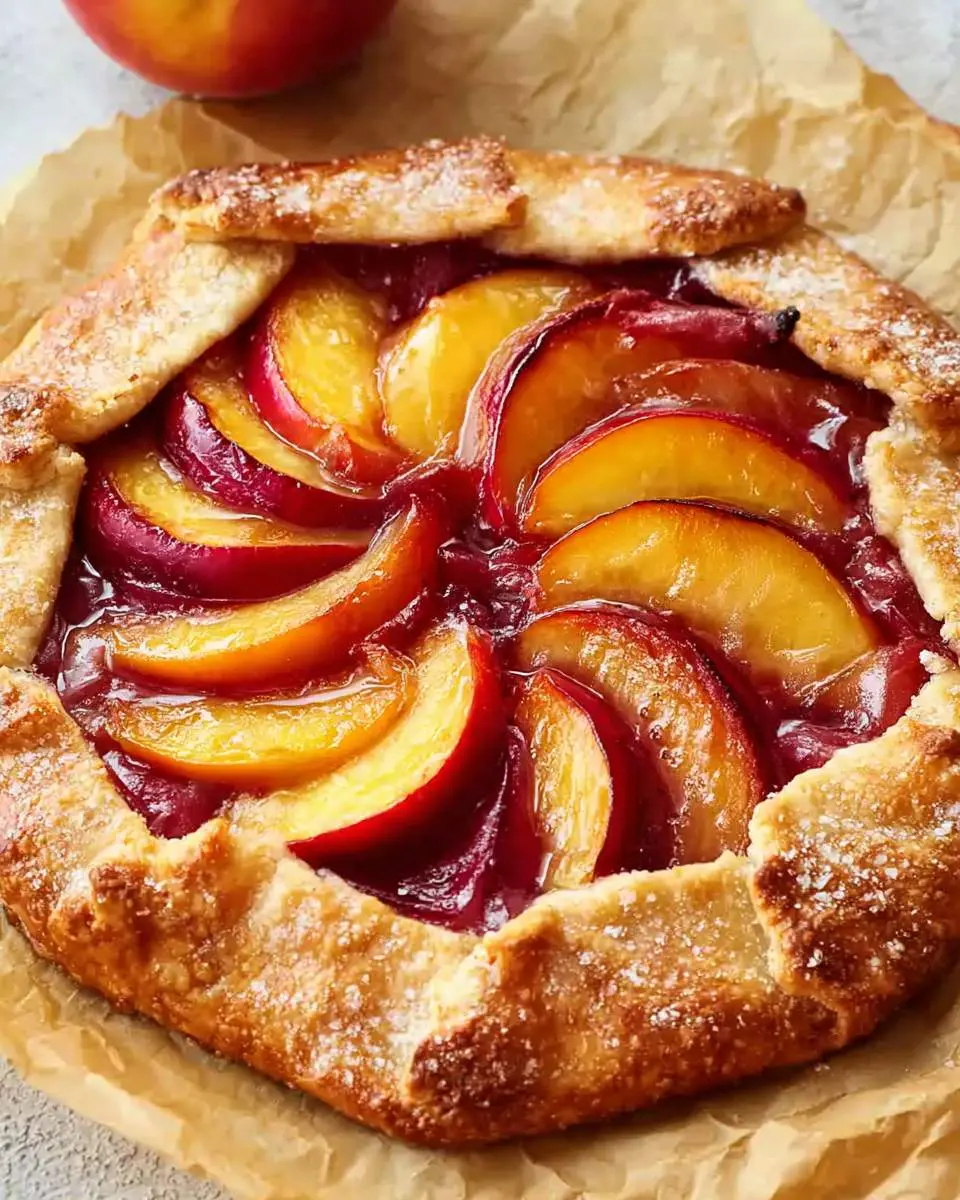
My grandmother never measured anything for her pies. She’d press the dough with her fingertips and declare it “happy” or “tired.” I think about her every time I fold those rough edges over the fruit, leaving the center gloriously exposed. There’s something deeply satisfying about embracing imperfection.
If you’ve never worked with stone fruit in baking, you might also love this nectarine cobbler I make when I’m craving something more saucy and spoonable. But today, we’re keeping things elegantly simple.
What You Need to Make This Recipe
The butter matters more than you’d think. I use European-style with higher fat content because it creates those shatteringly crisp layers that make people close their eyes when they bite in. For the fruit, I hunt down nectarines that give slightly to pressure but still smell like sunshine at the stem end. A touch of almond extract in the filling amplifies the stone fruit flavor without announcing itself. This lemon tiramisu taught me how a small amount of the right extract can transform an entire dessert. You’ll also need cornstarch to keep the juices from turning your beautiful nectarine galette into a soggy mess.
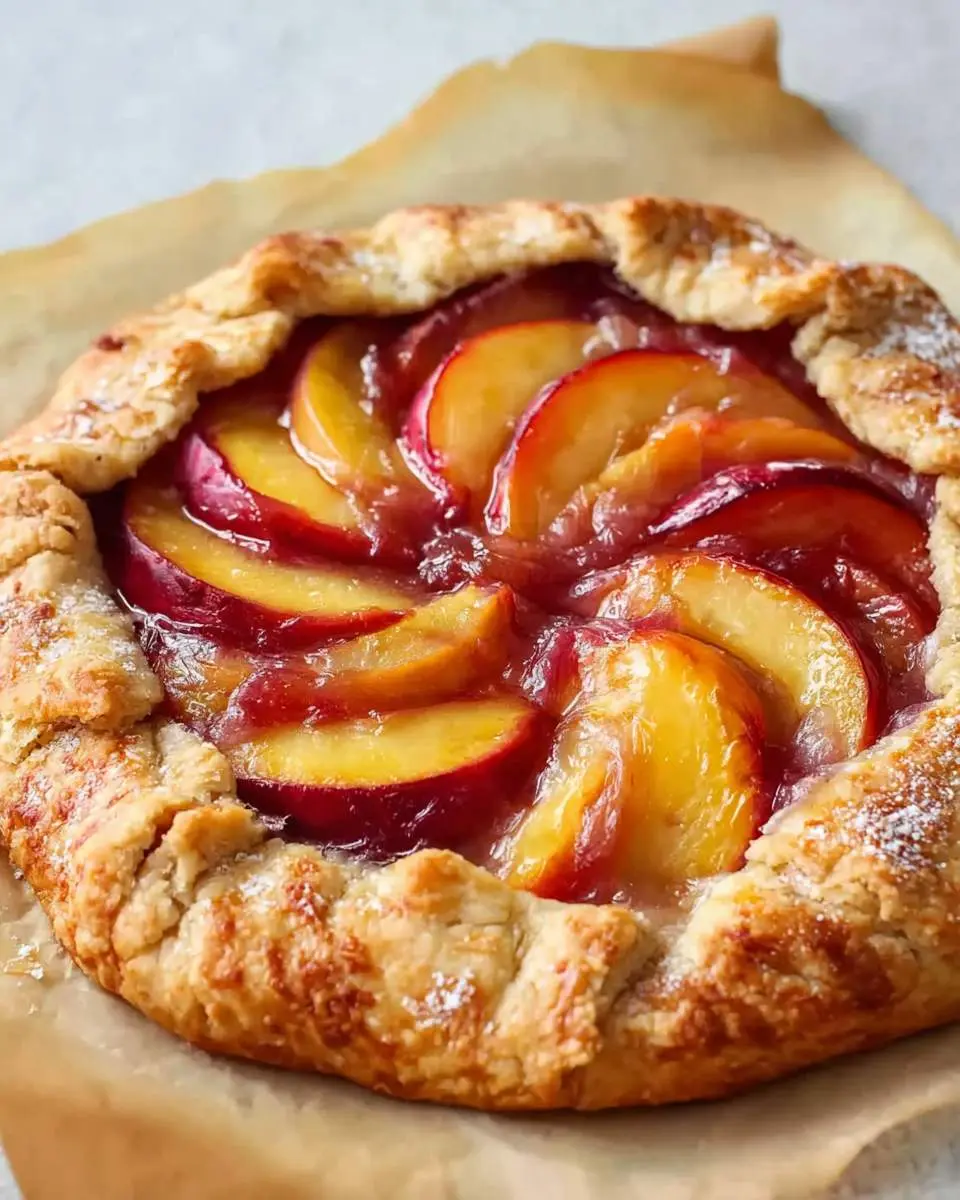
How to Make nectarine galette
I start with cold butter straight from the freezer, cutting it into flour until the pieces are no larger than peas. The sound is unmistakable: a rhythmic scraping against the bowl that tells me I’m getting close. Ice water comes next, just enough to bring the shaggy mass together without overworking. I can feel when it’s right—the dough holds together when squeezed but still looks slightly crumbly.
While the dough rests in the refrigerator, I slice nectarines into wedges no thicker than my thumb. The kitchen fills with their honeyed perfume. I toss them with sugar and let them macerate briefly, watching the juices pool at the bottom of the bowl. That liquid gets drained off and reduced on the stove until syrupy—a trick I learned from watching too many cooking shows at midnight.
The assembly feels almost meditative. I roll the dough into a rough circle, deliberately imperfect, then pile the fruit in the center leaving a generous border. The folding happens in sections, creating pleats that look like they were intentional even when they weren’t. Into the oven it goes, and I wait for the moment when the crust turns deep gold and the fruit bubbles at the edges. Speaking of celebratory baking, this king cake requires a similar patience with dough that rewards you beautifully.
Pro Tips
Chill your dough twice. Once after mixing, and again after shaping on the pan. Cold butter hitting hot oven creates steam pockets—that’s your flakiness insurance policy.
Slice fruit uniformly. Uneven pieces mean some turn to mush while others stay crunchy. I aim for consistent half-inch wedges every time.
Don’t skip the egg wash. Whole egg beaten with a splash of water gives that burnished, professional-looking sheen. Milk works in a pinch but won’t achieve the same depth of color.
My Secret Trick: I brush the exposed crust with warm apricot jam immediately after baking. It seals in the crispness and adds a subtle shine that makes the nectarine galette look like it came from a French bakery window.
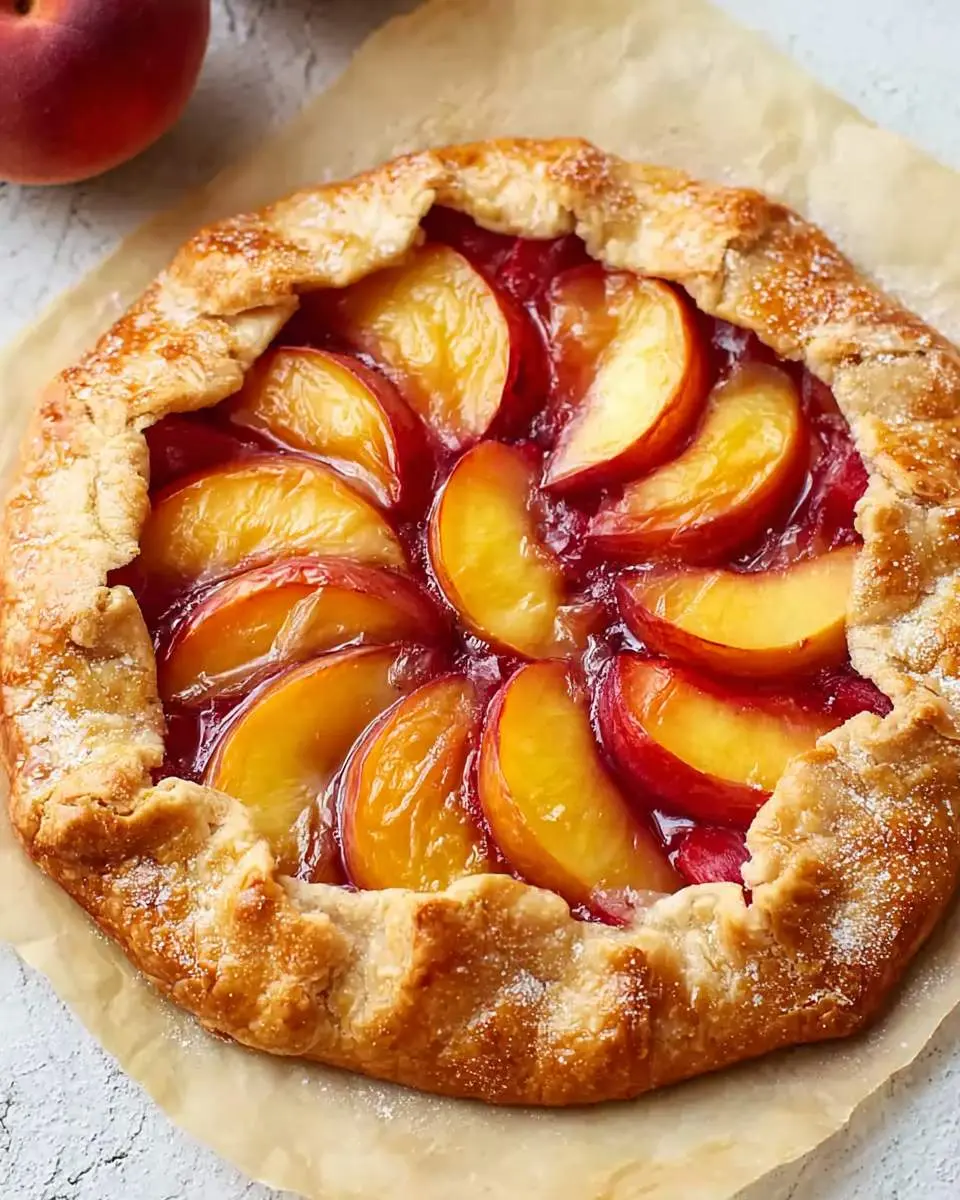
How to Store nectarine galette
- Room temperature: Up to 2 days uncovered on a wire rack, which prevents the bottom from softening
- Refrigerator: 4 days in an airtight container, though the crust loses some crispness
- Freezer: Wrap individual slices in parchment then foil, freeze up to 1 month
- Reheating: 350°F oven for 10-12 minutes restores the crust better than any microwave attempt
Nutritional Benefits
While I never pretend dessert is health food, this nectarine galette does deliver some genuine goodness. Nectarines bring vitamin C and dietary fiber to the table, particularly in the skin which I always leave on for texture and nutrition. The modest amount of sugar means you’re tasting fruit first, sweetness second—a balance that feels more satisfying than cloying.

FAQs
Can I use peaches instead of nectarines?
Absolutely. Peaches work beautifully, though you may want to peel them first since their fuzz doesn’t break down during baking the way nectarine skin does.
Why did my galette leak juice everywhere?
Your fruit was likely too wet or your cornstarch measurement was off. Macerate briefly, drain well, and don’t skip reducing those collected juices before adding them back.
Can I make the dough ahead of time?
The dough keeps refrigerated for 3 days or frozen for 2 months. Thaw overnight in the refrigerator before rolling.
Do I need a special pan for a nectarine galette?
Any rimmed baking sheet works perfectly. The free-form nature means no special equipment required—just parchment paper for easy release.
Nectarine Galette
Ingredients
Equipment
Method
Notes
Conclusion
There’s a particular joy in serving something that looks effortlessly beautiful when you know exactly how much care went into it. This nectarine galette has become my signature summer dessert, the one friends request by name. If you’re in the mood for something more dramatic, my pink velvet cake brings that same sense of occasion. But for quiet moments when you want to taste summer itself, this galette cannot be beaten.
Follow us on Social Media : Pinterest