
The first time I tasted beets prepared the Moroccan way, I was sitting on a sun-bleached patio in Marrakech, watching a woman peel roasted beets with her bare hands while the scent of cumin and preserved lemon drifted through the air. She tossed everything together in a clay bowl, and what emerged was nothing like the muddy, vinegar-heavy beet salads I’d grown up avoiding. This Moroccan Beet Salad changed how I think about root vegetables entirely.
Back home, I spent months trying to recreate that memory. My kitchen looked like a crime scene. magenta beet juice on white countertops, stained wooden cutting boards, fingers that stayed purple for days. But then one afternoon, the balance finally clicked. The sweetness of slow-roasted beets against the sharp brightness of lemon, the warmth of cumin, the unexpected crunch of raw onion softened just enough by citrus. I ate it straight from the mixing bowl, standing at my counter, completely alone and completely happy.
Now this salad lives in my regular rotation, especially when I need something that feels special without requiring much effort. If you’re building a collection of bold, vegetable-forward dishes, my sesame orange napa cabbage salad makes a wonderful companion. similar energy, completely different flavors.
The Ingredients That Transform Ordinary Beets
The magic of this Moroccan Beet Salad starts with how you treat the beets themselves. roasted slowly until they caramelize at the edges and turn almost creamy inside. I use medium-sized beets, not those enormous woody ones that never seem to cook through. The dressing builds on preserved lemon, which brings a fermented depth you simply cannot get from fresh lemon alone, though I offer a workaround if you cannot find it. Fresh cilantro and flat-leaf parsley add brightness without competing, and a pinch of cinnamon rounds everything out in a way that makes people pause mid-bite and ask what that warm, mysterious note might be. For another salad that treats vegetables with similar respect, my garlic sweet potato lentil salad uses the same philosophy. simple ingredients, transformed.
How to Make Moroccan Beet Salad
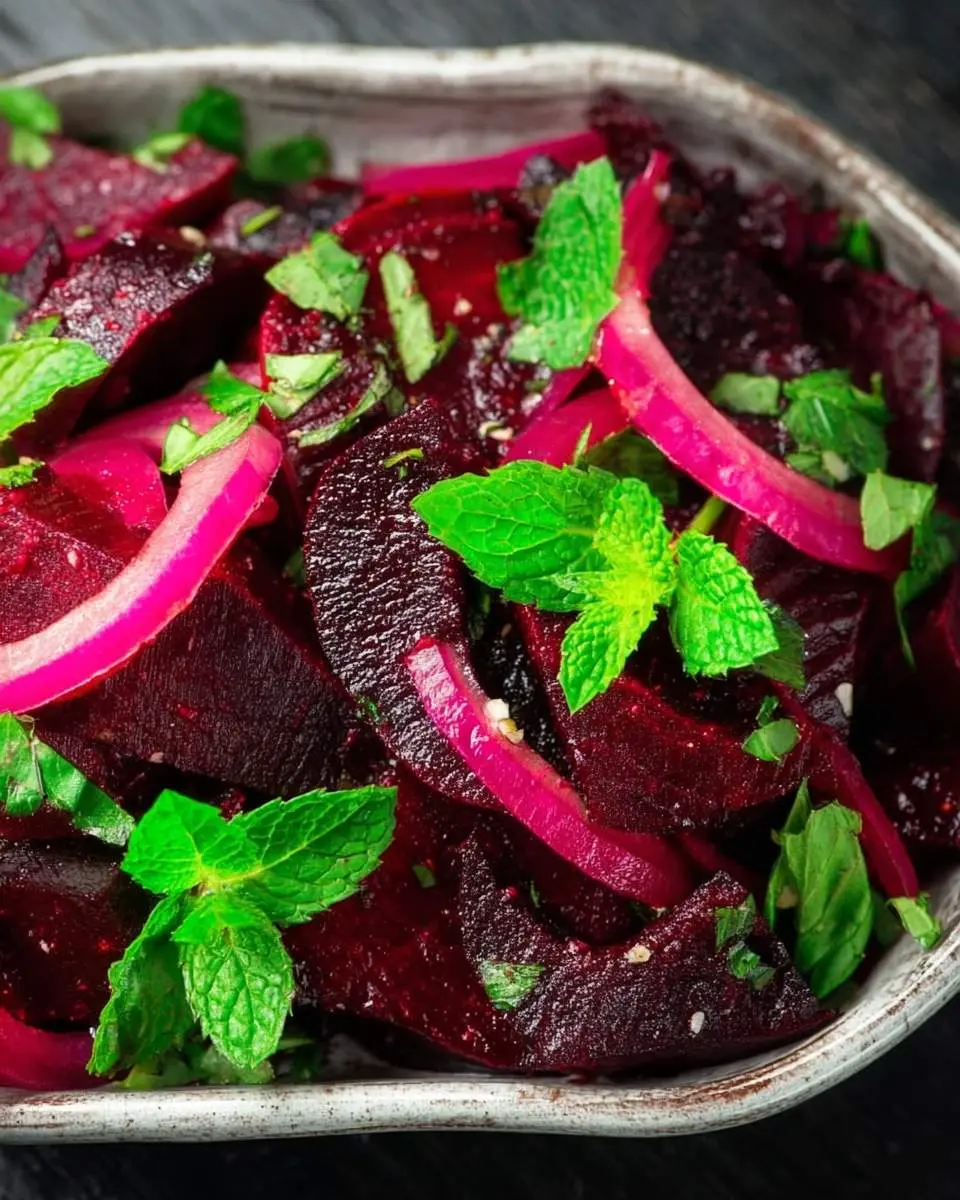
I start by scrubbing the beets and wrapping them individually in foil with a drizzle of olive oil and a pinch of salt. this keeps them moist while they roast. Into a 400-degree oven they go, and I forget about them for nearly an hour. The kitchen fills with an earthy, almost chocolatey aroma that signals they are nearly done. When a knife slides through without resistance, I let them cool just enough to handle, then slip off the skins with my fingers. the most satisfying kitchen task I know.
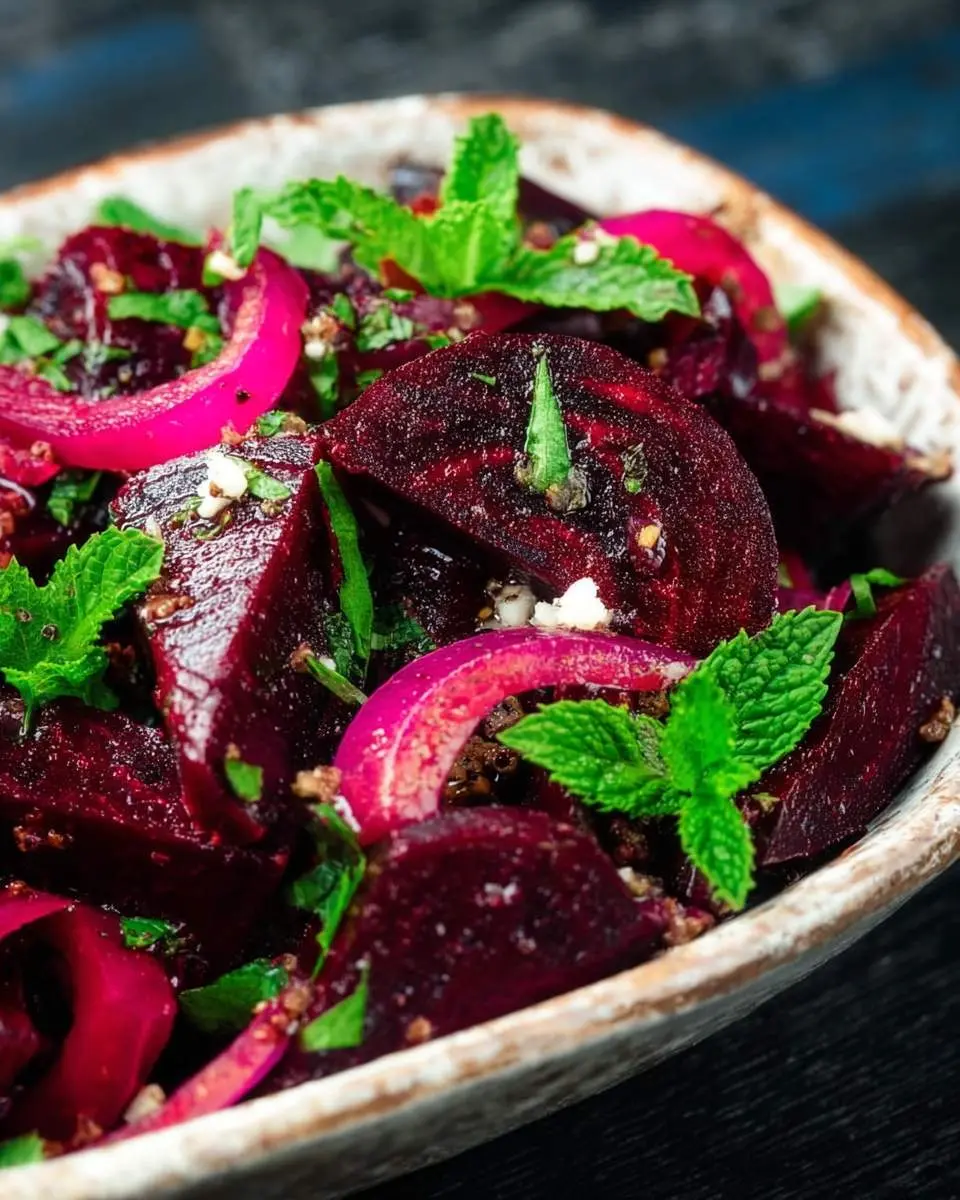
While the beets rest, I whisk together the dressing: olive oil, fresh lemon juice, finely minced preserved lemon rind, cumin, cinnamon, and a touch of honey to balance the acidity. The preserved lemon needs to be chopped almost to a paste so it distributes evenly. I dice the beets into rough chunks. none of that perfect cube business, this salad should look rustic. and toss them with thinly sliced red onion and the dressing while everything is still slightly warm. The heat helps the onions mellow and the beets absorb flavor. A final shower of herbs, a taste for salt, and it is done. For a different approach to roasted root vegetables, my roasted beets and carrots salad with burrata uses similar techniques with Italian flavors.
What I Learned After Making This a Dozen Times
Wear gloves when peeling roasted beets, unless you enjoy explaining purple hands to strangers for two days. The stain sets into skin crevices and nail beds with remarkable persistence. Roast beets until they are truly tender. undercooked beets stay crunchy and never absorb the dressing properly. You want that yielding, almost buttery texture.
Let the dressed salad sit for at least thirty minutes before serving. This is not one of those salads to eat immediately. the flavors need time to marry, the onions to soften in the acid, the cumin to bloom. This Moroccan Beet Salad actually improves overnight, which makes it perfect for entertaining.
My Secret Trick: Save a tablespoon of the beet roasting juices that collect in the foil packets and whisk it into your dressing. It intensifies the earthy sweetness and gives the salad a subtle gloss that makes it look as good as it tastes.
How to Store Moroccan Beet Salad
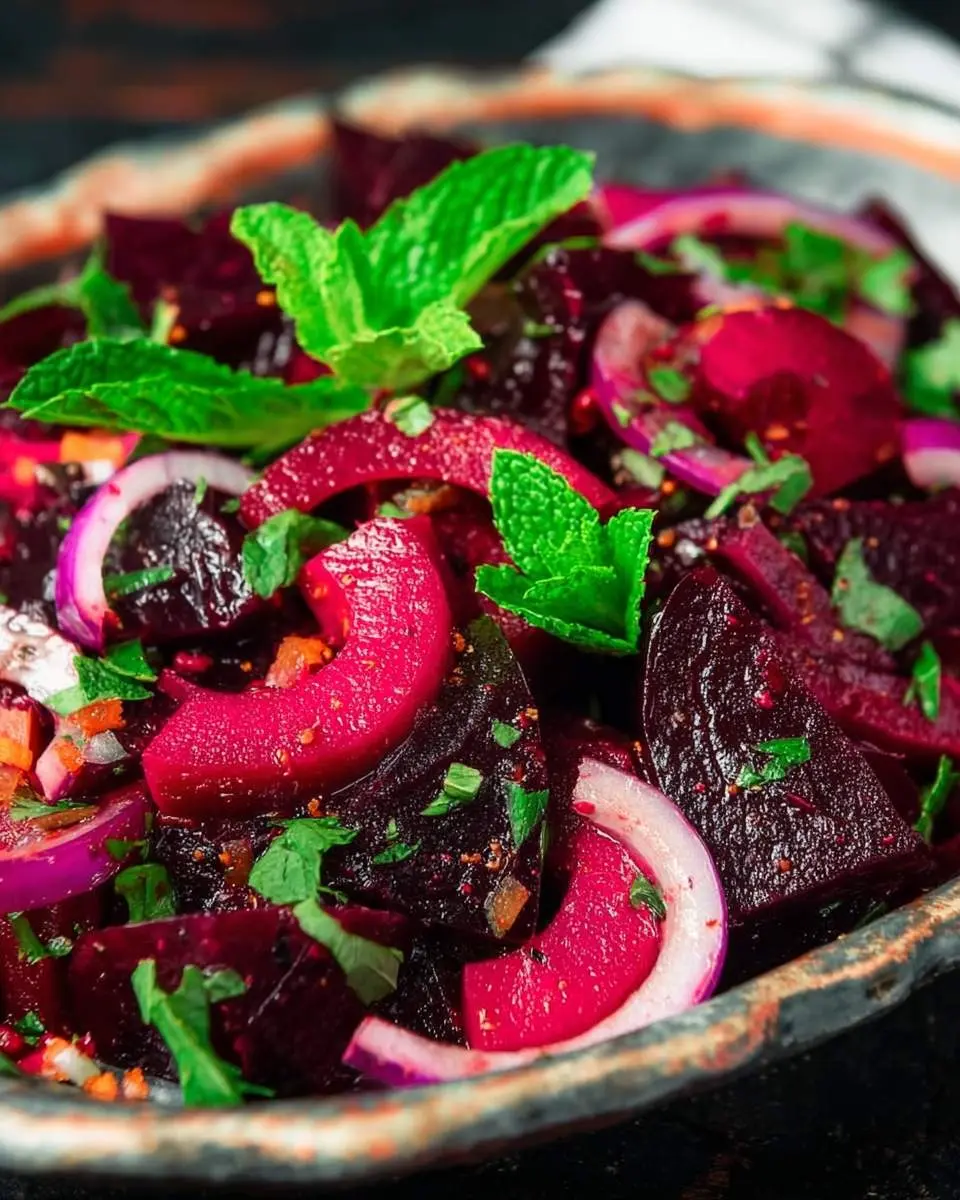
- Refrigerate in an airtight glass container for up to 5 days. the flavors actually deepen on day two and three
- Do not freeze. the texture of roasted beets becomes mealy and unpleasant when thawed
- Store at 40°F or below, and keep the salad away from strong-smelling foods as beets absorb odors easily
- Serve cold or at cool room temperature. no reheating needed, and warming actually diminishes the bright, fresh qualities of the dressing
Why This Salad Belongs in Your Regular Rotation
Beyond the obvious pleasure of eating something this vibrant and complex, this Moroccan Beet Salad delivers genuine nutritional substance. Beets bring natural nitrates that support healthy blood flow, and the combination of raw onion and preserved lemon contributes prebiotic fibers and fermented compounds that support gut health. I find it particularly satisfying as a light lunch with flatbread, or as a substantial side that holds its own against grilled meats. The cinnamon and cumin offer anti-inflammatory benefits, but honestly, I make it because I crave the flavor. the wellness aspect feels like a bonus.

FAQs
Can I use canned beets instead of roasting fresh ones?
Canned beets will work in an emergency, but they lack the caramelized depth that makes this salad special. If you must use them, drain thoroughly and pat completely dry, then give them a quick roast at high heat to develop some browning. The texture will be softer and slightly more metallic tasting.
Where do I find preserved lemons?
Most well-stocked grocery stores carry them in the international or Middle Eastern section, or you can find them at specialty markets and online. In a pinch, substitute the zest and juice of one lemon plus one quarter teaspoon of fine sea salt, though you will miss the complex, fermented quality.
Why did my salad turn out watery?
Beets retain surprising moisture after roasting. Let them cool completely before dressing, and if they seem particularly juicy, blot them gently with paper towels. Dressing warm beets also causes the oil to separate and pool. patience here rewards you with better texture.
Is this Moroccan Beet Salad vegan?
Yes, completely. The honey can be replaced with maple syrup or agave if you prefer, though traditional Moroccan preparations often include honey. Check that your preserved lemons do not contain any additives that concern you. most are simply lemon and salt.
Moroccan Beet Salad
Ingredients
Equipment
Method
Notes
Conclusion
This Moroccan Beet Salad has become my answer to the question of what to bring to gatherings when I want something memorable but not fussy. It travels well, improves with time, and consistently surprises people who think they dislike beets. For another fresh take on beet-centric salads, try my crisp cucumber beetroot salad with herb dressing. it keeps the beet love going in a completely different direction.
Follow us on Social Media : Pinterest