
The first time I smelled gochujang hitting a hot pan, I knew my weeknight dinners would never be the same. That deep, funky heat wrapped around sweet soy and garlic, and suddenly I was standing in my kitchen at 6 PM on a Tuesday, transported to a tiny Seoul restaurant I’d visited years ago. This Korean Bibimbap Beef Bowl captures that exact moment. the sizzle, the color, the way everything comes together in one glorious bowl.
My friend Min brought me to her grandmother’s house in Busan during a humid August. Halmoni didn’t speak English, but she spoke in rice and banchan, piling my bowl until I thought it would overflow. The beef was barely cooked, just kissed by heat, nestled against crisp vegetables and a runny egg. I ate until I was embarrassed, and then I ate more. That memory lives in every bite of this recipe.
What I love most about bowl recipes is their forgiving nature. You can adapt, substitute, make them your own. If you’re craving something lighter but equally satisfying, my low carb spicy tuna rice bowl hits that same comfort spot with a completely different protein.
The Ingredients That Make This Bowl Sing
Gochujang is non-negotiable here. that fermented Korean chili paste brings complexity you simply cannot fake. I keep a tub in my fridge door and it lasts forever, transforming everything it touches. The beef matters too: I use thinly sliced ribeye when I’m feeling fancy, but flank steak works beautifully if you freeze it for twenty minutes first to make slicing easier. For the rice, day-old is actually better than fresh; the grains separate and crisp slightly at the edges when they hit the hot bowl. If you’re into the bowl lifestyle like I am, you might also enjoy my cottage cheese berry bowl for a completely different kind of morning.
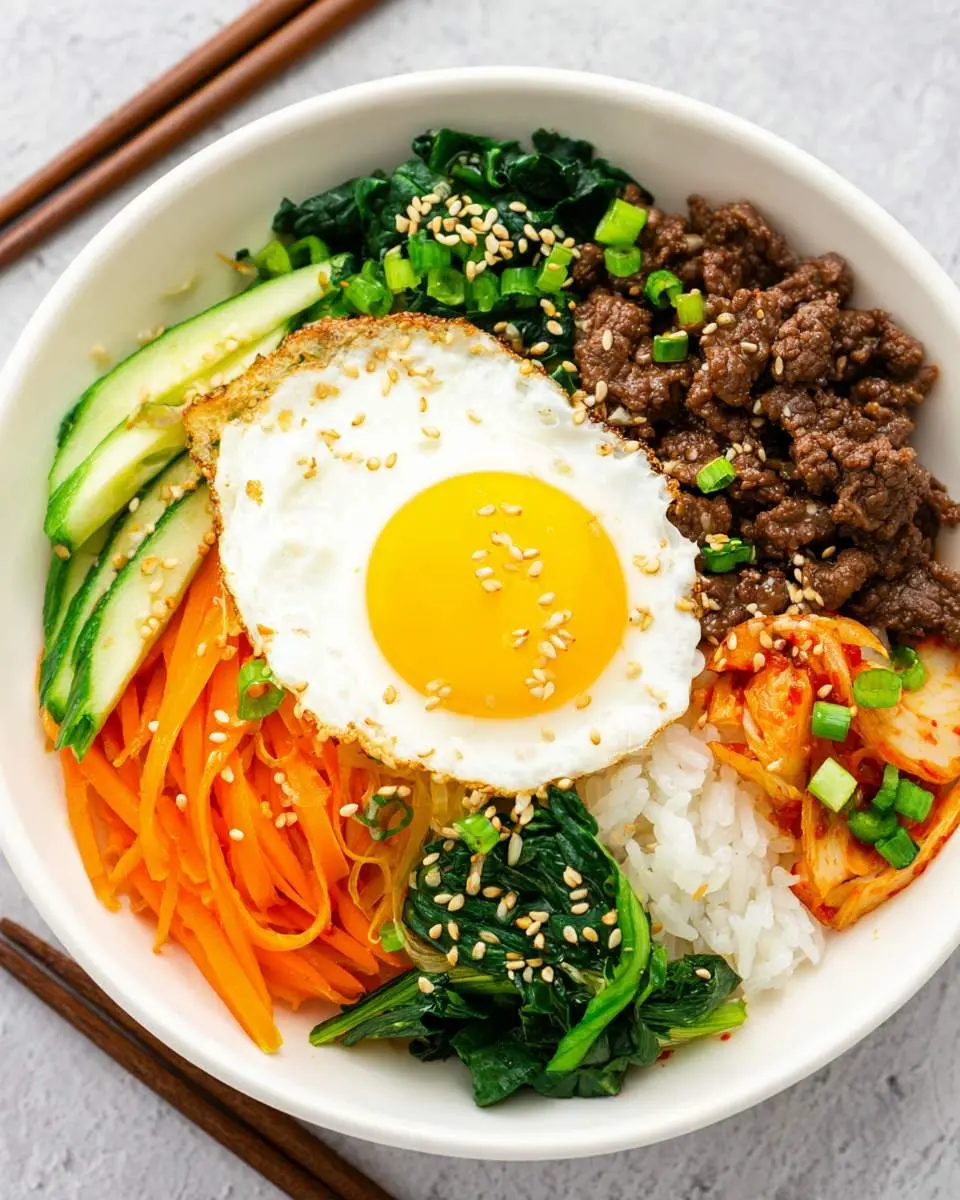
How to Make Korean Bibimbap Beef Bowl
I start by marinating the beef while my rice reheats. just thirty minutes in soy, sesame oil, garlic, and a spoonful of sugar transforms ordinary meat into something that tastes like it came from a restaurant kitchen. The sound of that beef hitting a screaming hot cast iron skillet is pure satisfaction; it sears in seconds, leaving caramelized edges and a tender center. While it rests, I quick-pickle my vegetables. julienned carrots and cucumber in rice vinegar with a pinch of salt. They soften just enough, keeping their crunch but losing that raw edge. The egg is personal: I like mine fried with crispy edges and a runny yolk that breaks and coats everything below. Assembly is where the fun lives. rice first, then beef arranged with intention, vegetables in separate piles so each bite offers something different. A drizzle of gochujang mixed with honey and sesame oil ties it all together. If ground beef is more your speed, my Korean ground beef bowl uses the same flavors with a weeknight-friendly protein.
What I Learned Making This Three Times
Freeze your beef before slicing. Twenty minutes in the freezer firms up the meat just enough that you can cut paper-thin slices against the grain. Without this, you end up with thick chunks that chew tough and never caramelize properly. The texture difference is dramatic.
Don’t skip the gochugaru. Korean red pepper flakes add a different kind of heat than gochujang. brighter, more immediate. I sprinkle them on the beef during the last thirty seconds of cooking, and they bloom in the hot fat, creating layers of flavor that keep you reaching for another bite.
Hot stone bowls are worth the investment. I found mine at an Asian market for twelve dollars. Preheated in the oven, they crisp the bottom layer of rice into something almost like socarrat. that coveted crispy bottom from Spanish paella. Without it, you’re still eating something delicious. With it, you’re eating something unforgettable.
My Secret Trick: I keep a jar of pre-mixed bibimbap sauce in my fridge. equal parts gochujang, rice vinegar, sesame oil, and honey, whisked until smooth. It lasts two weeks and means I can throw this Korean Bibimbap Beef Bowl together in fifteen minutes flat.
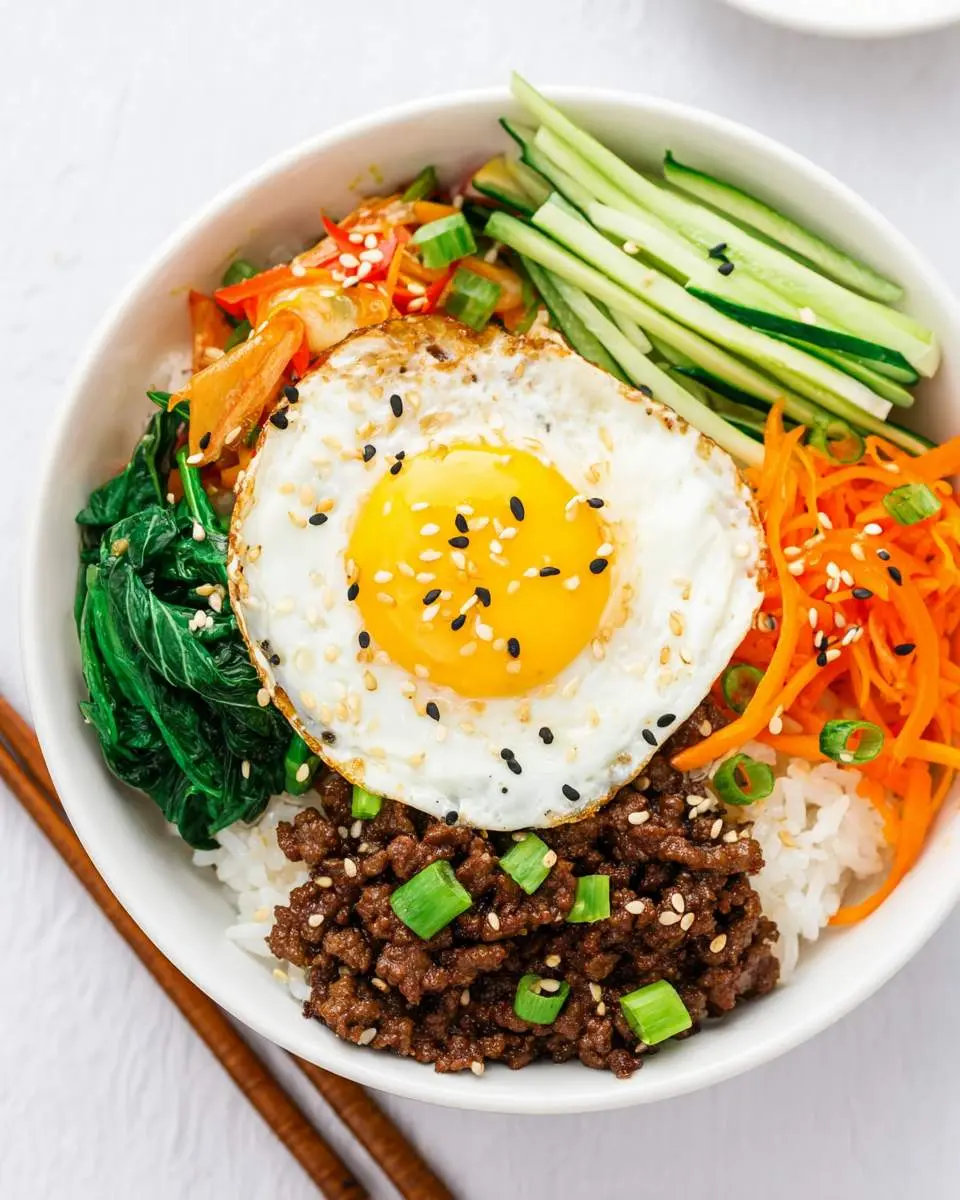
How to Store Korean Bibimbap Beef Bowl
- Store components separately in airtight containers in the refrigerator for up to 4 days. keeping rice, beef, and vegetables apart prevents sogginess
- Prepared sauce keeps in a jar for 2 weeks refrigerated
- Freezing works for the marinated beef only: freeze raw in the marinade for up to 3 months, then thaw overnight in the refrigerator before cooking
- Reheat rice with a damp paper towel over the bowl in the microwave for 90 seconds to restore moisture
- Reheat beef quickly in a hot skillet for 60 seconds. the microwave makes it tough and rubbery
- Assemble fresh each time; pre-mixed bowls become mushy after one day
Why This Bowl Earns a Permanent Spot in My Rotation
The beauty of this Korean Bibimbap Beef Bowl isn’t just in its flavor. it’s in how it fits real life. The beef delivers heme iron and complete protein, while the rainbow of vegetables brings fiber and antioxidants without feeling like a health food sacrifice. Gochujang itself contains probiotics from fermentation, adding gut health benefits to its already impressive resume. I feel genuinely good after eating this, not stuffed and sluggish, which matters more to me now than it did in my twenties.
FAQs
Can I make this without gochujang?
You can substitute sriracha mixed with a little miso paste in a pinch, but honestly, it’s worth buying the real thing. Gochujang’s fermented depth is what makes this dish distinctive. Look for it in the Asian section of most grocery stores or order online. one tub lasts months and opens up dozens of Korean recipes.
What cut of beef works best?
Ribeye is traditional and worth the splurge for special occasions, but flank steak or sirloin work beautifully for everyday cooking. The key is slicing thin against the grain. I’ve even used shaved steak from the deli counter when I’m truly pressed for time, and nobody complained.
How do I get the crispy rice bottom without a stone bowl?
A well-seasoned cast iron skillet does the job. Press your cooked rice into the hot, oiled pan and let it sit undisturbed for four to five minutes. You’ll hear it sputter and smell the toasting. Slide it onto your plate with a thin spatula, crispy side up.
Is this recipe spicy?
The Korean Bibimbap Beef Bowl has gentle heat that builds. Gochujang varies by brand. some are mild and sweet, others genuinely fiery. Start with one tablespoon in your sauce, taste, and add more. I make mine medium-spicy and serve extra gochujang on the side for heat-seekers.
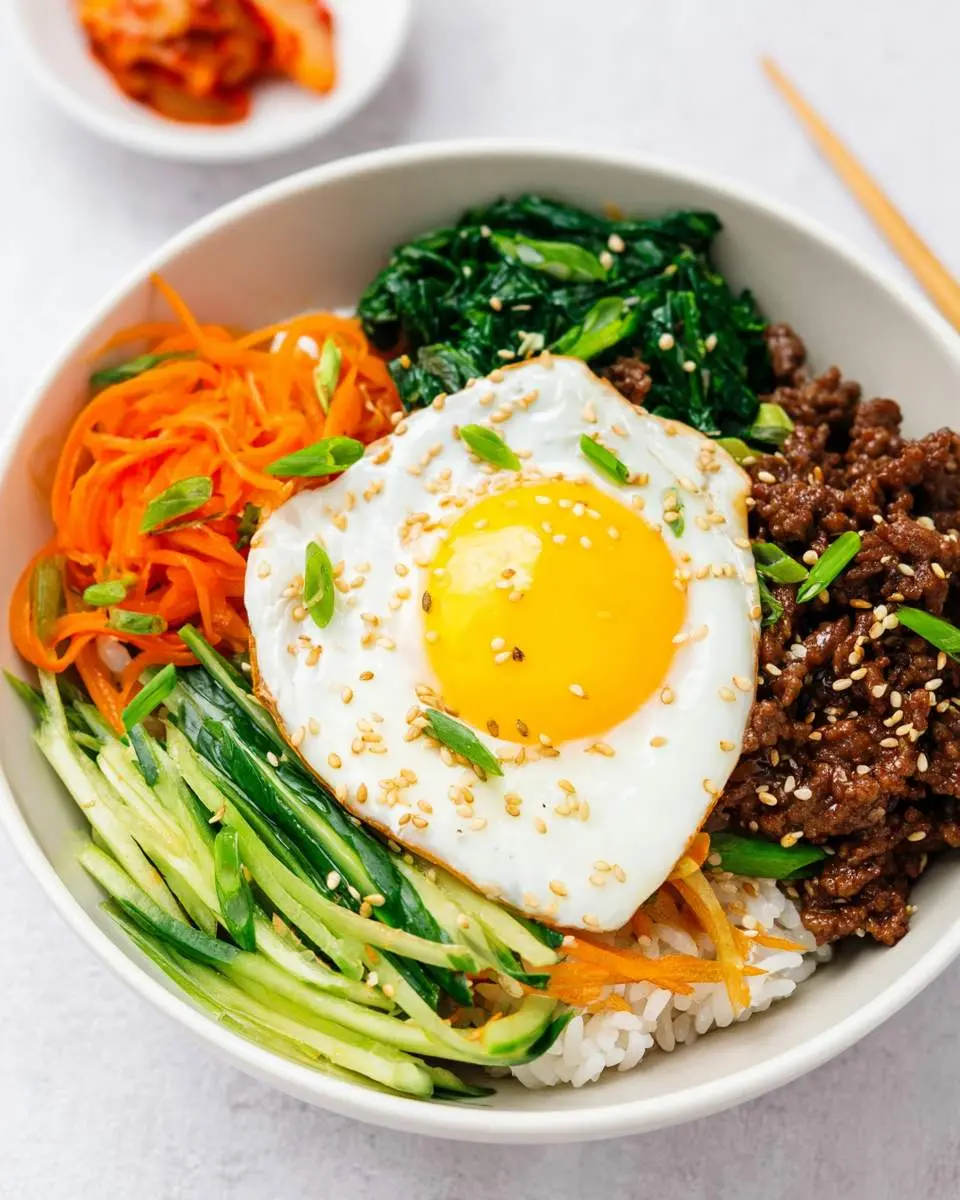
Korean Bibimbap Beef Bowl
Ingredients
Equipment
Method
Notes
Conclusion
This Korean Bibimbap Beef Bowl has become my answer to almost everything. busy Tuesdays, impressing dinner guests, craving something that feels like a hug. The first time you break that yolk and watch it run through gochujang and crisp rice, you’ll understand why I make this again and again. For another Korean-inspired favorite, try my Korean BBQ steak rice bowls. same comfort, different angle. Follow us on Social Media : Pinterest
