
The first time I tasted fresh peas straight from the pod, I was standing in my grandmother’s garden with dirt under my fingernails and the sun warming my shoulders. That sweetness, that impossible green brightness, ruined me for frozen peas forever. Years later, I finally figured out how to capture that same fleeting magic in a bowl of fresh pea soup that tastes like late spring distilled into something you can actually eat.
I made this on a Tuesday that felt like a Monday, when the rain wouldn’t stop and my mood matched the gray outside. I had a bag of peas from the farmers market that were starting to look apologetic in my crisper drawer. Twenty minutes later, my kitchen smelled like something hopeful, and I was eating lunch from a mug with both hands wrapped around it, feeling genuinely restored.
That transformation is what keeps me coming back to simple soups. If you need more proof that humble ingredients can become something extraordinary, my Greek lemon chicken soup started with a similar kind of kitchen rescue mission.
The Ingredients That Make This Soup Sing
The peas themselves are non-negotiable. I have tried this with frozen in desperation, and while it works, the fresh ones give you this vegetal sweetness that tastes alive. Good vegetable stock matters more than you’d think, since there are so few ingredients to hide behind. I simmer mine with a parmesan rusk if I have one, which sounds fancy but is really just me being too lazy to throw away cheese ends. The shallot and garlic create a soft aromatic base that never overpowers the peas. For a completely different kind of soup built on careful layering, my Reuben soup taught me how much foundation work happens before the main ingredient ever hits the pot.

How to Make Fresh Pea Soup
Start by sweating your shallot in butter until it turns translucent and soft, about five minutes of gentle sizzling. Add the garlic for just thirty seconds, enough to wake it up without letting it brown. Pour in your stock and bring it to a lively simmer, then tumble in the peas all at once. They cook fast, three to four minutes maximum, and you will know they are ready when they turn the most intense green you have ever seen in food.
The blending is where the texture happens. I use an immersion blender right in the pot, which feels satisfying and saves dishes. You want it mostly smooth with just a whisper of texture remaining. Stir in a splash of cream if you are feeling indulgent, or a handful of fresh mint if you want to keep things bright and dairy-free. The whole process takes less time than ordering takeout, which still surprises me every time. For another soup that rewards patience with simple technique, my roasted tomato basil soup follows a similar philosophy of letting ingredients do the heavy lifting.
What I Learned After Making This Four Times
Shelling peas the same day you cook them makes a measurable difference. The sugars start converting to starch the moment they leave the pod, so that farmers market urgency is real. I now shell them directly into a bowl and cook within two hours maximum.
Do not walk away during the simmer. Fresh peas go from perfect to army green and sad in about ninety seconds. Set a timer, hover nearby, trust your eyes when that color peaks.
Blend while hot for the silkiest texture. The soup thickens slightly as it cools, so resist the urge to add more liquid until you have tasted it at serving temperature.
My Secret Trick: Reserve a small handful of raw peas before cooking, then blend them into the finished soup off the heat. This preserves that raw, just-picked sweetness that gets lost even in gentle cooking, giving you two layers of pea flavor in every spoonful.

How to Store Fresh Pea Soup
- Refrigerate in airtight glass containers for up to 3 days. The color will dull slightly but the flavor holds beautifully.
- Freeze in individual portions for up to 2 months. I use silicone muffin trays, then transfer to freezer bags once solid for easy single servings.
- Reheat gently over medium-low heat, stirring frequently. Never microwave on high, the texture separates and becomes grainy.
- Thin with a splash of stock or water if needed after storage, as the soup thickens considerably when cold.
Why This Soup Belongs in Your Rotation
Fresh pea soup delivers genuine protein and fiber from those peas, enough that I have eaten it as a light lunch without needing anything else. The minimal butter and optional cream keep it lighter than most comfort foods, while the bright green color signals chlorophyll and nutrients that actually make you feel good after eating. It is the rare dish that satisfies both the craving for something cozy and the desire to eat more vegetables without trying very hard.
FAQs
Can I use frozen peas if fresh are not available?
Frozen peas work in a pinch, though the result tastes more muted and less vibrant. Thaw them first and reduce cooking time to two minutes maximum. The texture will be slightly softer, and you will miss that raw sweetness, but it is still a respectable weeknight option.
Why did my soup turn brownish instead of bright green?
Overcooking is almost always the culprit. Peas contain chlorophyll that breaks down with prolonged heat exposure. Cook just until tender, blend immediately, and serve soon after. Adding a small pinch of baking soda to the cooking water can help preserve color, though I prefer to simply watch the pot closely.
What can I use instead of cream to keep this dairy-free?
Full-fat coconut milk adds surprising richness without dairy, though it does introduce a subtle tropical note. For something more neutral, blend in a quarter cup of raw cashews soaked in hot water, or simply finish with good olive oil and extra fresh mint. The soup is genuinely delicious even completely unadorned.
Can I make this soup ahead for a dinner party?
Fresh pea soup is best served within an hour of making, when the color and flavor peak. If you must prep ahead, make the base without peas and refrigerate up to two days. Bring back to a simmer and add fresh peas at the last minute, cooking and blending just before guests arrive.

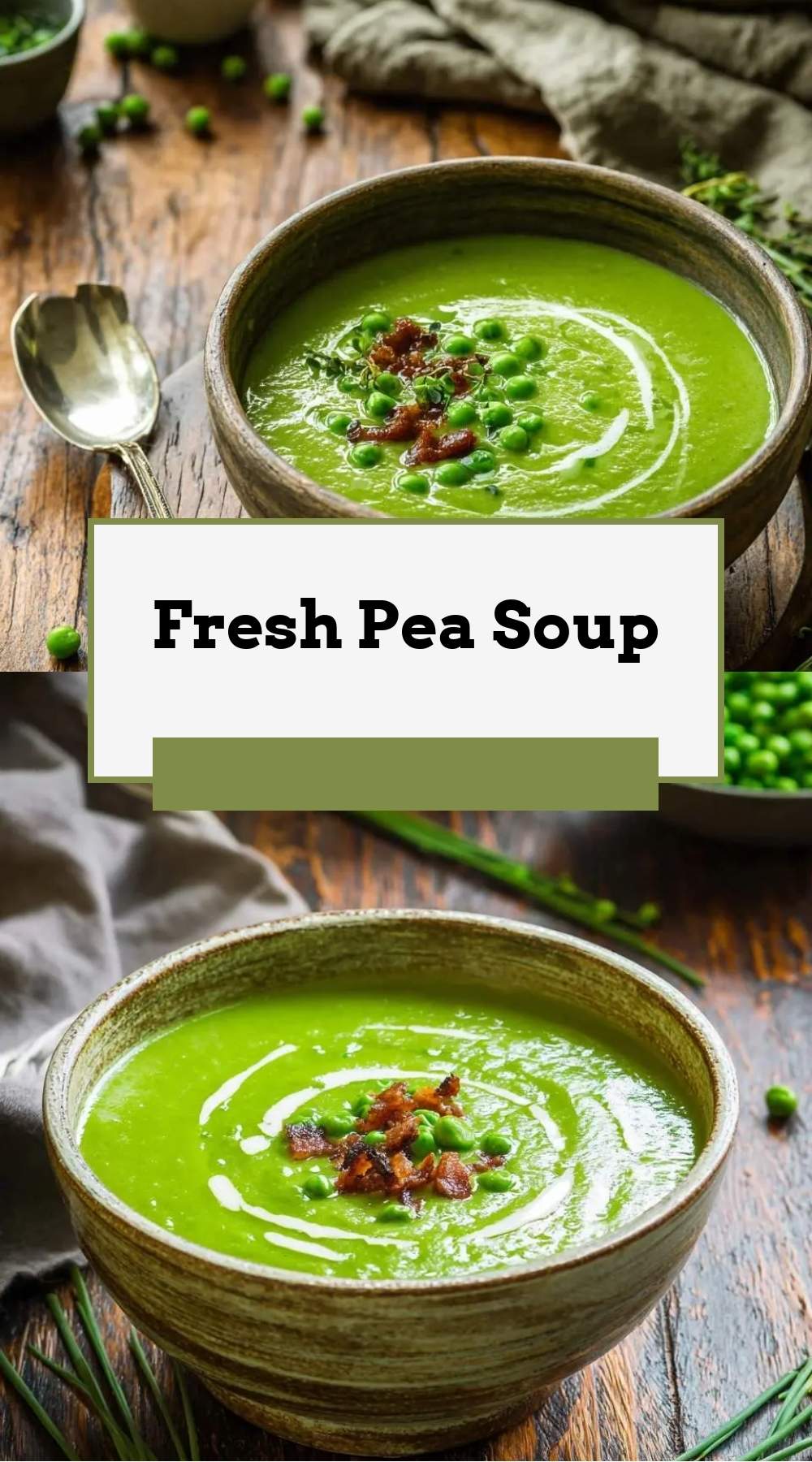
Fresh Pea Soup
Ingredients
Equipment
Method
Notes
Conclusion
This fresh pea soup has become my answer to too many questions. Too tired to cook, too broke for takeout, too sad for a salad, too rushed for anything complicated. It asks for so little and gives back something that feels like care. If one simple soup can do that much, imagine what else your kitchen might hold. For another weeknight rescue that starts with a handful of ingredients, my tomato tortellini soup has saved dinner more times than I can count.
Follow us on Social Media : Pinterest