
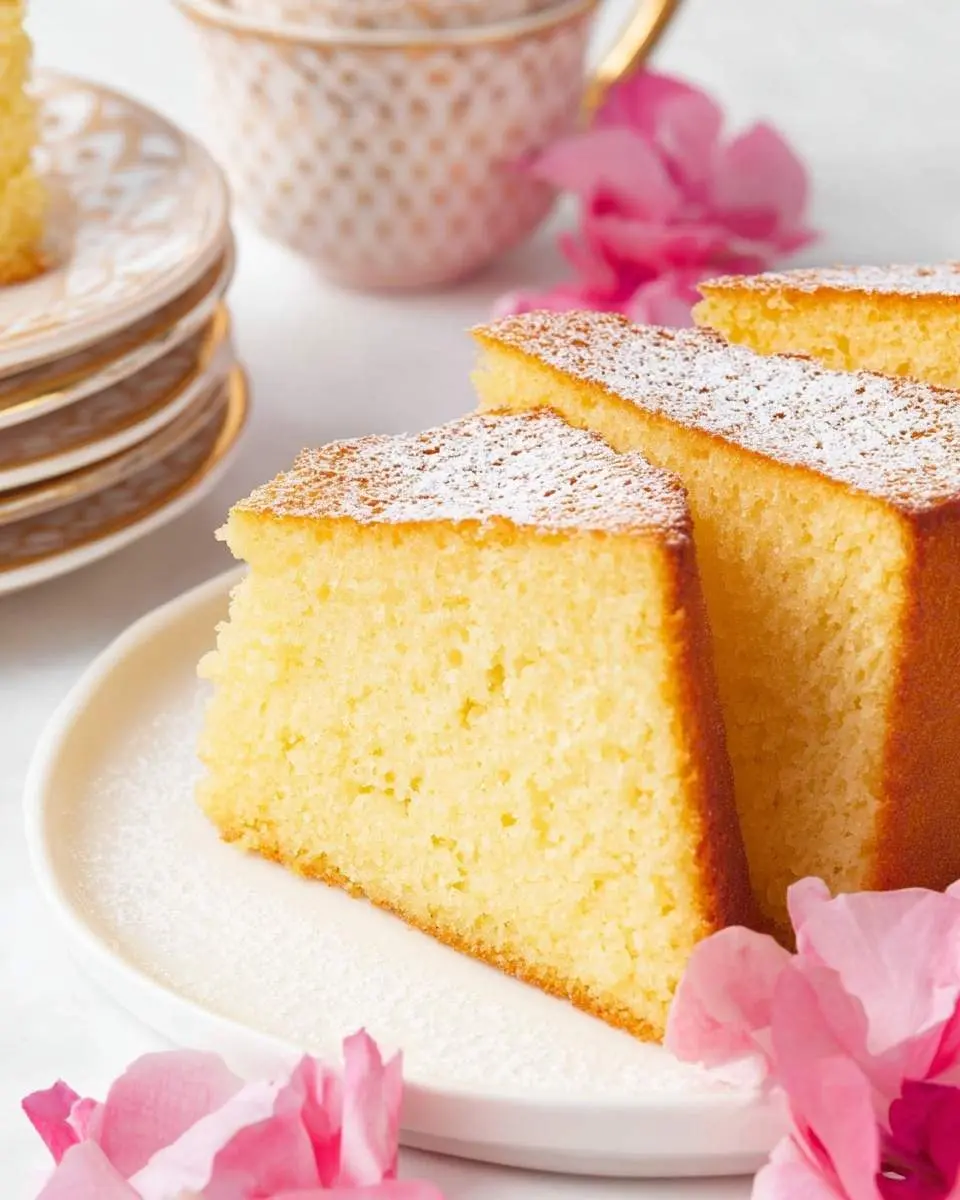
Oh, the pure bliss of a slice of French Butter Cake! Its tender crumb and delicate, rich flavor effortlessly whisk me away to a charming Parisian patisserie. It’s a pure, simple joy, much like the unexpected delight of crafting Tiramisu Brownies – a true celebration of delicious moments.
Growing up, the scent of butter and vanilla baking was the soundtrack to my childhood. My grandmother, with her flour-dusted apron, taught me that the best food nourishes not just the body, but also the heart and soul.
This French Butter Cake recipe embodies that philosophy perfectly – it’s comforting, beautifully simple, and always brings a smile. My secret for success? Patience with your ingredients; they’ll reward you with incredible flavor.
What You Need to Make This Recipe
For this French Butter Cake, humble yet quality ingredients shine. Rich unsalted butter and fragrant vanilla extract are truly essential, much like the spices in my Gingerbread Truffles. Find the complete list below.

How to Make French Butter Cake
Making this beautiful French Butter Cake is wonderfully simple. I begin by creaming butter and sugar until fluffy. Then, eggs, dry ingredients, and milk are blended for a smooth batter, similar to how I layer richness in my Fruity Pebbles Cheesecake. Baked golden, it emerges with an irresistible aroma.
Pro Tips for Making This French Butter Cake
Over the years, I’ve gathered a few tricks for making the absolute best French Butter Cake. These are the little things that truly elevate the results and make your baking experience even more delightful.
- Room Temperature Ingredients: This is non-negotiable for me! Ensuring your butter, eggs, and milk are all at room temperature helps them emulsify properly, creating that incredibly smooth, uniform batter and tender crumb we all adore in a classic French Butter Cake.
- Don’t Overmix: Once you add the flour, mix just until combined. Overmixing can develop the gluten too much, leading to a tough cake – and nobody wants that! A gentle hand is your best friend here.
- My Secret Trick: For an extra layer of flavor, I love to brush the warm cake with a simple lemon syrup (lemon juice + sugar) right after it comes out of the oven. It adds a beautiful zesty brightness and keeps the cake incredibly moist.
- Preheat Your Oven Properly: Give your oven ample time to reach and maintain the correct temperature. A perfectly preheated oven ensures even baking and that beautiful golden crust.

Fun Variations for French Butter Cake
The beauty of a classic French Butter Cake is its adaptability! It’s a wonderful canvas for creativity, much like how I love finding new spins for my Pineapple Upside Down Cheesecake.
- Citrus & Spice: Try orange zest with a hint of cardamom.
- Nutty Infusion: Fold in toasted pecans or pistachios.
- Chocolate Swirl: A delicate swirl of melted dark chocolate adds elegance.
- Berry Fresh: Add a handful of fresh raspberries or blueberries for a burst of fruitiness.

How to Store French Butter Cake
To keep your French Butter Cake tasting fresh and delicious, proper storage is key. I always store leftover cake at room temperature, tightly wrapped in plastic, for up to 2-3 days. If you want to keep it longer, an airtight container in the refrigerator will extend its freshness for up to a week.
My Storage Tip: For longer enjoyment, I actually prefer to freeze individual slices of French Butter Cake. I wrap each slice tightly in plastic wrap, then aluminum foil, and store them in a freezer-safe bag for up to 3 months. When I’m ready for a treat, I just let a slice thaw at room temperature – it’s just as moist and flavorful as when it was first baked!
Nutritional Benefits
A slice of French Butter Cake, while an indulgence, provides some protein from eggs and calcium from milk. I believe in balanced enjoyment, ensuring our family meals are nourishing for both body and soul.
FAQs
What gives French Butter Cake its distinct texture?
The magic is in the method! Creaming the unsalted butter and granulated sugar thoroughly creates tiny air pockets, resulting in that incredibly fine, tender, and somewhat dense crumb that defines a classic French Butter Cake. It’s all about building that delicate structure from the very first step.
Can I make French Butter Cake ahead of time?
Absolutely! This is one of my favorite make-ahead desserts. You can bake the French Butter Cake a day in advance, allow it to cool completely, and then store it at room temperature, tightly wrapped. It often tastes even better the next day as the flavors meld beautifully.
What’s the best way to serve French Butter Cake?
I love serving French Butter Cake simply dusted with powdered sugar, as the recipe suggests. It’s also wonderful with fresh berries or a light fruit compote. Its rich, delicate flavor truly shines on its own, making it an elegant and versatile dessert for any occasion.
Why is room temperature butter important for this recipe?
Using room temperature butter is absolutely crucial for a successful French Butter Cake. It creams more easily with sugar, trapping more air, which results in a lighter, fluffier crumb. Cold butter won’t emulsify properly, leading to a denser, less desirable texture. Trust me on this little detail!
Classic French Butter Cake (Gâteau au Beurre)
Ingredients
Equipment
Method
Notes
Conclusion
There’s something so timeless and comforting about a homemade French Butter Cake. It’s more than just a dessert; it’s a connection to cherished memories and the simple joy of creating something beautiful from scratch. I hope this recipe brings as much warmth and delight to your kitchen as it has to mine. Happy baking, my friends!
Follow us on Social Media : Pinterest