
The first time I pulled a bubbling tray of eggplant parmesan from my oven, the smell stopped my husband mid-conversation. That deep, toasty scent of roasted eggplant layered with garlic and bubbling mozzarella. it filled our entire kitchen and made the dog wander in hopeful circles. I knew right then this would become one of those recipes I make when I want to feed people love.
My grandmother never made eggplant parmesan. She was a Midwestern meat-and-potatoes woman who viewed vegetables with suspicion. I discovered this dish in my twenties, standing in a tiny Brooklyn kitchen while a friend’s Italian mother showed me how salting the eggplant wasn’t optional. it was transformation. That lesson stuck with me more than any cooking class.
What I love most is how this dish proves that simple ingredients, treated with patience, become something extraordinary. If you are looking for another way to love vegetables in your air fryer, my roasted baby potatoes have that same crispy-edged magic.
The Ingredients That Make This Dish Work
Eggplant parmesan demands three things done right: the eggplant itself, the cheese, and your sauce. I use globe eggplants, the big purple ones that feel heavy for their size. salting them draws out bitterness and that spongy texture that otherwise soaks up oil like a sponge. For cheese, I splurge on whole-milk mozzarella and real Parmigiano-Reggiano; the pre-grated bags contain anti-caking agents that never melt properly. My sauce is simple: good canned San Marzano tomatoes, garlic, olive oil, and time to reduce until it coats the back of a spoon. If you want to understand how lemon transforms potatoes the way patience transforms eggplant, try my Greek lemon potatoes next.

How to Make Eggplant Parmesan
The rhythm of this recipe has become meditative for me. I start early, slicing the eggplant into half-inch rounds and laying them on paper towels with salt. The beads of moisture that form always surprise me. that’s the bitterness leaving, the texture changing. After thirty minutes, I press them dry and brush each slice with olive oil before they hit a hot oven.
The roasting is where the kitchen starts to smell like something is happening. The edges curl and brown, the centers soften to creaminess. I make my sauce while they roast, the garlic sizzling before the tomatoes go in, the whole thing bubbling down to intensity.
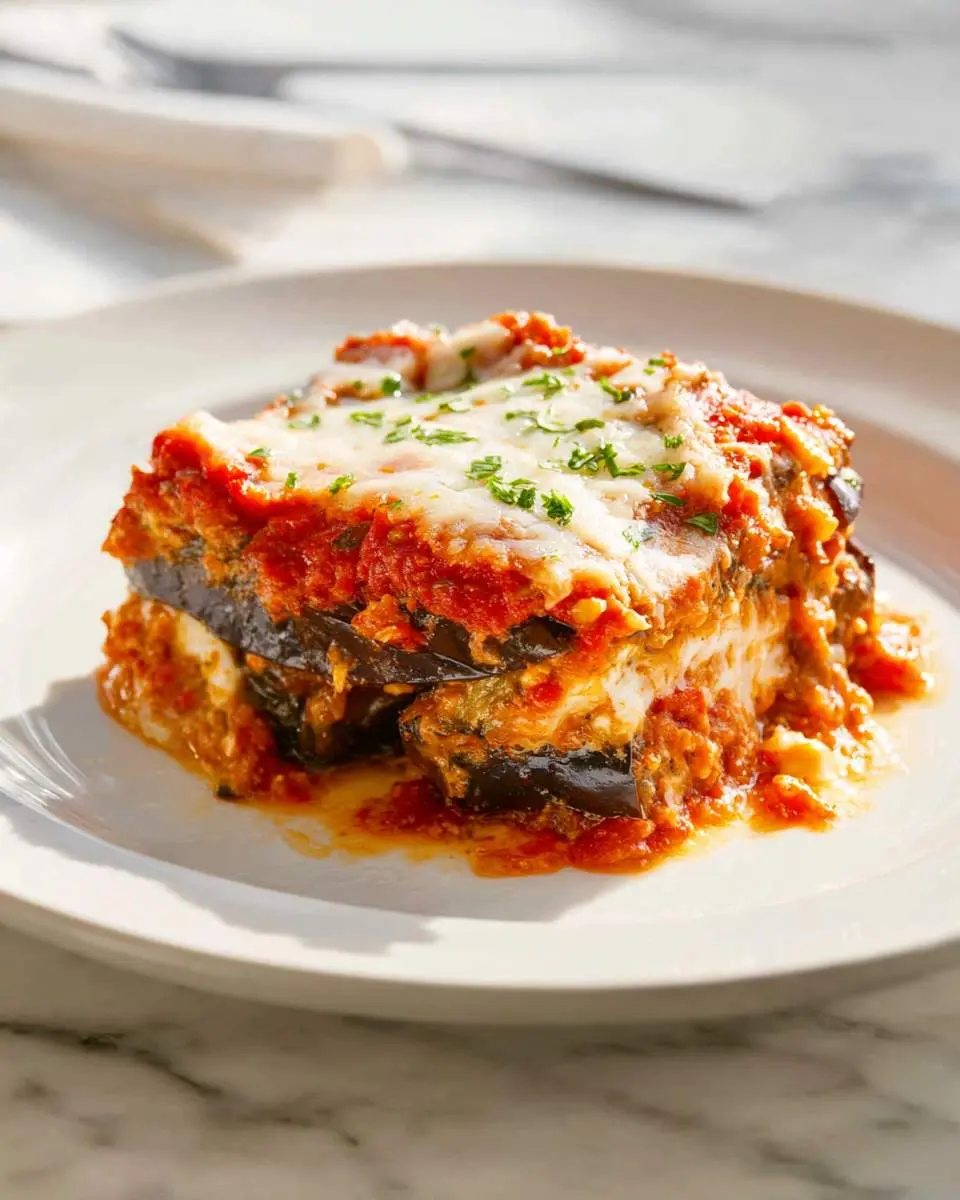
Then comes the layering, which I do in a deep dish: sauce, eggplant, torn mozzarella, grated parmesan, repeat. The top gets extra cheese because I am not restrained. Into the oven until the edges are frantic with bubbles and the center is molten. If you enjoy this kind of layered vegetable bake, my eggplant lasagna uses similar techniques with different results.
What I Learned Making This Three Times
My first attempt was a soggy disappointment. The eggplant released water during baking and pooled at the bottom. Now I roast the slices until they are deeply golden before they ever see sauce. this pre-cooking step is non-negotiable for texture.
I also stopped breading the eggplant. Traditional recipes call for flour, egg, breadcrumbs, but I found it masks the vegetable’s own flavor and adds unnecessary heaviness. The roasted slices develop their own crust that holds up beautifully.
Letting the dish rest for fifteen minutes after baking changed everything. The layers settle, the sauce thickens, and you can actually cut clean squares instead of watching it collapse on the plate.
My Secret Trick: I add a thin layer of ricotta mixed with lemon zest and black pepper between two layers of eggplant. It creates pockets of creamy brightness that cut through the richness of the mozzarella and tomato.
How to Store Eggplant Parmesan
- Refrigerate covered tightly with foil or in an airtight container for up to 4 days
- Freeze individual portions wrapped in plastic then foil for up to 2 months; thaw overnight in refrigerator before reheating
- Reheat in a 350°F oven covered with foil for 20-25 minutes until center reaches 165°F
- Do not microwave. the texture becomes rubbery and the cheese separates
Why This Recipe Fits a Healthy Routine
Eggplant parmesan delivers substantial satisfaction without meat, and the eggplant itself brings fiber and that deep purple skin full of nasunin, an antioxidant that supports brain health. By roasting rather than frying the slices, I cut the oil content dramatically while keeping that essential richness. The protein from the cheese makes this genuinely filling. I serve it to skeptical carnivores who never miss the meat.

FAQs
Do I really need to salt the eggplant?
Yes, and I do not skip this even when rushed. Salting draws out bitter compounds and excess moisture that would otherwise make your final dish watery. Thirty minutes is the minimum; an hour is better if you have time.
Can I make this ahead for a dinner party?
Absolutely, and I prefer it. Assemble the entire dish up to 24 hours ahead, cover tightly, and refrigerate. Bring to room temperature for 30 minutes before baking, and add 10-15 minutes to the cooking time.
Why did my eggplant parmesan turn out soggy?
The most common culprit is under-roasted eggplant. Those slices need to be deeply golden and slightly collapsed before layering. Eggplant parmesan requires patience at this stage. rushing leads to disappointment.
What can I substitute for mozzarella?
Provolone works beautifully and brings more assertive flavor. I have also used fontina for extra meltiness. Avoid low-moisture mozzarella. it lacks the creamy pull that makes this dish special.

Eggplant Parmesan
Ingredients
Equipment
Method
Notes
Conclusion
This eggplant parmesan has become my answer to the question of what to cook when I want to feel capable and generous. It asks for time and attention, and it rewards both abundantly. For another way to celebrate eggplant’s versatility, my grilled eggplant with harissa takes it in an entirely different direction.
Follow us on Social Media : Pinterest