
The smell of toasted coconut drifting through my kitchen always stops me mid-step. It takes me straight back to my grandmother’s cramped Florida kitchen, where she’d hum off-key and stir sweetened coconut into everything. That’s where my obsession with coconut cookies began — not from a fancy bakery, but from a woman who believed dessert should make you close your eyes and sigh.
I was maybe eight when she first let me roll the dough into ragged balls, my palms sticky with butter and sugar. She’d wink and say, “Don’t make ’em too pretty — the ugly ones taste better.” I believed her then. I still do.
These days I bake a batch whenever I need that same comfort, that same pause in a chaotic week. They’re simpler than my raspberry chocolate chip cookies, but somehow they feel more necessary.
What You Need to Make This Recipe
Sweetened shredded coconut is the heart here — don’t swap it for unsweetened or you’ll lose that chewy, almost-caramelized edge that makes these coconut cookies unforgettable. I use unsalted butter because I want to control the salt myself, and there’s something satisfying about watching it cream into pale fluff with the sugar. A splash of pure vanilla extract rounds everything out, the kind that costs a few dollars more and tastes like actual vanilla beans, not chemicals. If you’re feeling fancy, the technique I learned from making peaches and cream macarons taught me that room temperature ingredients truly matter — cold butter fights you, and warm butter weeps.

How to Make coconut cookies
I start by beating butter and sugar until the mixture turns almost white and fluffy — this takes longer than you think, maybe four minutes, and the sound shifts from gritty scraping to something lighter, like whisking cream. The eggs go in one at a time, each disappearing completely before the next joins, and then the vanilla hits and suddenly it smells like a bakery.
The dry ingredients come together in a separate bowl, and I add them in batches, watching the dough transform from sandy to cohesive. The coconut folds in last, and I always use my hands for this part — there’s no substitute for feeling when the shreds are evenly distributed. The dough needs a brief rest in the fridge, just twenty minutes, enough to firm up so the cookies don’t spread into puddles.
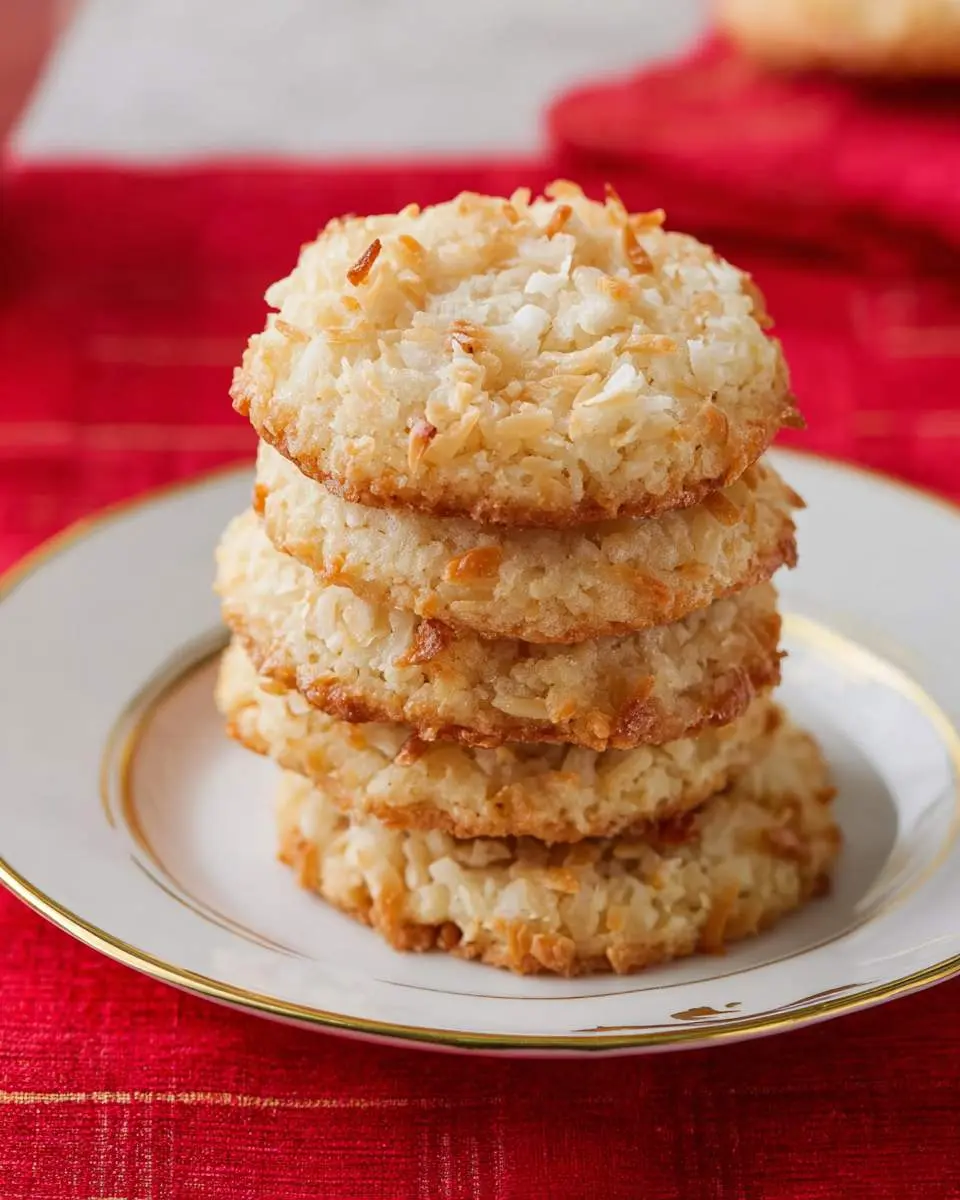
When they bake, the edges turn golden while the centers stay pale and slightly underdone — that’s the texture you’re hunting for. They’ll look too soft when you pull them out. Trust the process. They firm up as they cool, leaving you with that perfect contrast of crisp edge and chewy middle. My strawberry cookies taught me that patience with cooling racks pays off.
Pro Tips
Toast your coconut first. Ten minutes at 325°F deepens the flavor from one-note sweet to complex and nutty, and that extra step makes these coconut cookies taste like you tried harder than you actually did.
Don’t skip the chilling. Warm dough spreads; cold dough holds its shape. That twenty minutes in the fridge is the difference between thick, bakery-style cookies and thin, crispy discs.
Underbake slightly. Pull them when the edges are set but the centers still look a touch raw. They’ll finish cooking on the hot sheet, and you’ll get that coveted chewy texture instead of dry crumbles.
My Secret Trick: I press a small pinch of untoasted coconut onto each dough ball right before baking. It toasts in the oven and creates these gorgeous golden flecks that make the cookies look artisanal — and adds a textural crunch that surprises people.

How to Store coconut cookies
- Room temperature: Store in an airtight container for up to 5 days, with a slice of bread to maintain softness.
- Refrigerator: Not recommended — the cold dries out the coconut and hardens the texture.
- Freezer (baked): Freeze cooled cookies in a single layer, then transfer to freezer bags for up to 3 months. Thaw at room temperature for 30 minutes.
- Freezer (dough): Scoop dough balls onto a baking sheet, freeze solid, then store in bags for up to 2 months. Bake from frozen, adding 2-3 extra minutes.
- Reheating: 10 seconds in the microwave restores that fresh-baked warmth and chew.
Nutritional Benefits
These coconut cookies aren’t health food, but they do carry some genuine benefits from their star ingredient. Coconut contains medium-chain triglycerides, a type of fat your body processes more quickly for energy, and it brings small amounts of manganese and copper to the table. I appreciate that they’re naturally dairy-rich from real butter rather than hydrogenated oils, which matters more to me than counting calories ever will.

FAQs
Can I use unsweetened coconut instead of sweetened?
You can, but the texture and flavor will change significantly. Sweetened coconut retains moisture better during baking, creating that signature chew. If you must substitute, add two extra tablespoons of sugar to the dough.
Why did my coconut cookies spread too much?
Warm butter or skipped chilling is almost always the culprit. Your dough needs that refrigerator time to solidify the fat. Also check your oven temperature with a thermometer — many run hot.
Can I make the dough ahead of time?
Absolutely. The dough keeps refrigerated for up to 72 hours, and I actually prefer the flavor after a day of resting. The flour fully hydrates and the vanilla deepens.
How do I know when coconut cookies are done baking?
Look for golden edges with pale, slightly puffy centers. They should feel set around the rim but soft in the middle. Remember, coconut cookies firm up considerably as they cool on the baking sheet.
Coconut Cookies
Ingredients
Equipment
Method
Notes
Conclusion
I hope these coconut cookies find their way into your kitchen on a day when you need something simple and good. Bake them for someone you love, or just for yourself — my grandmother would have approved of both. If you’re craving more fruity treats, my strawberry shortcake cookies are waiting for you next.
Follow us on Social Media : Pinterest