
My kitchen, for a long time, held a kind of sacred quiet when it came to baking. Then, one day, I just needed something bright and comforting, a taste of sunshine that wasn’t too heavy, and that’s when I finally decided it was time to tackle a proper coconut cake. I wanted something that felt celebratory but was also wonderfully easy to make.
I remember thinking of my grandmother’s kitchen, the scent of vanilla always lingering, and how she could whip up the most incredible treats seemingly without effort. This cake brought back a little bit of that magic for me, a feeling of effortless joy.
So, if you’re looking for a dessert that’s not just a recipe but an experience, full of delightful flavors and textures, you’ve landed in the right spot. This particular cake is a vibrant celebration, much like my lemon raspberry cake.
What You Need to Make This Recipe
When I set out to create the most divine coconut cake, I knew the star ingredients had to shine. That’s why I lean into using both full-fat coconut milk and shredded sweetened coconut – they work together to create an incredible depth of flavor and ensure every bite is unbelievably moist. Also, don’t skimp on the vanilla extract; it really elevates the sweet coconut notes and rounds out the whole flavor profile beautifully, much like the bright flavors in my lemon poppy seed bundt cake.

How to Make coconut cake
The journey to this beautiful cake starts with combining the wet and dry ingredients, and I always feel a little thrill when the batter comes together, smooth and creamy. The aroma of coconut and vanilla begins to fill my kitchen even before it hits the oven. As it bakes, that sweet, tropical scent intensifies, promising something truly special. I love watching for those edges to just pull away from the pan, knowing that perfect, tender crumb is forming inside, much like the lovely texture I aim for in my lemon blueberry cake.
Pro Tips
- Room Temperature Ingredients are Key: I’ve learned that letting your butter, eggs, and coconut milk come to room temperature really makes a difference. It helps everything emulsify much better, leading to a smoother batter and a far more tender, evenly baked cake.
- Don’t Overmix: Once you add your dry ingredients, mix just until combined. Overmixing develops the gluten too much, which can result in a tough, dense coconut cake instead of the light, airy texture we’re aiming for.
- Toast Your Coconut: For an extra layer of flavor and a beautiful golden crunch, I often lightly toast some of my shredded coconut for garnish. It brings out a nutty sweetness that complements the cake perfectly.

How to Store coconut cake
- For short-term storage, I place leftover slices or the entire cake in an airtight container in the refrigerator for up to 3-4 days. It keeps it wonderfully moist and fresh.
- If I’m planning ahead or have a lot leftover, unfrosted cake layers can be wrapped tightly in plastic wrap, then foil, and frozen for up to 2-3 months. Thaw them in the refrigerator overnight before frosting.
- Frosted cake doesn’t freeze quite as well for long periods, as the frosting texture can change. However, individual slices can be frozen for a couple of weeks, then thawed in the fridge.
Nutritional Benefits
While I mostly bake this coconut cake for pure joy, it’s nice to know there are some thoughtful aspects to its ingredients. Coconut, of course, provides healthy fats and fiber, which contribute to a feeling of satiety. And eggs, a staple in this recipe, offer a good source of protein and essential vitamins, making it a delicious treat that also offers a little something extra.

FAQs
Can I use fresh coconut instead of shredded?
Absolutely! If you have access to fresh coconut, it will elevate the flavor even further. Just make sure to grate it finely. You might need to adjust the amount slightly as fresh coconut has more moisture, but it adds an incredible, vibrant taste that is truly unmatched for this kind of recipe.
Why did my cake turn out dry?
A dry cake usually comes from either overbaking or overmixing the batter. Keep a close eye on your oven and test for doneness with a toothpick that comes out with moist crumbs, not liquid batter. Also, remember that overworking the flour can develop gluten too much, leading to a tough, dry texture.
Can I make this cake ahead of time for a party?
Yes, this cake is wonderful for making ahead! I often bake the layers a day in advance, wrap them tightly, and store them at room temperature. Then, I make the frosting and assemble the cake the morning of the party. It allows the flavors to meld beautifully and saves you time on event day.
What makes this the best moist coconut cake?
What makes this such a wonderfully moist coconut cake is the combination of full-fat coconut milk and a hint of sour cream or buttermilk in the batter. These ingredients add richness and acidity, which tenderizes the crumb and ensures every slice is incredibly soft and never dry, truly delivering on that moist promise.
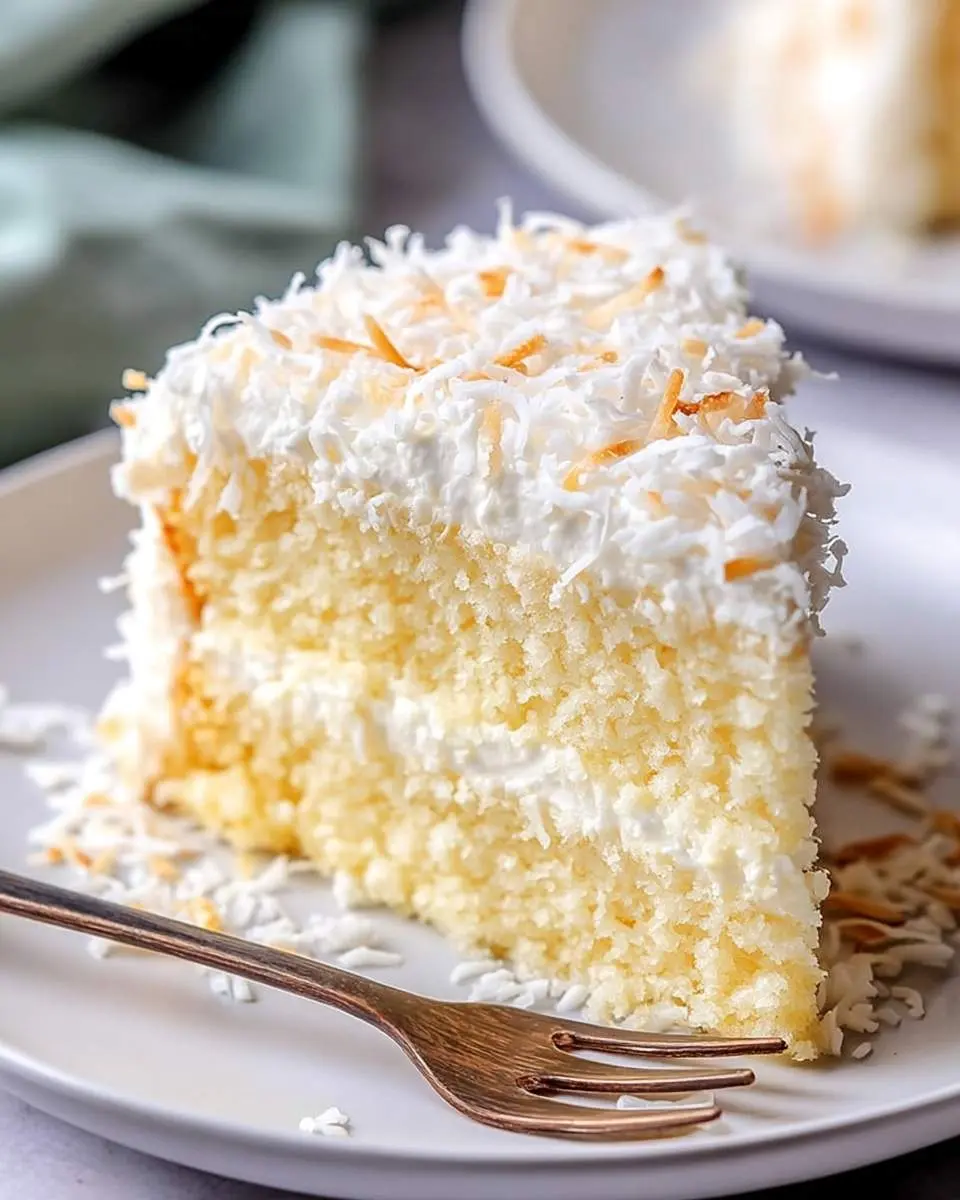
Coconut Cake
Ingredients
Equipment
Method
Notes
Conclusion
Crafting this coconut cake has truly become one of my favorite kitchen rituals. The way it fills my home with that sweet, tropical scent, and then delivers on its promise of moist, tender deliciousness, always brings a smile to my face. I genuinely hope you find as much joy in baking and sharing it as I do. It’s a guaranteed crowd-pleaser for any gathering, just like my strawberry shortcake layer cake.